
The Lakes District

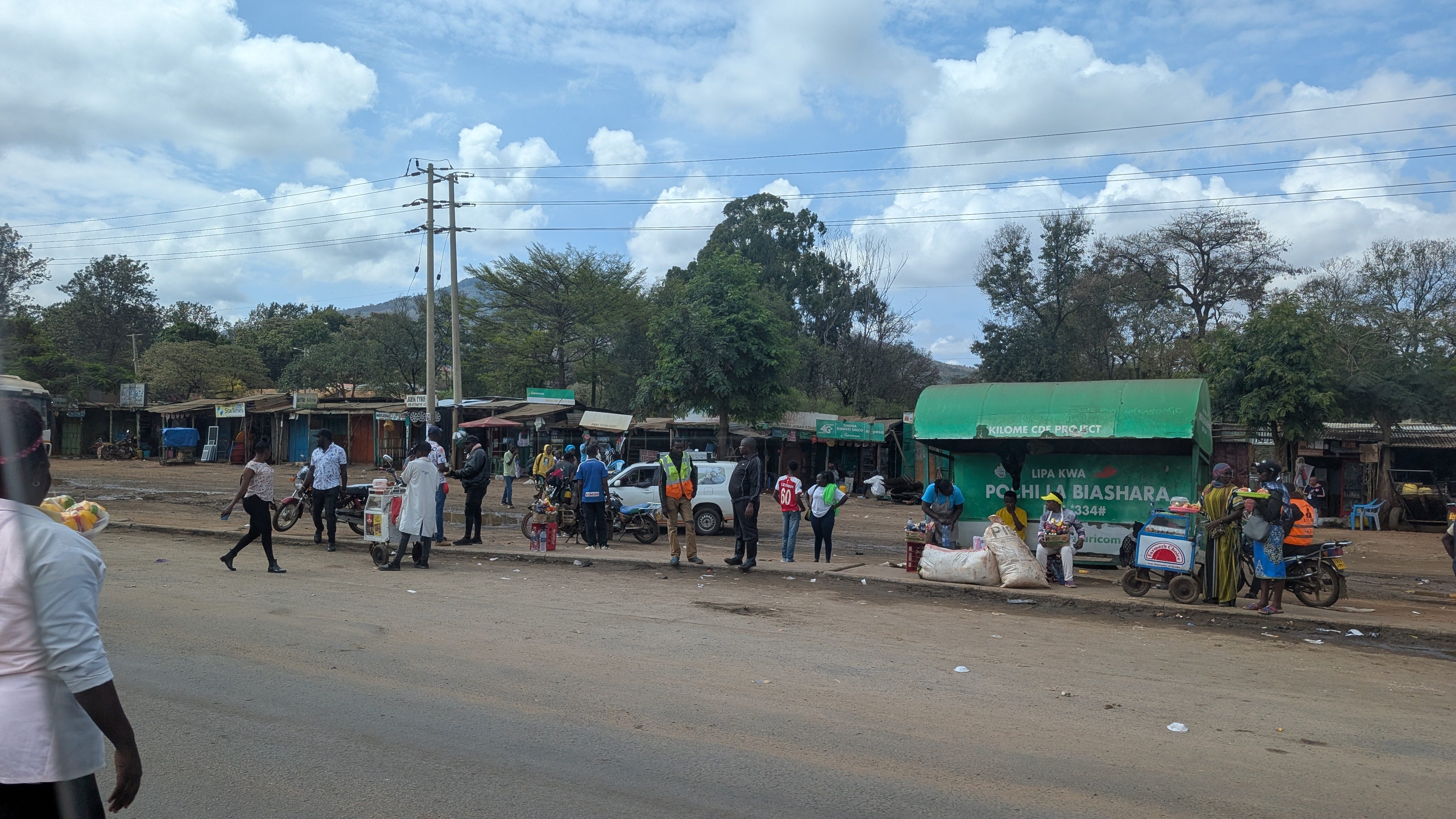
We left Amboseli early in the morning and drove hard most of the day. Traffic here is pretty intense--most of the time we were on a two-lane highway full of big trucks. Passing is a big part of the process and drivers think nothing of barrelling head on toward each other, trusting there will be room to slip back into the correct lane before a collision. The road goes through many towns, where shops with disproportionately grandiose names (Royal Palace Restaurant, Finest Salon, Grand Lakeview Hotel) line the dirt frontage and people stand in between the lanes of traffic offering fruit and drinks for sale as the cars and trucks bump slowly over the speed bumps.
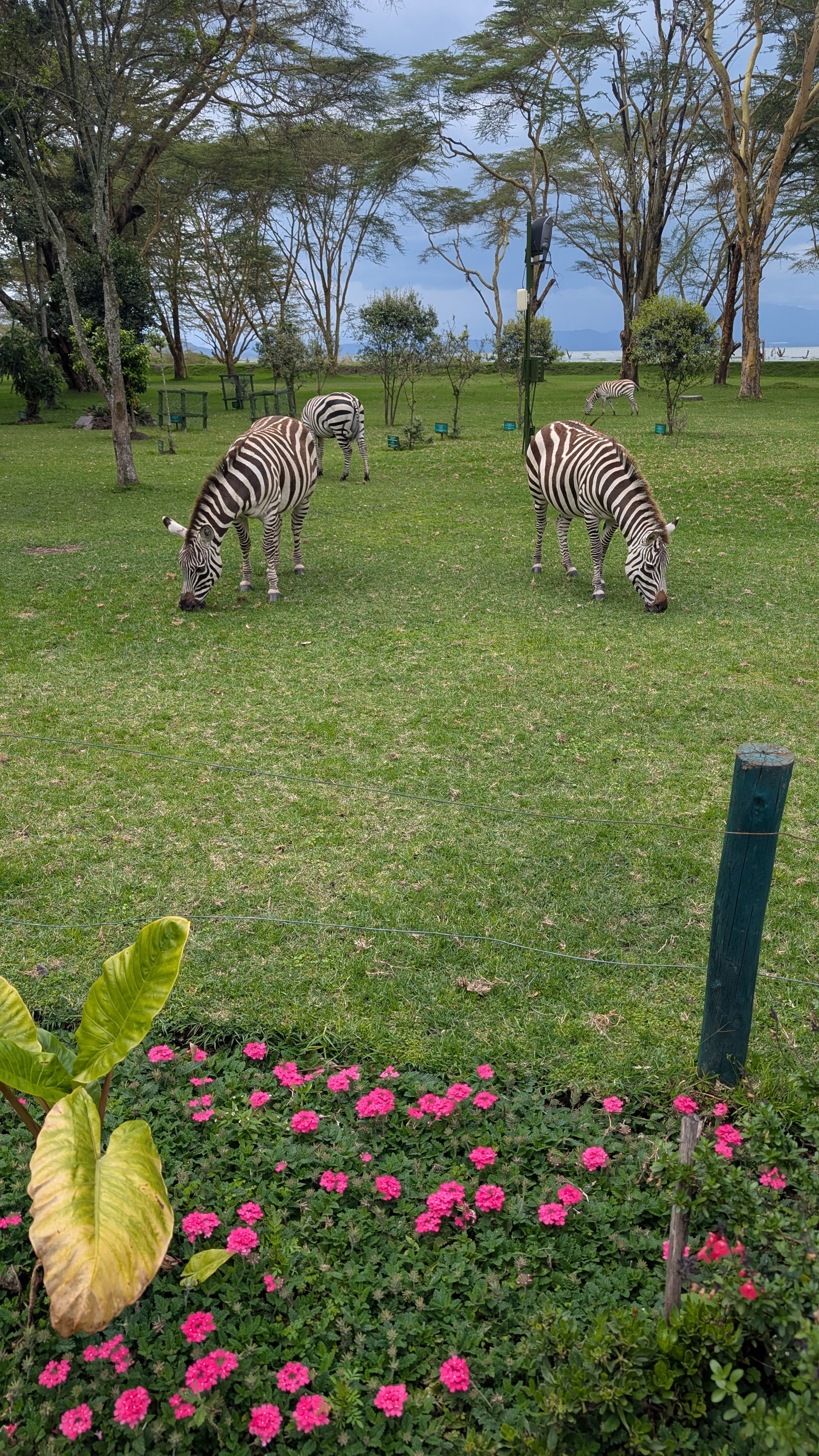
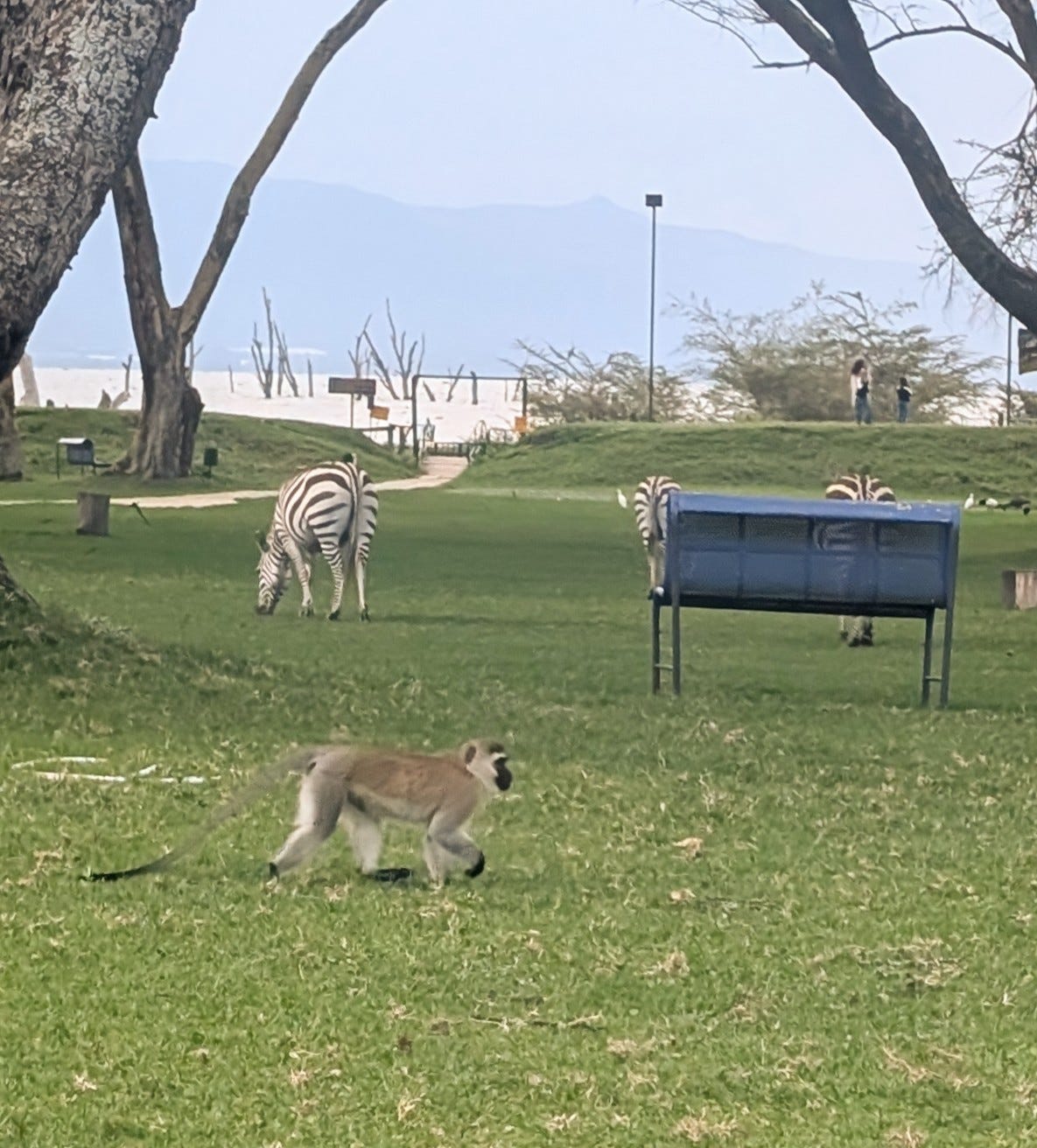
Tom did a great job of navigating all that, plus accidents and construction delays to get us to Lake Naivasha Simba Lodge before the lunch buffet closed at 2:30pm. The lodge has various animals wandering the grounds and this is the sight that met us as we walked to our room.
After a short break we got back in the truck and went back up toward town to Lake Naivasha Resort, where we had a boat ride scheduled. But by the time we got there, it was pouring, so no boat ride. But there were hippos!
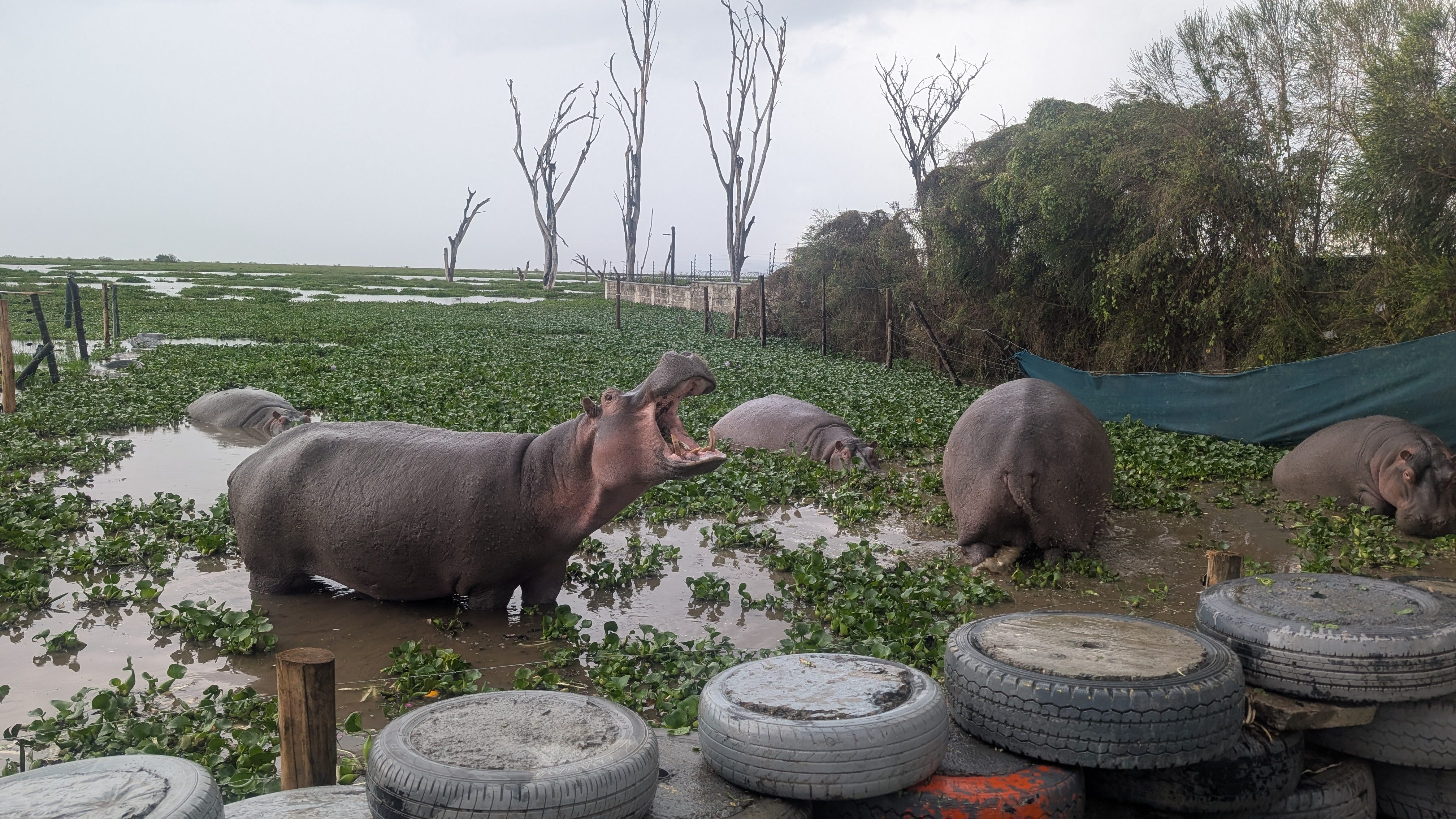
They wander up from the lake to this area where the staff toss them greens to supplement their diet and encourage them to visit.
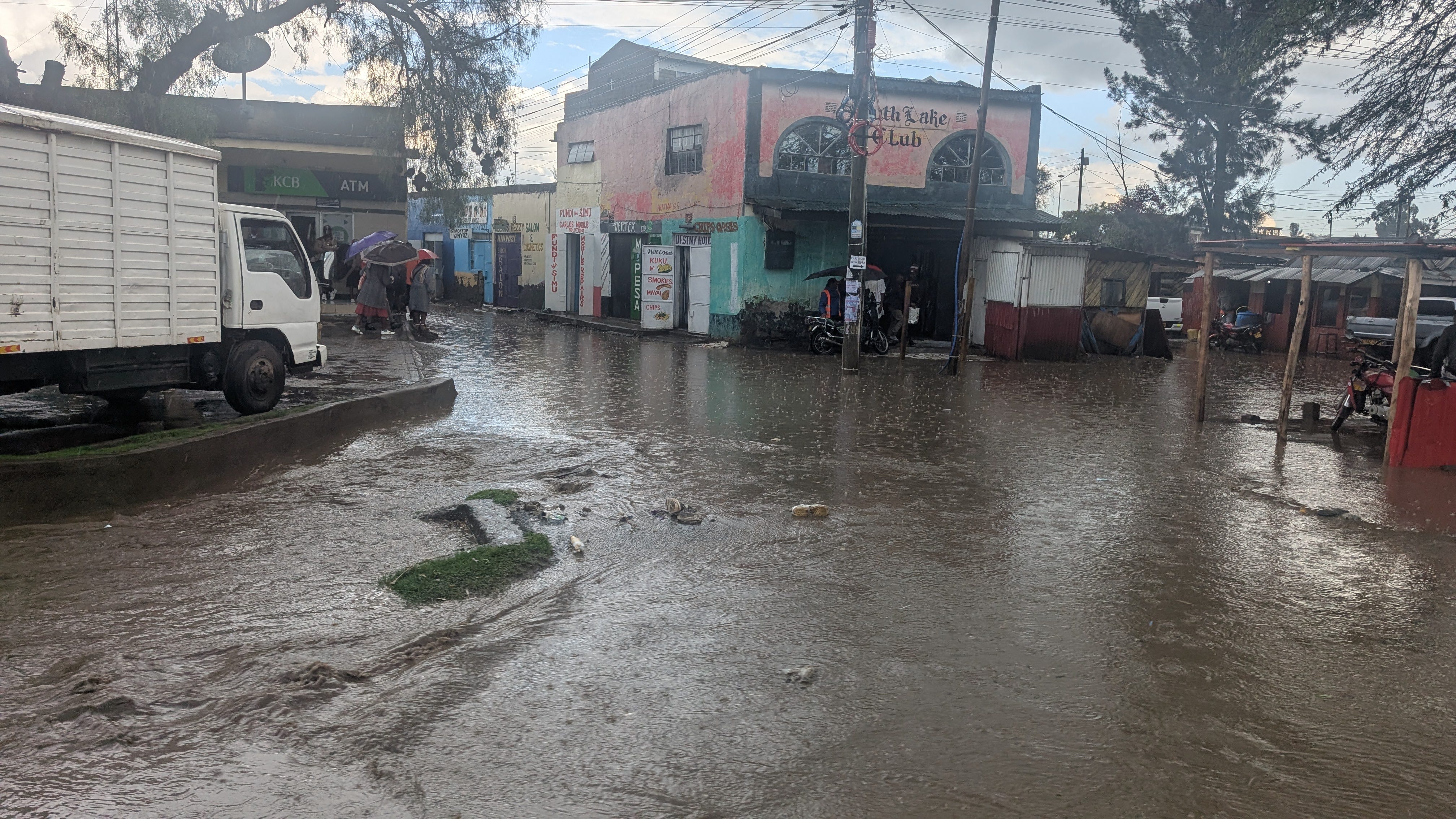
We headed back out to the lodge through torrential rain that was filling the ditches along the road and flooding the parking lots.
But back at our lodge, just 11km away, there was no rain at all. Jason and I sat on the patio at the bar and had some tea and cookies and watched the animals roaming around.
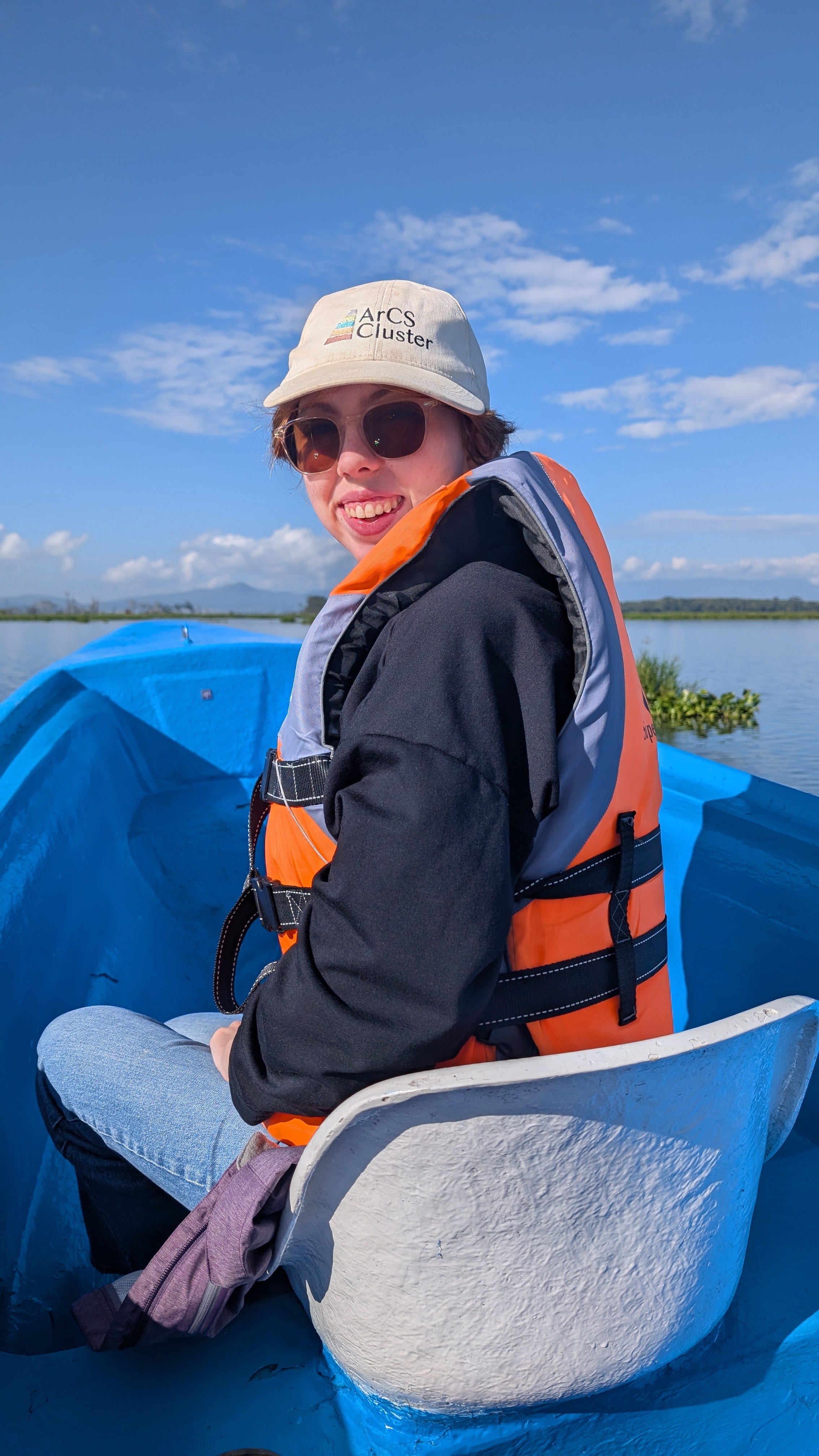
We had dinner and got to bed early for another early start. First up was that boat ride on Lake Naivasha.
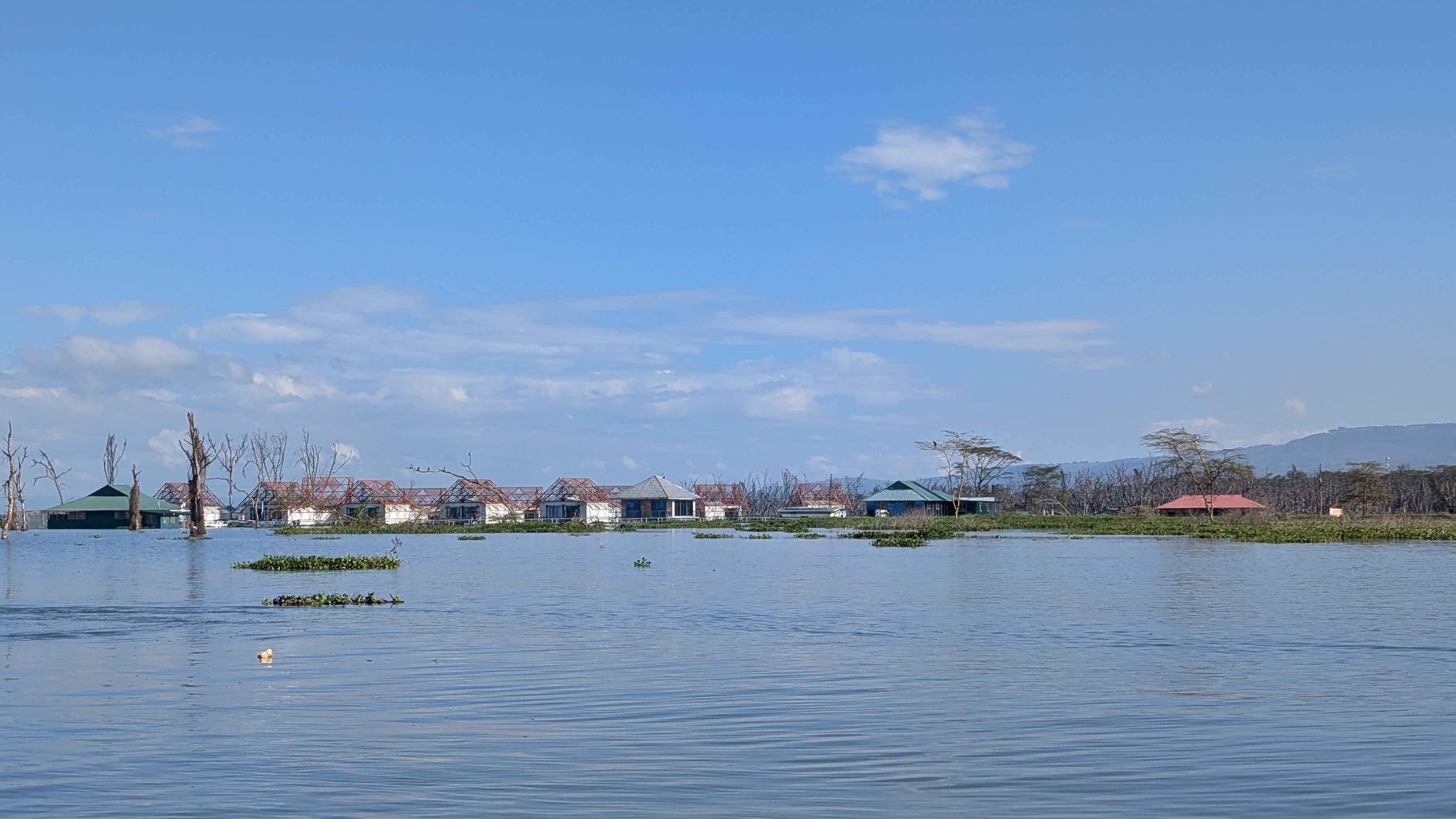
Over the past several years the water level in the lake has risen catastrophically, drowning land and displacing families and workers in the vast local flower industry that supplies most of Europe’s fresh flower market.
The other problem is the water hyacinths.
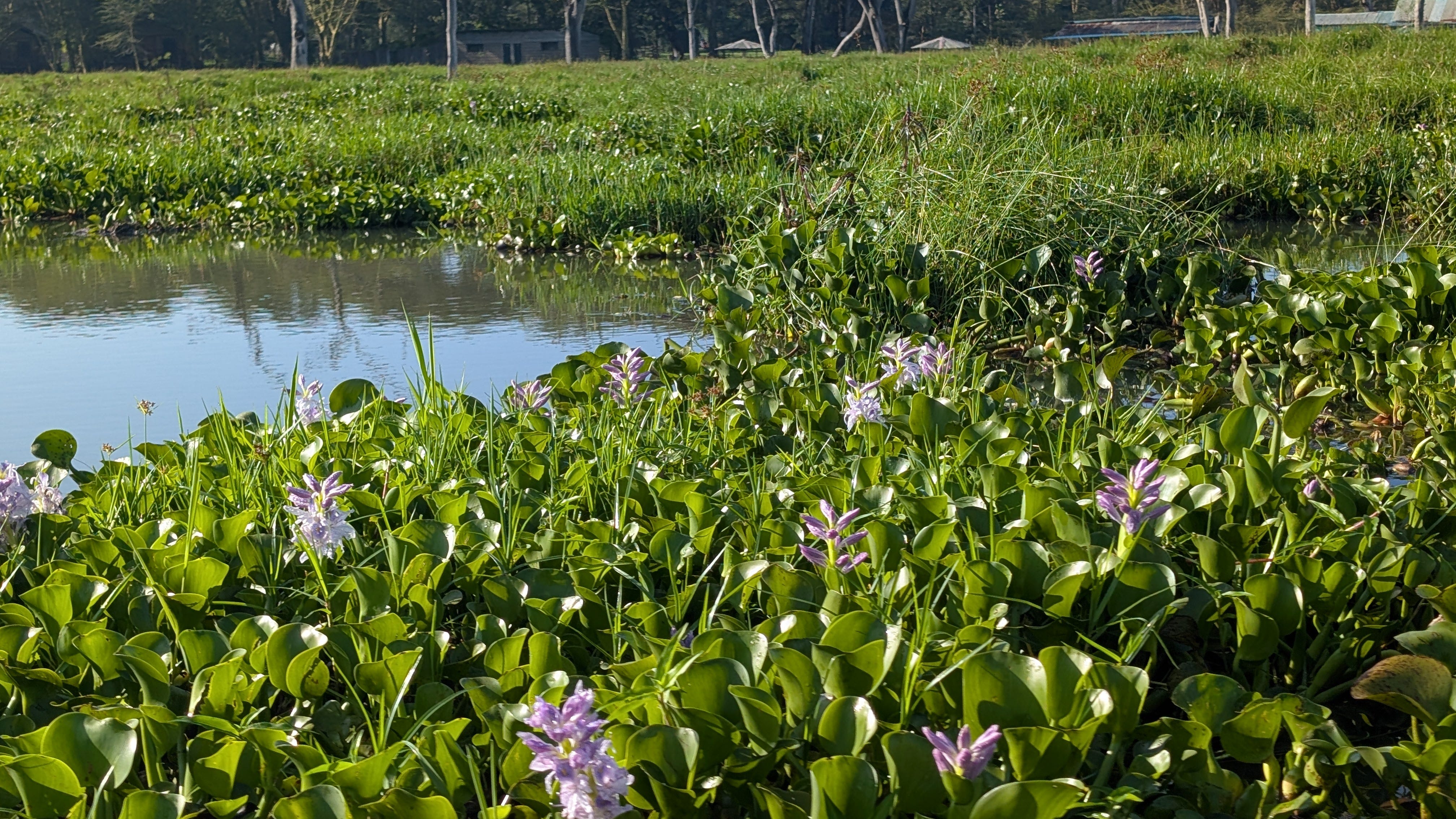
They are an invasive aquatic weed that has become a significant problem in Lake Naivasha, choking the lake, disrupting the ecosystem, and negatively impacting the economy. Our guide said that they were deliberately introduced by scientists, but the web thinks they were imported by colonists as ornamental garden plants and spread through the water system.
Despite all of this, we had a lovely time out on the lake, puttering around and looking at the amazing birds.
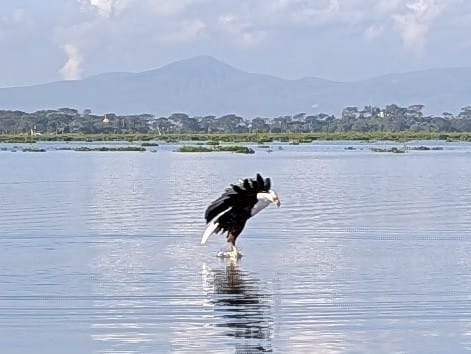
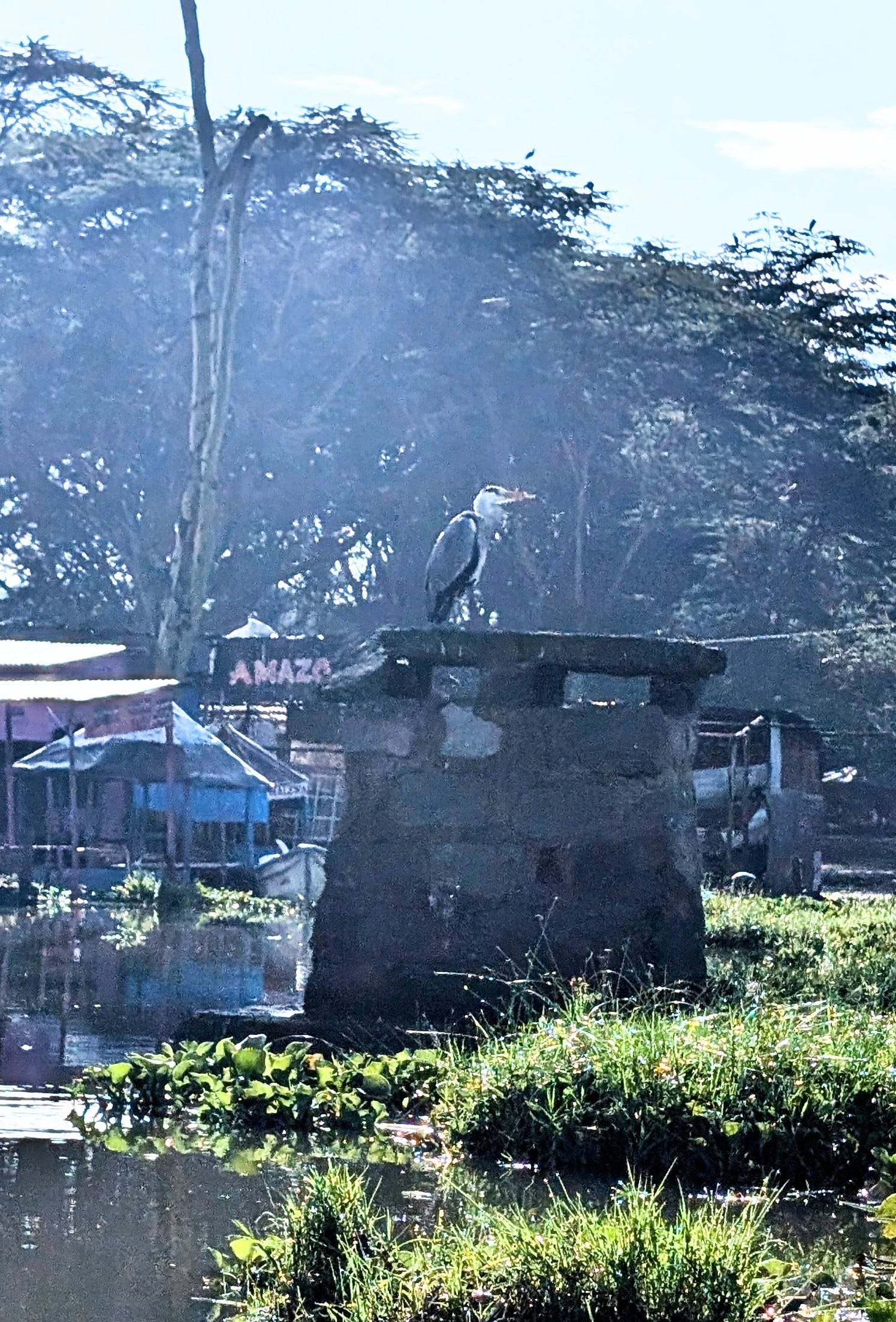
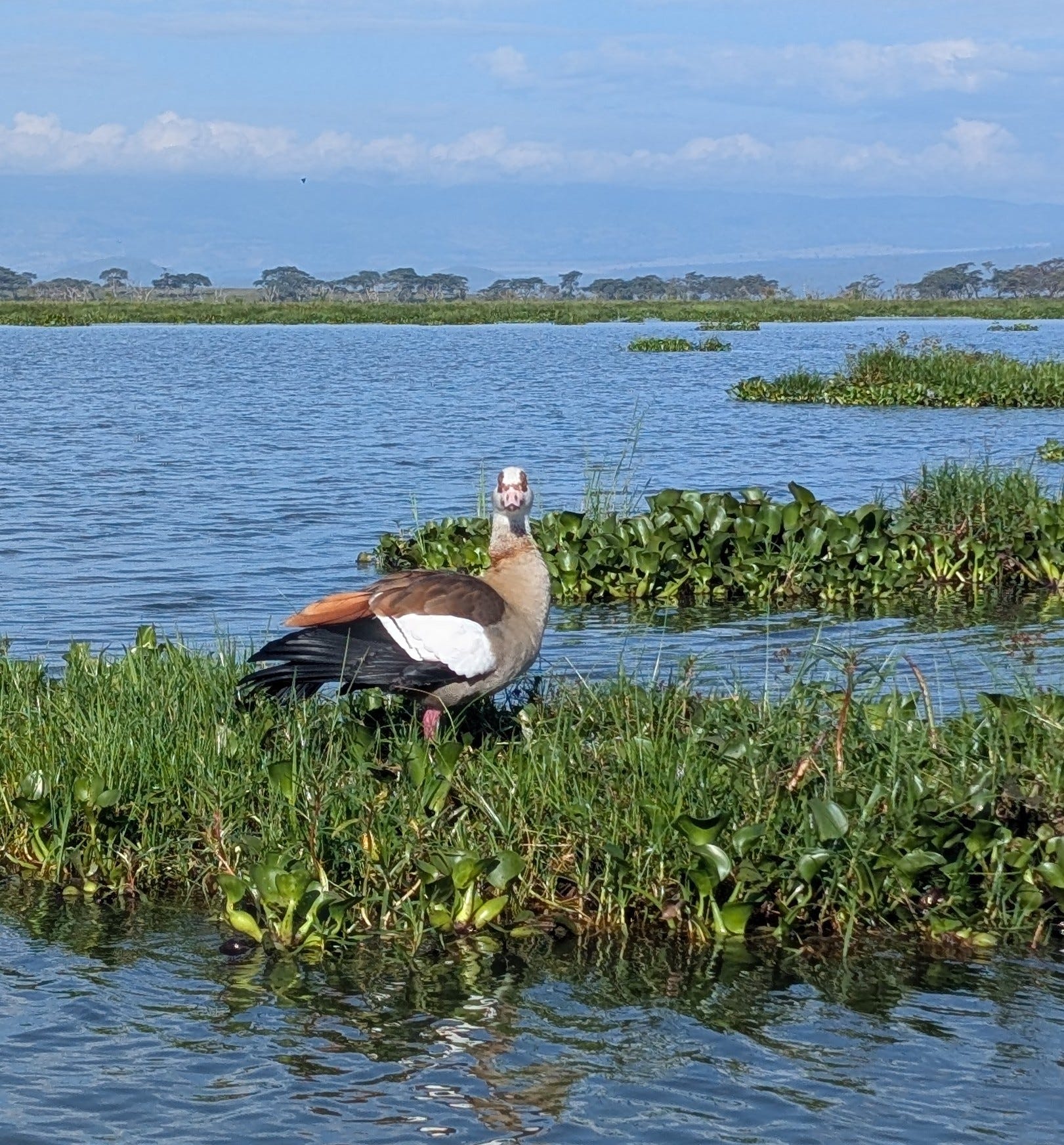
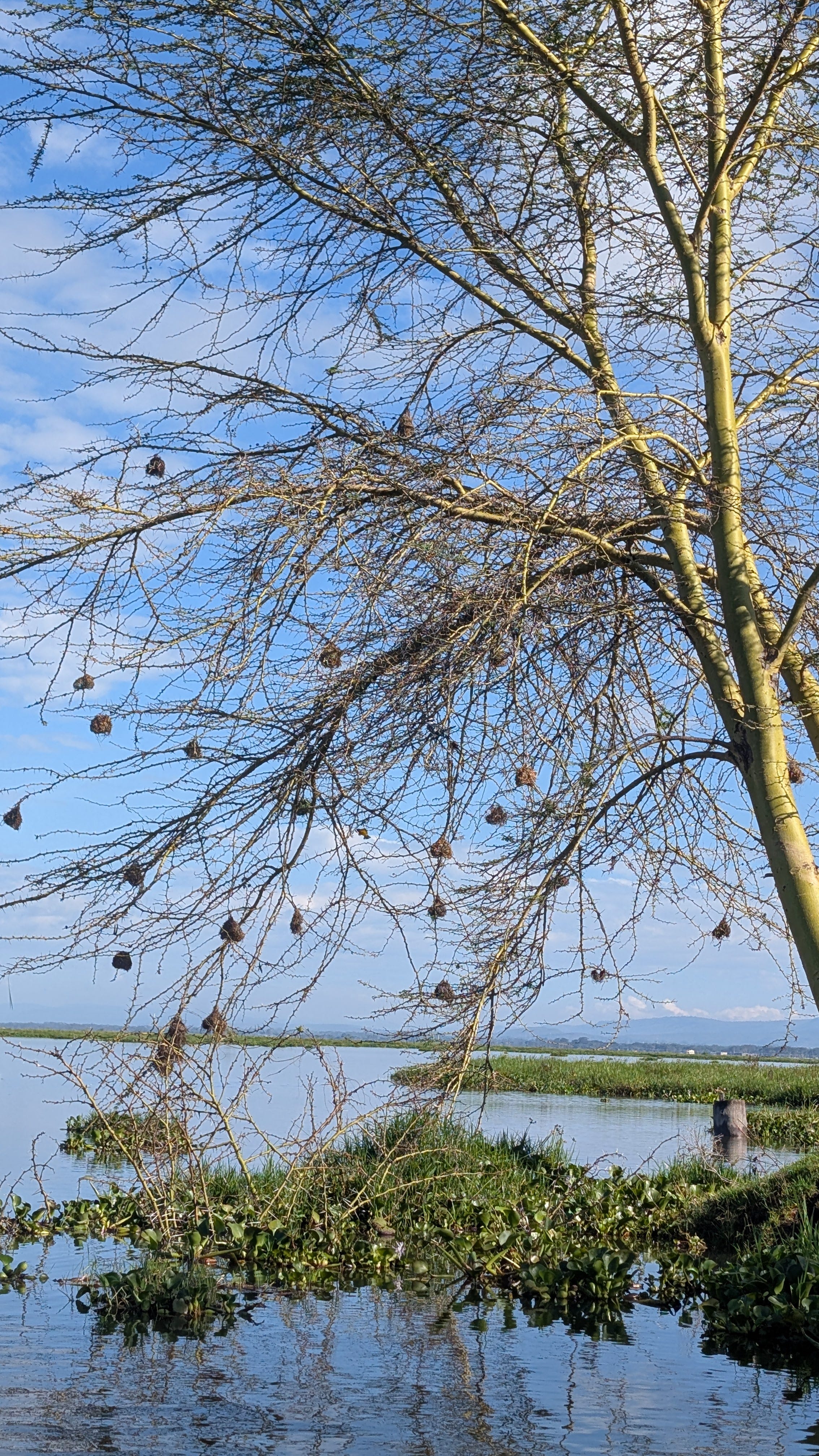
Before we knew it an hour had passed and it was time to get on the road to Lake Nakuru National Park, about ninety minutes away.
That park is different from the others we've visited. First of all, it used to be private property--the former owner's house is now a hotel. Secondly, the park is right next to a fairly large town and you can see houses from the hilltops in the park.
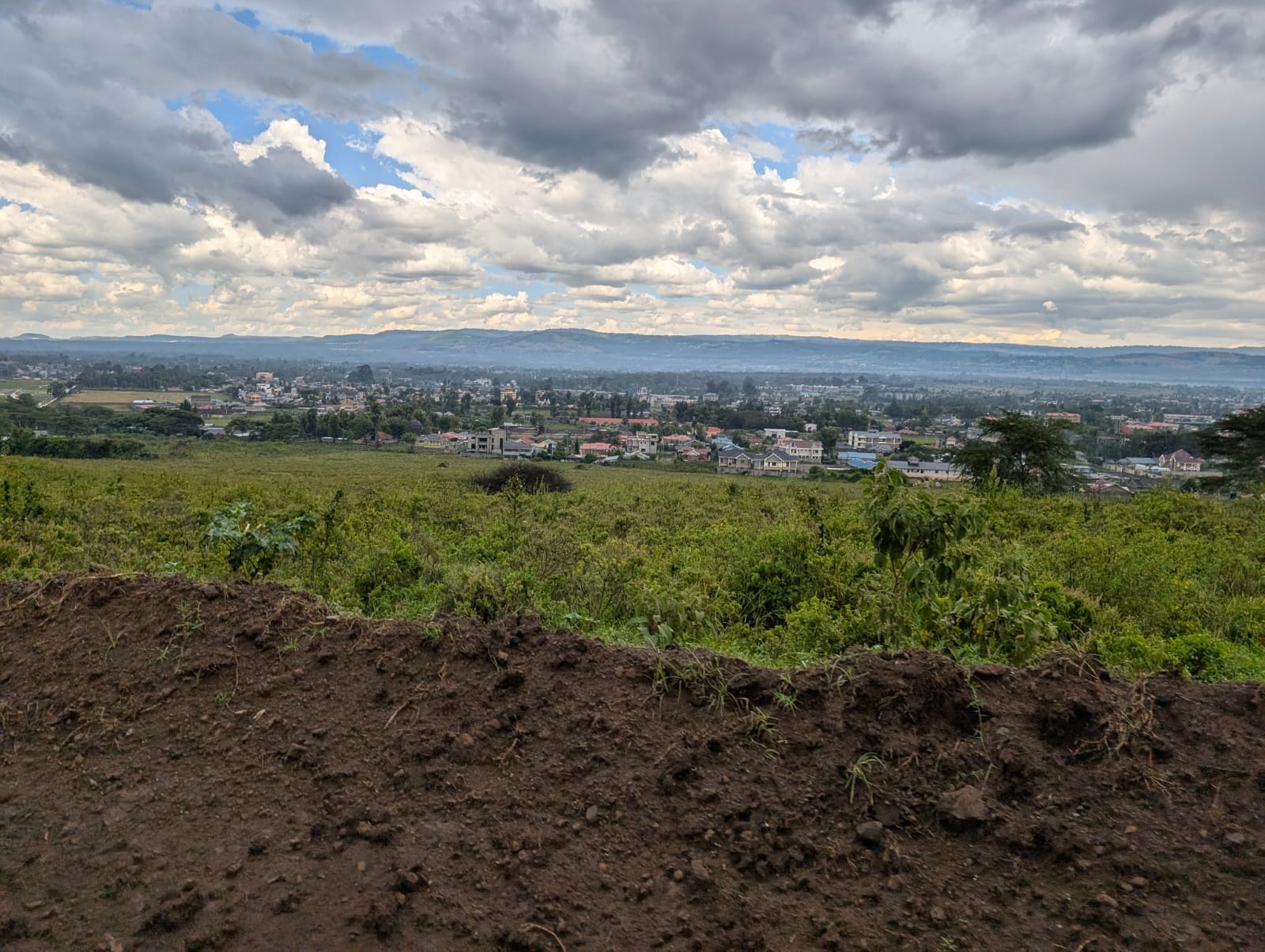
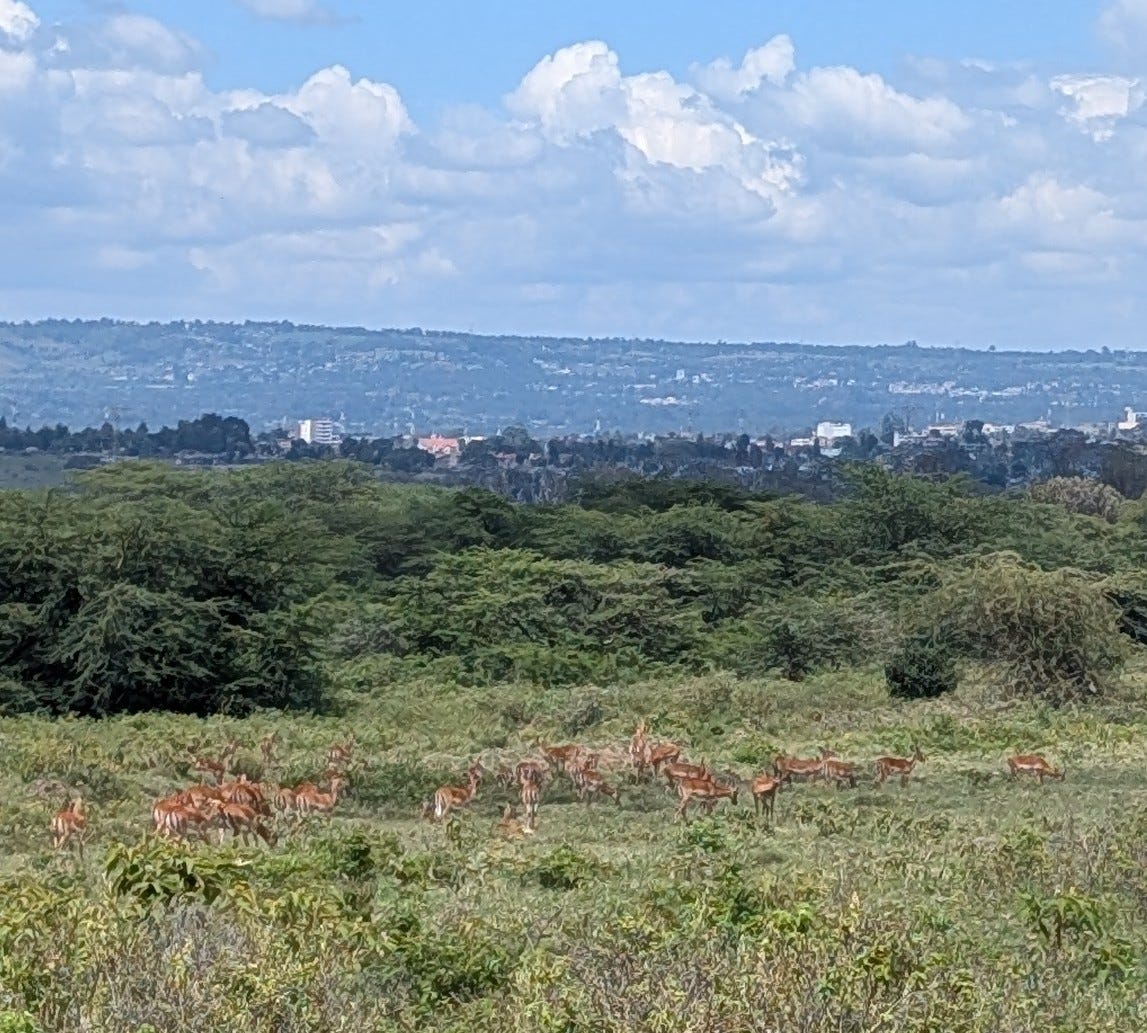
But it is still a very wild place. Among the first animals we saw were elands, the largest antelopes in Africa, and ones we hadn't seen before.
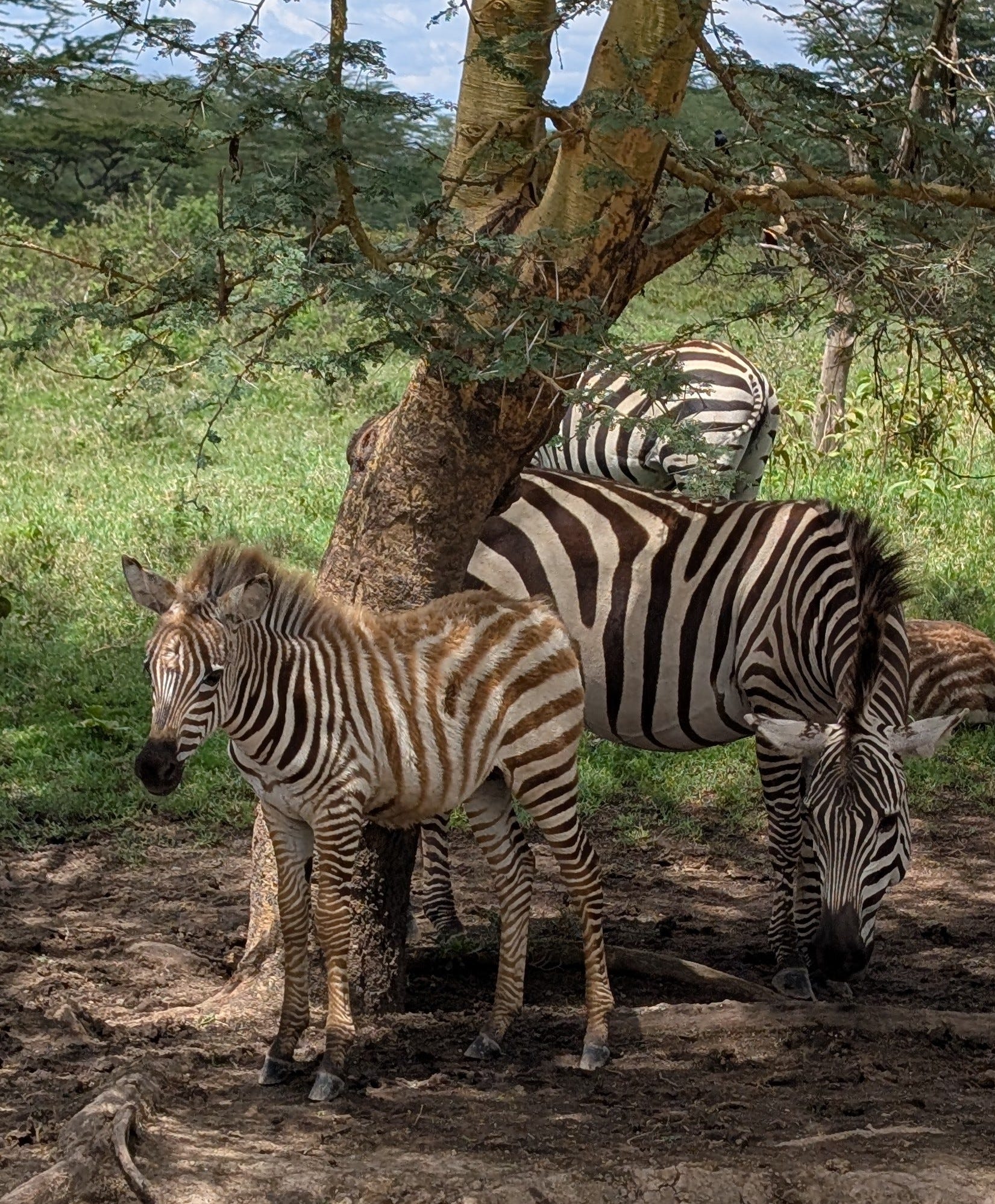
There were tons of zebras, including this adorable little one.
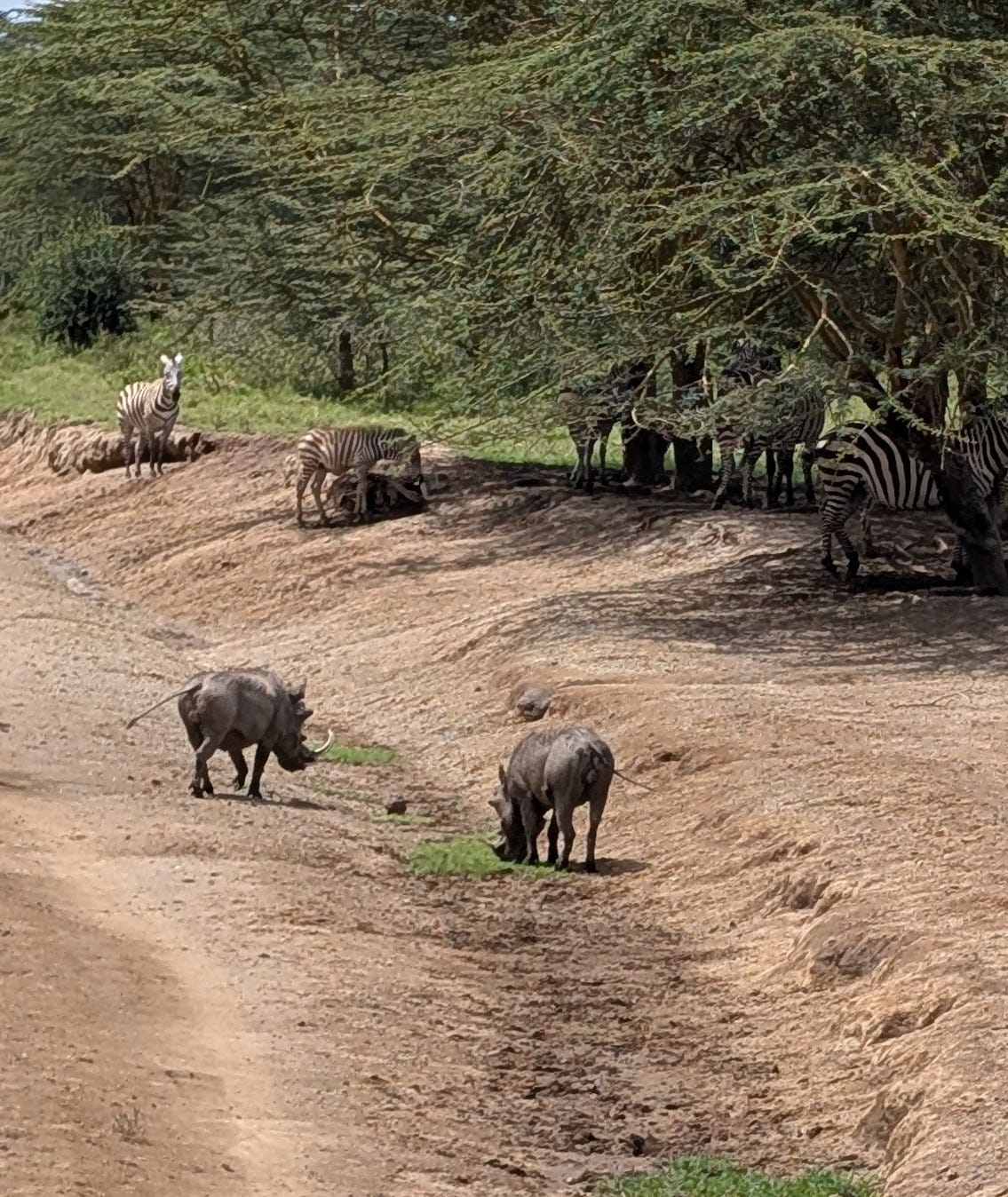
We also saw several warthogs, often hanging out with zebras.
(By the way, one of the staff at the lodge used the phrase “hakuna matata” entirely unironically, the first time I've heard that here.)
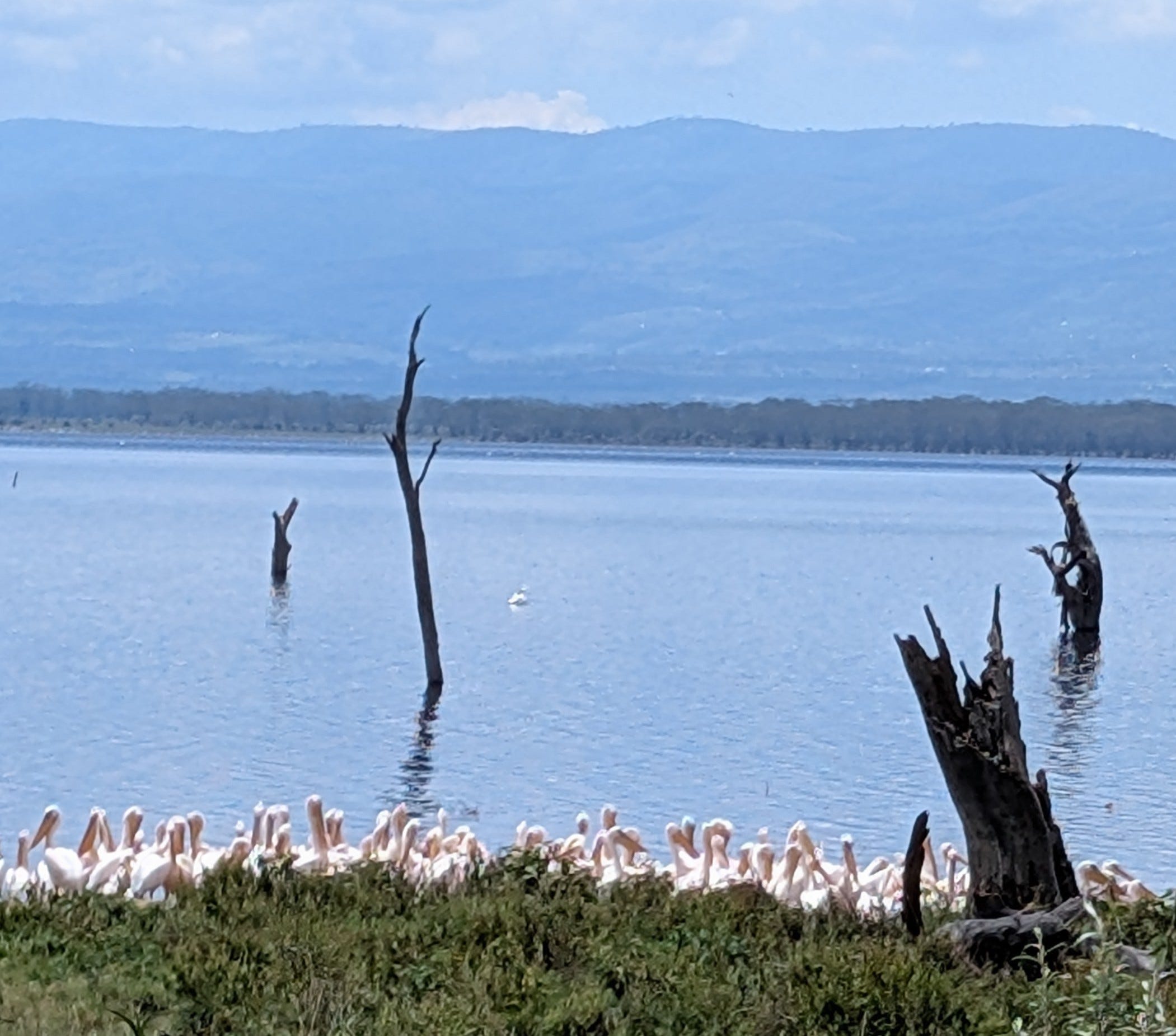
The lake itself is highly alkaline, so there is not a lot of life in it. It used to be famous for throngs of flamingos, but the rising water levels have made it too deep for them to wade. But there are enough fish to make it attractive to a veritable flotilla of pelicans.
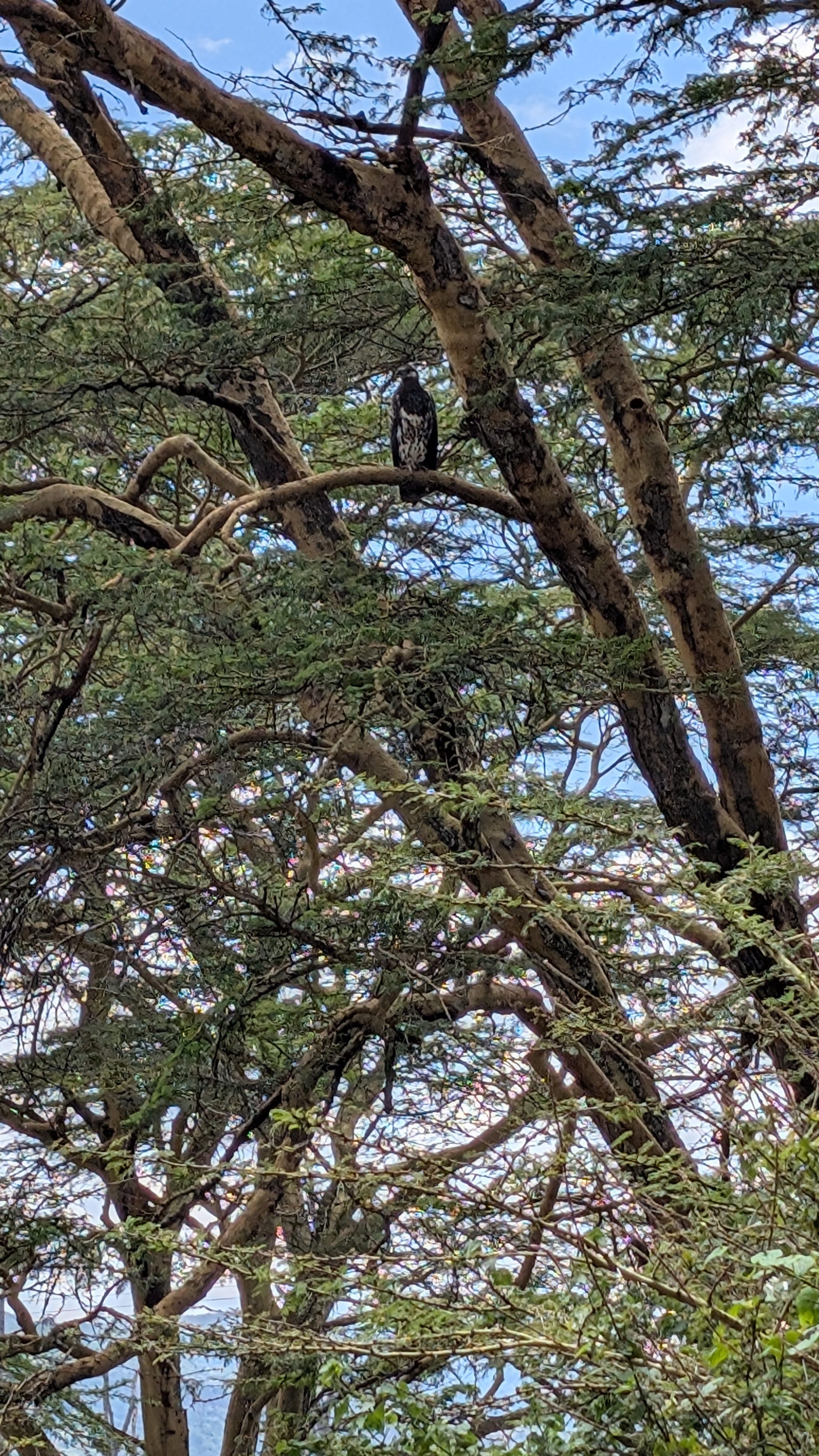
I was very proud to spot this bird of prey--possibly a juvenile martial eagle--without Tom pointing it out.
The absolute highlight of the day was seeing this black rhino.
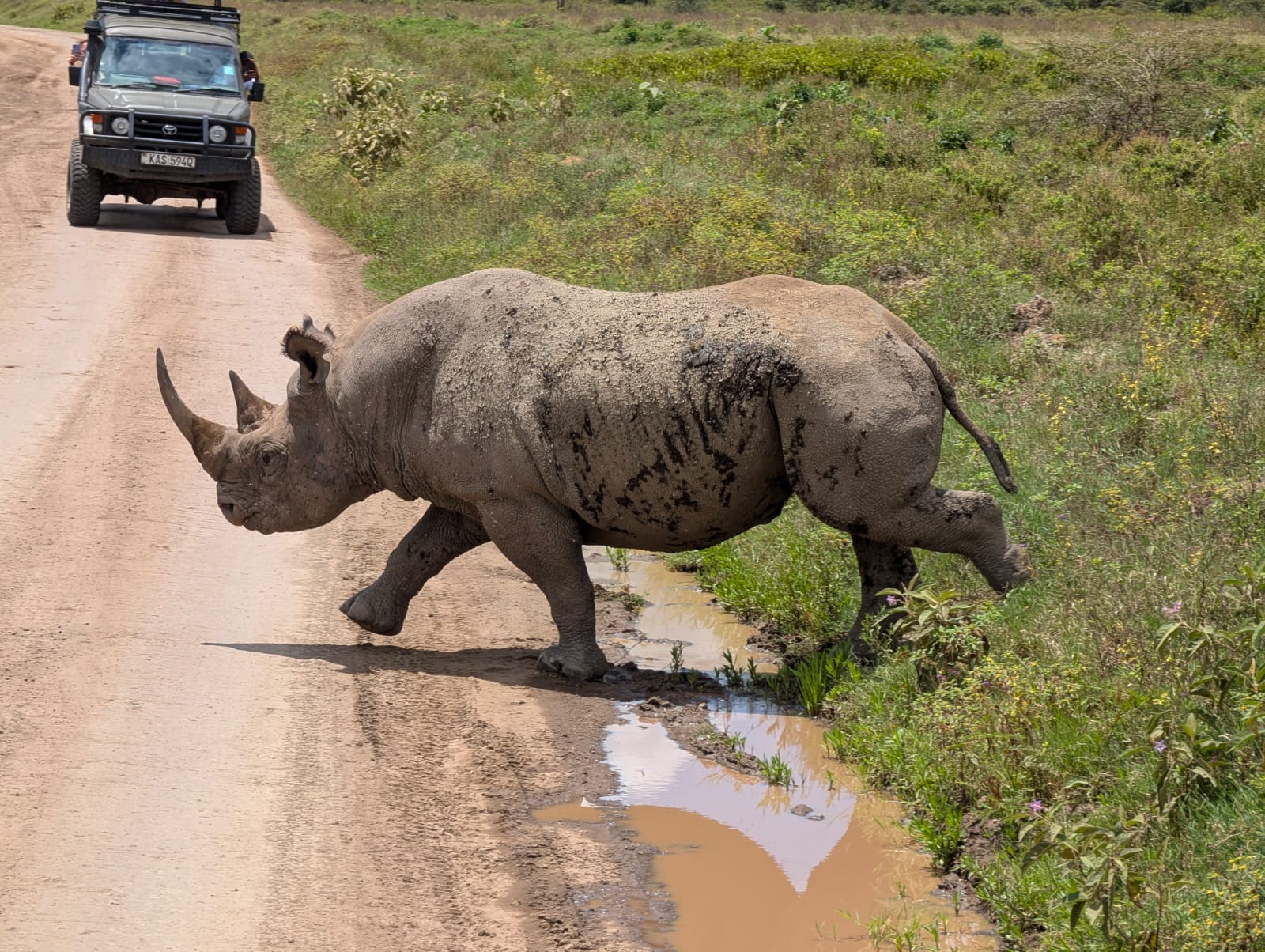
They are critically endangered, with only about 6500 remaining in the wild. We spotted this one quite far off and were thrilled when he ambled all the way across the field in our direction and trotted across the road right in front of our truck.
Not long after that we came across a large group of Rothschild giraffes.
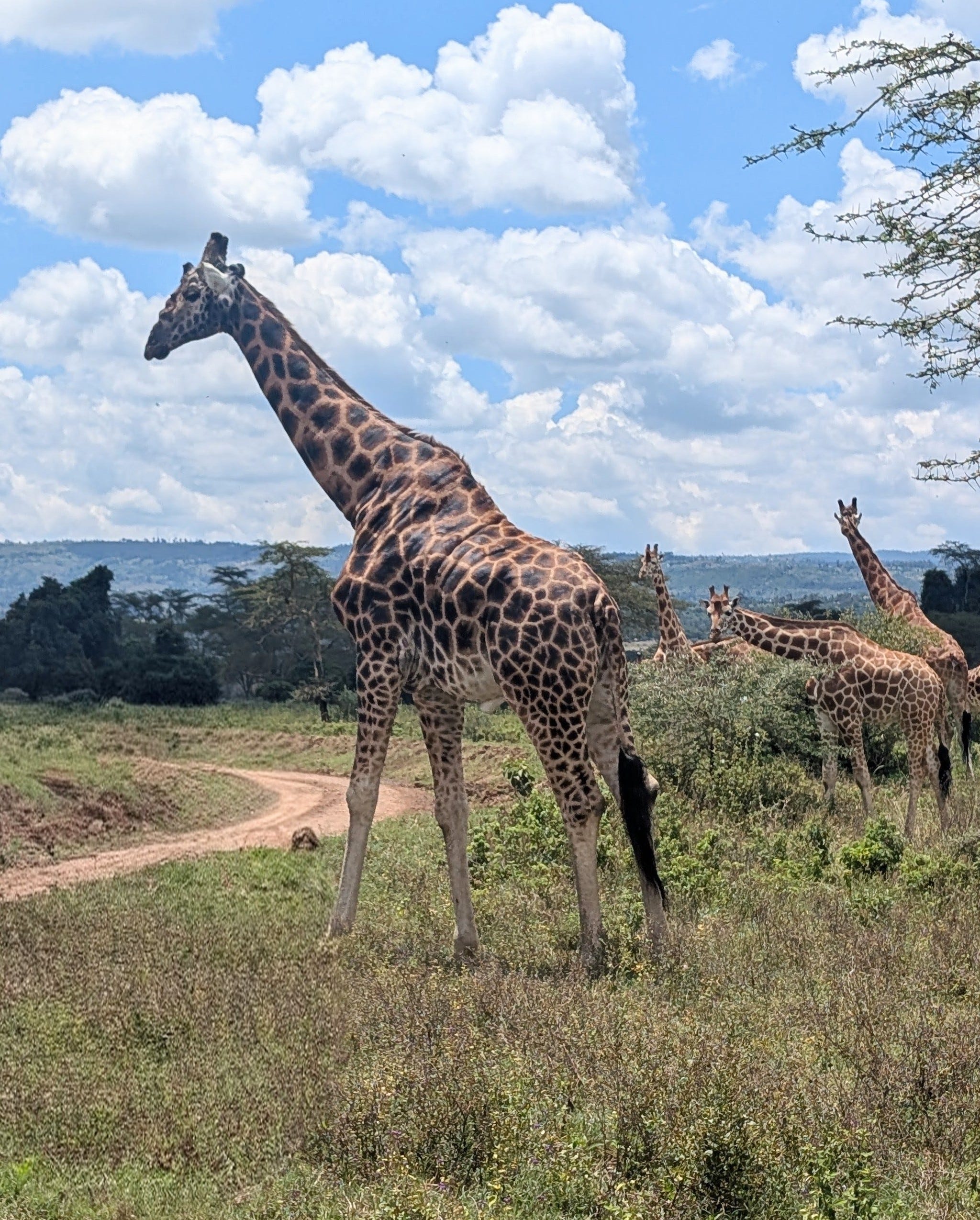
It is even rarer than the black rhino, with only 1400 estimated in the wild as of 2018. They have been introduced to the park fairly recently in an effort to sustain their population and we were very excited to see them.
After all of that we stopped for lunch at a picnic area near this impressive waterfall.
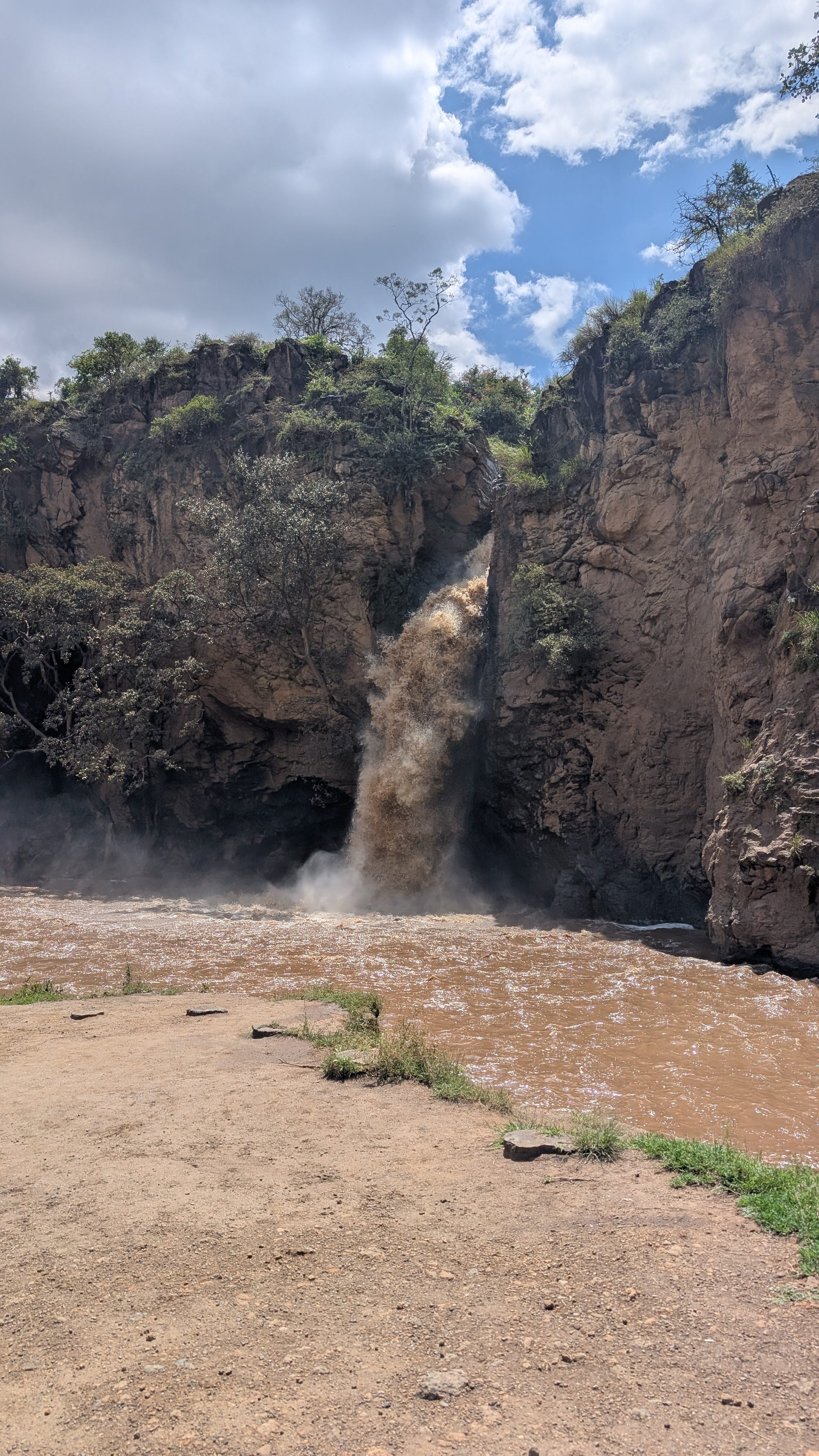
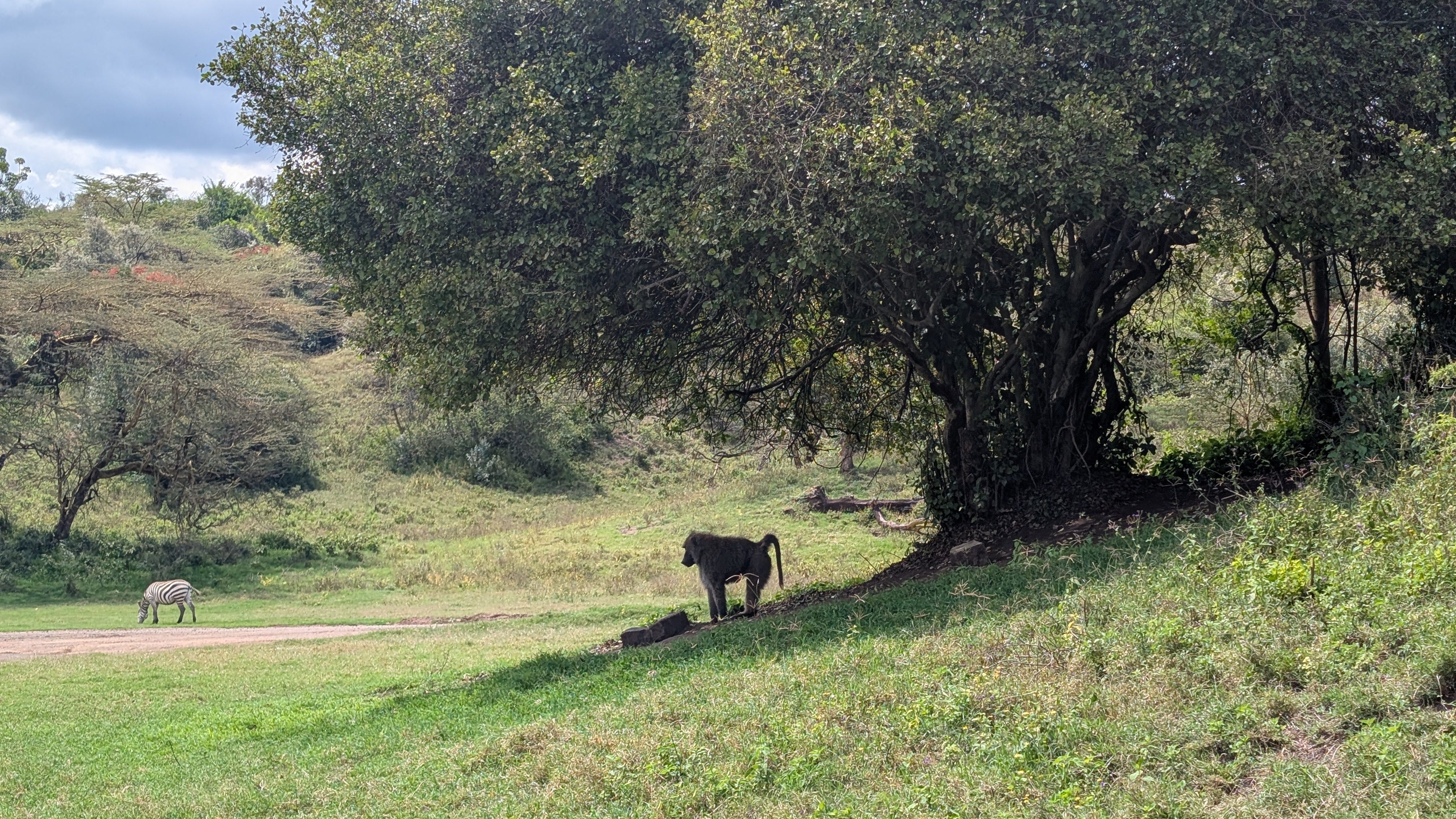
There were some very large baboons hanging around, but we kept our distance from each other.
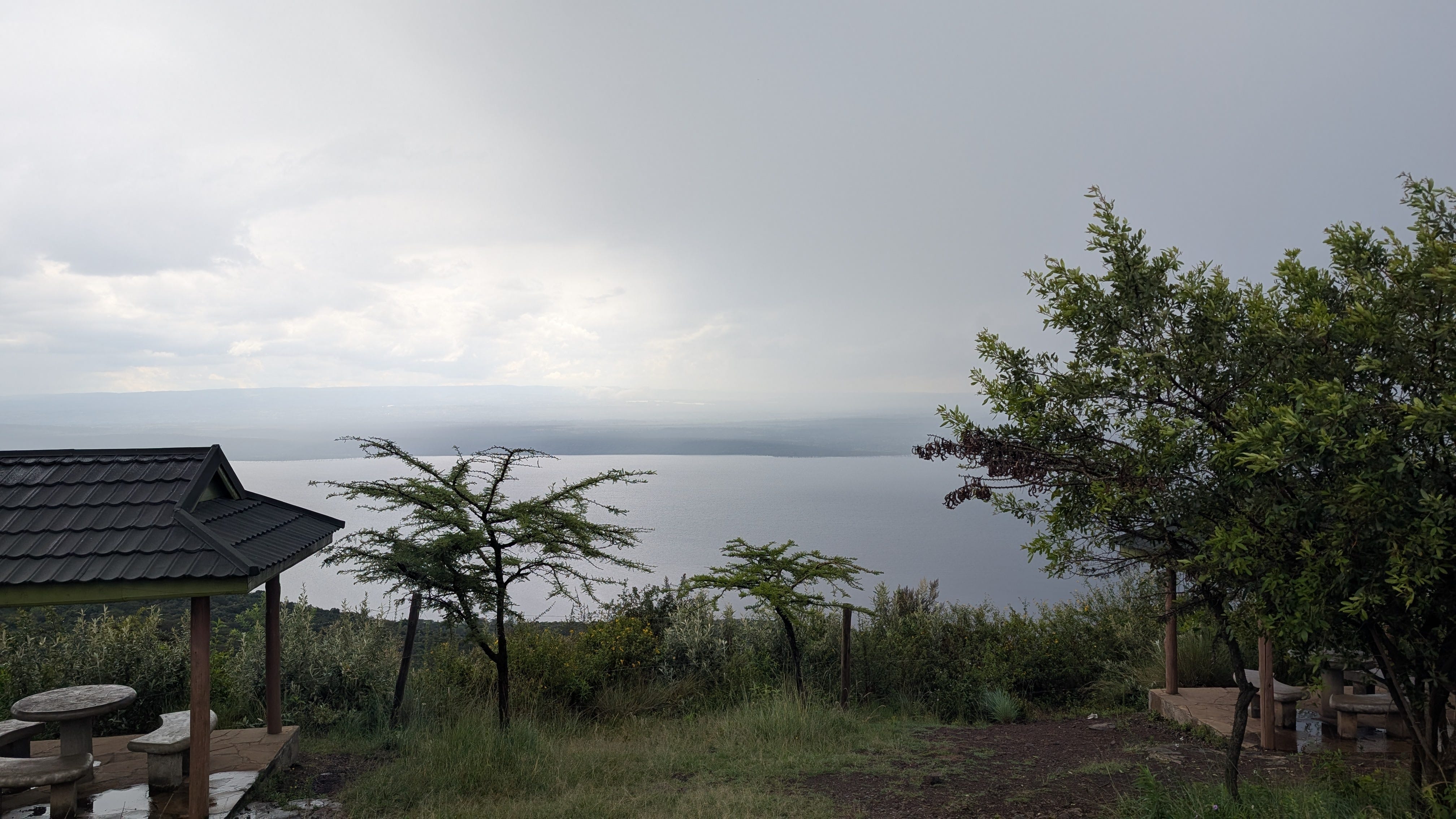
It was starting to cloud up, so we moved pretty steadily from there to complete our circle back to the gate. We did stop on Lion Hill and after carefully checking that there were no lions there today (Tom has seen whole prides hanging out there in the past) we got out to enjoy this panoramic view of the lake.
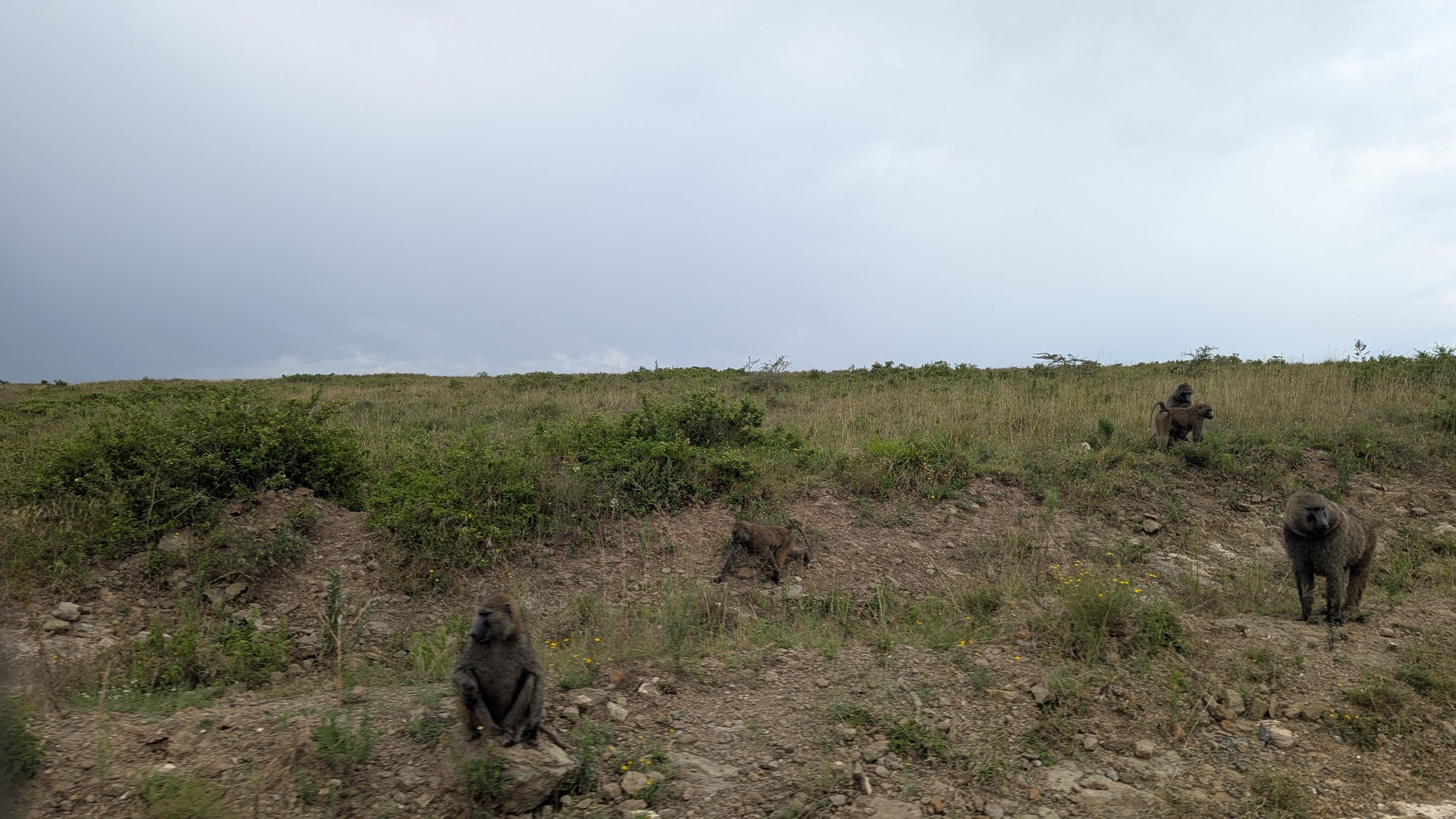
We passed more zebras, giraffes, and the ever-present impalas on our way out, as well as another troop of baboons.
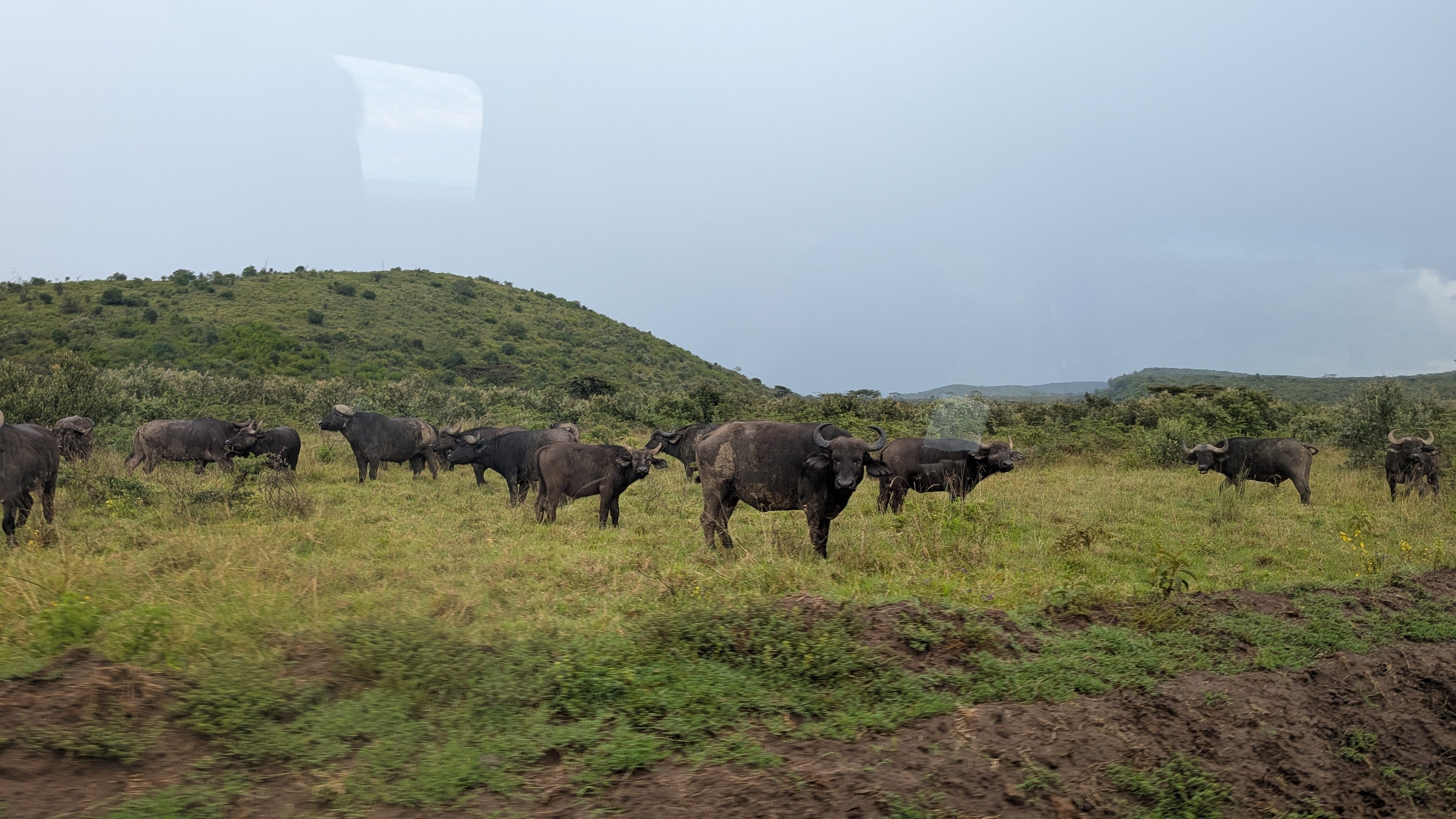
There was also a large herd of buffalo.
We exited the park around 3pm and left the rain behind as we drove back to Lake Naivasha Simba Lodge for our last night in Africa. What a thrilling conclusion to an epic first visit to this part of the world!
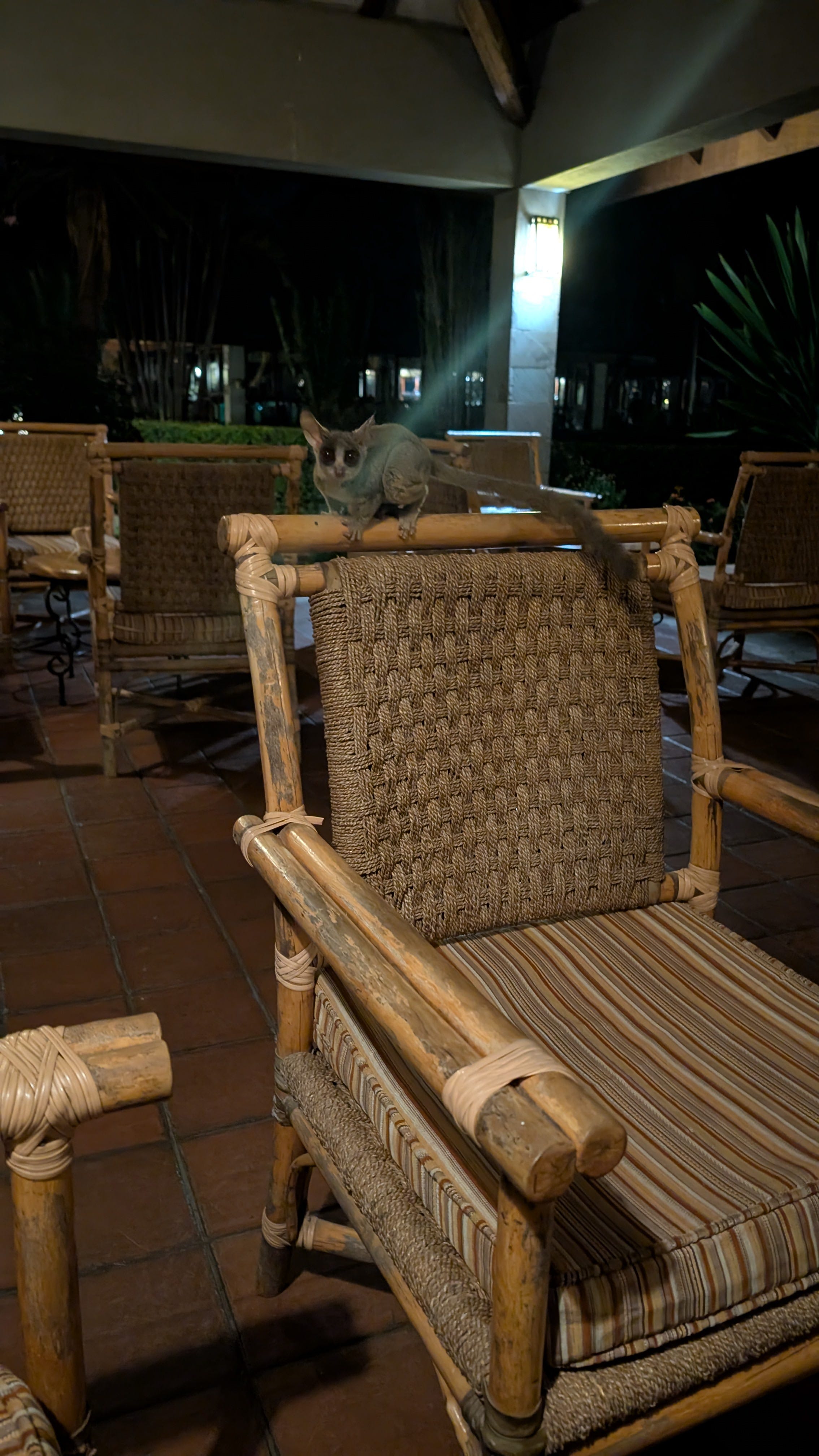
P.S. Just as I was proofreading this post, the bush baby I have seen around the patio jumped into the table in front of me and then onto the back of the chair next to mine. Hello and farewell, little friend!
Hungry hungry hippos! Love all the local zebras and yes that one is exceedingly cute. [I’ve now looked it up and apparently zebra (zeh-bra) is a more British plural but for Americans it’s correct to say zeeebraz. 🦓🦓 ]. On to another continent, with a bush baby seeing you off, fabulous!
Beautiful giraffes! Love the darker patterning. How could you tell that was a black rhino and not a grey one with black dirt! LOL! Oh, the bush baby looks adorable. Indeed, what a lovely end to these adventures. Driving there sounds like Manila! So glad you are in capable hands.