
Temples to Time

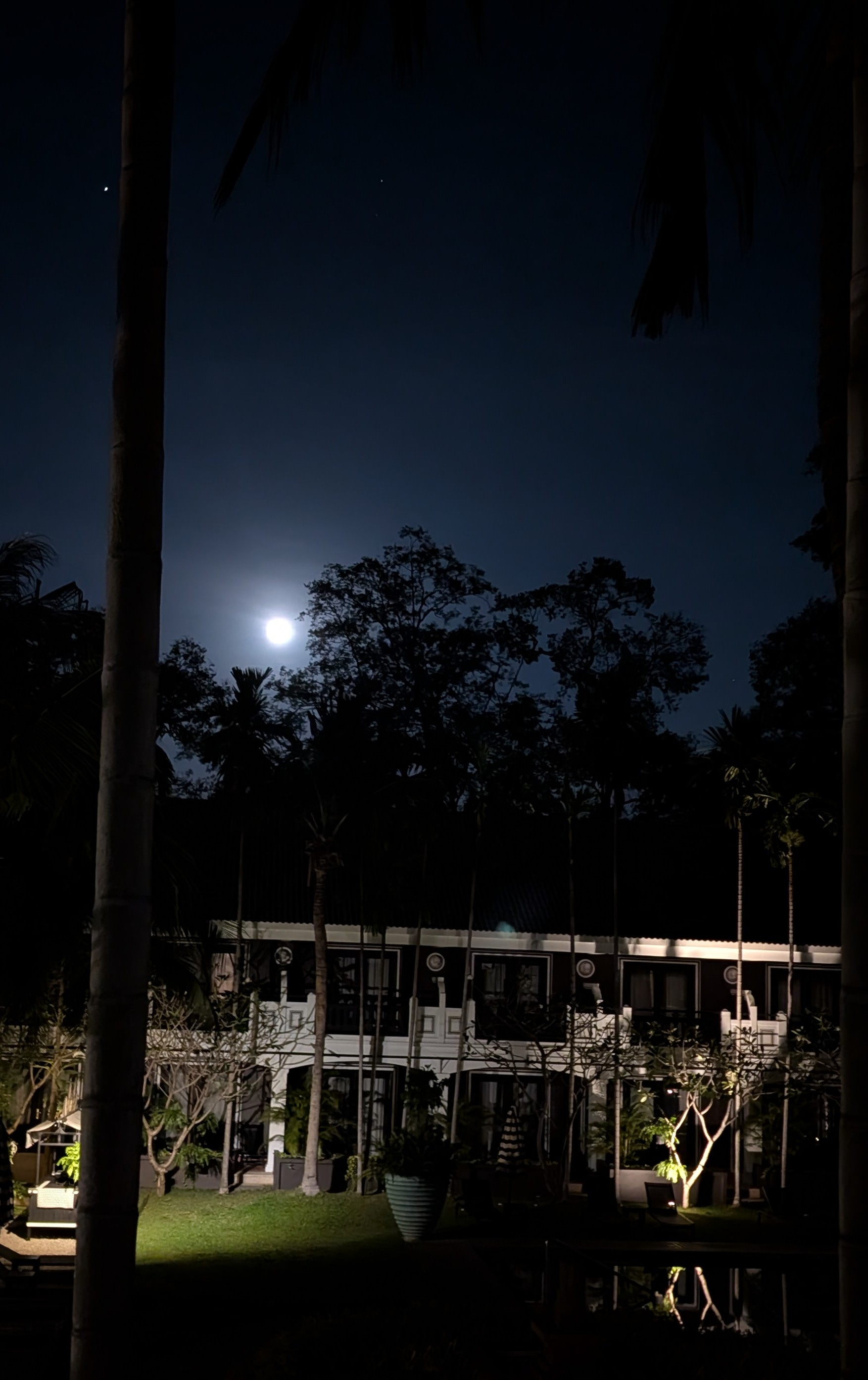
The moon was setting as we headed to the van at 5:30 am. We were all sleepy and a bit grumpy, but some things really are worth getting up for.
Before the sun was really up we were at Ta Prohm with no one else in sight.
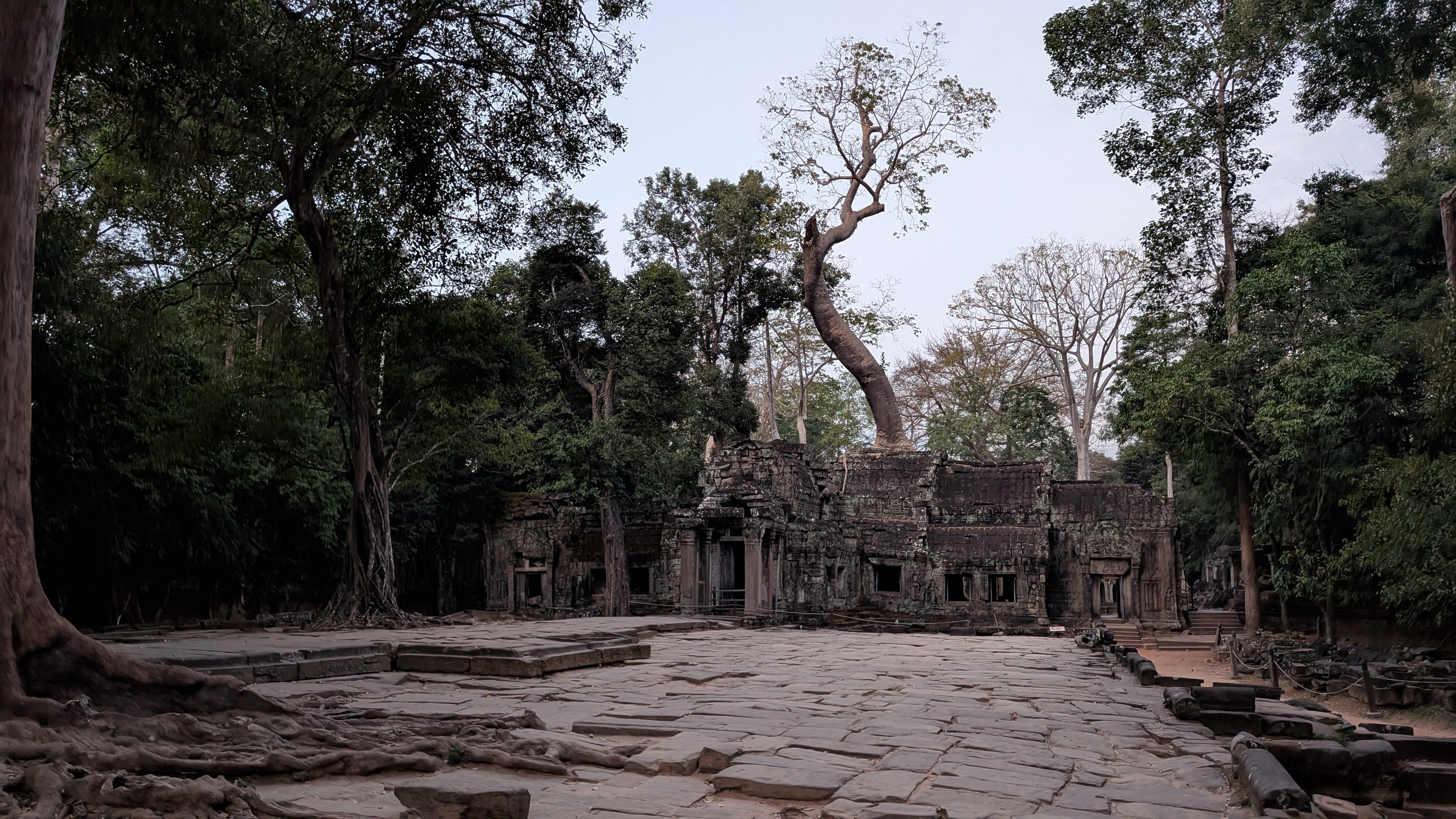
Ta Prohm was constructed in the late 12th century as a Mahayana Buddhist monastery dedicated to the king's mother. While some clearance and restoration had been done, the massive spung trees and strangler figs that have both destroyed and supported the ruins have been allowed to remain.
It was used as one of the settings in the original Tomb Raider movie and Nimol spoke gratefully about celebrities who have come here and used their fame to draw attention to Cambodia and convince more people to visit. Their recovery as a nation depends on outside support. The tourism industry still has not regained pre-pandemic levels and they are very eager for more visitors.
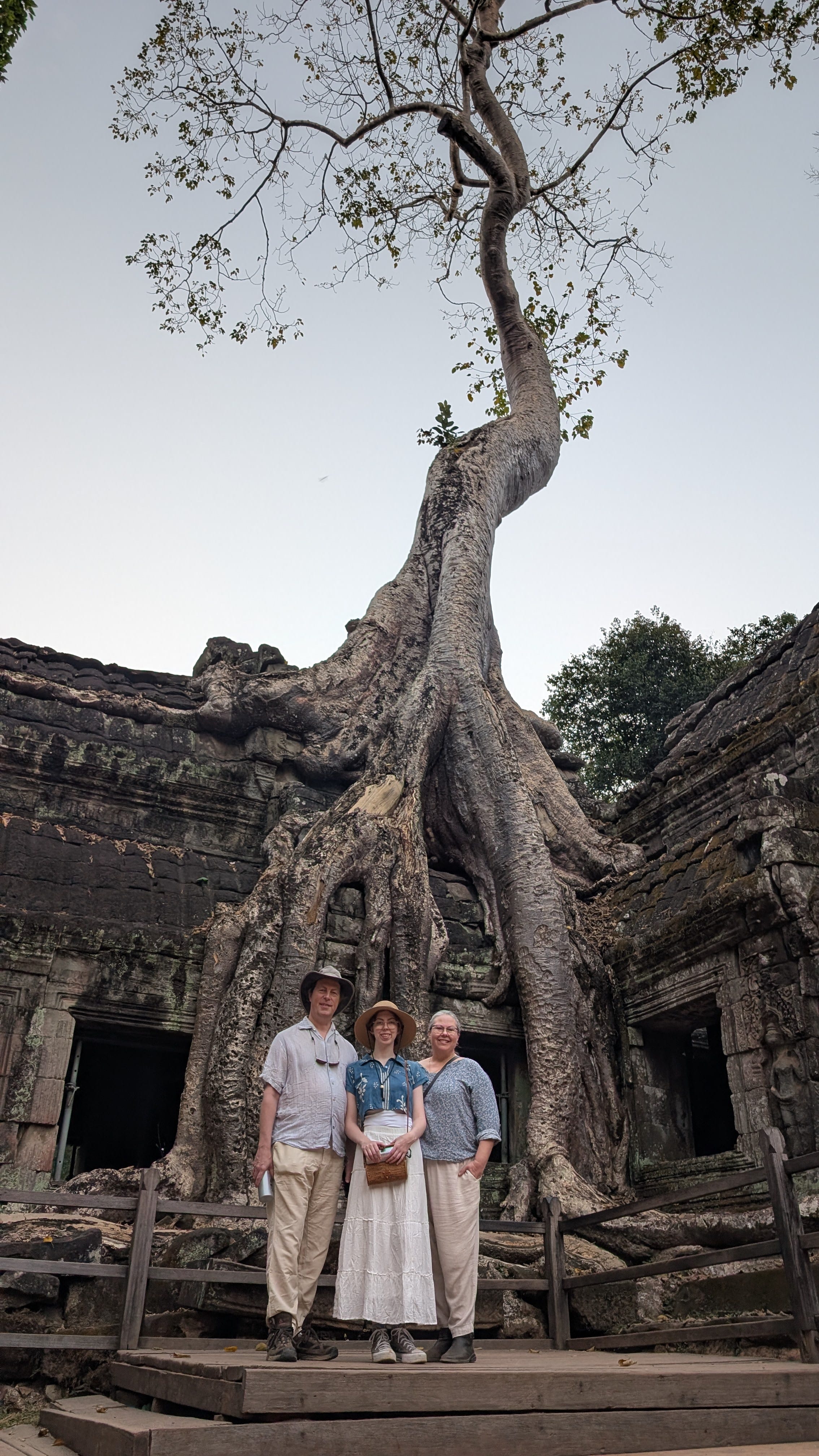
We were able to wander through the site at our own pace, while Nimol talked about the history of Angkor as the capital of the Khmer Empire, the back and forth tides of Hinduism and Buddhism to which the ruins bear witness, and the ongoing process of careful presentation and restoration.
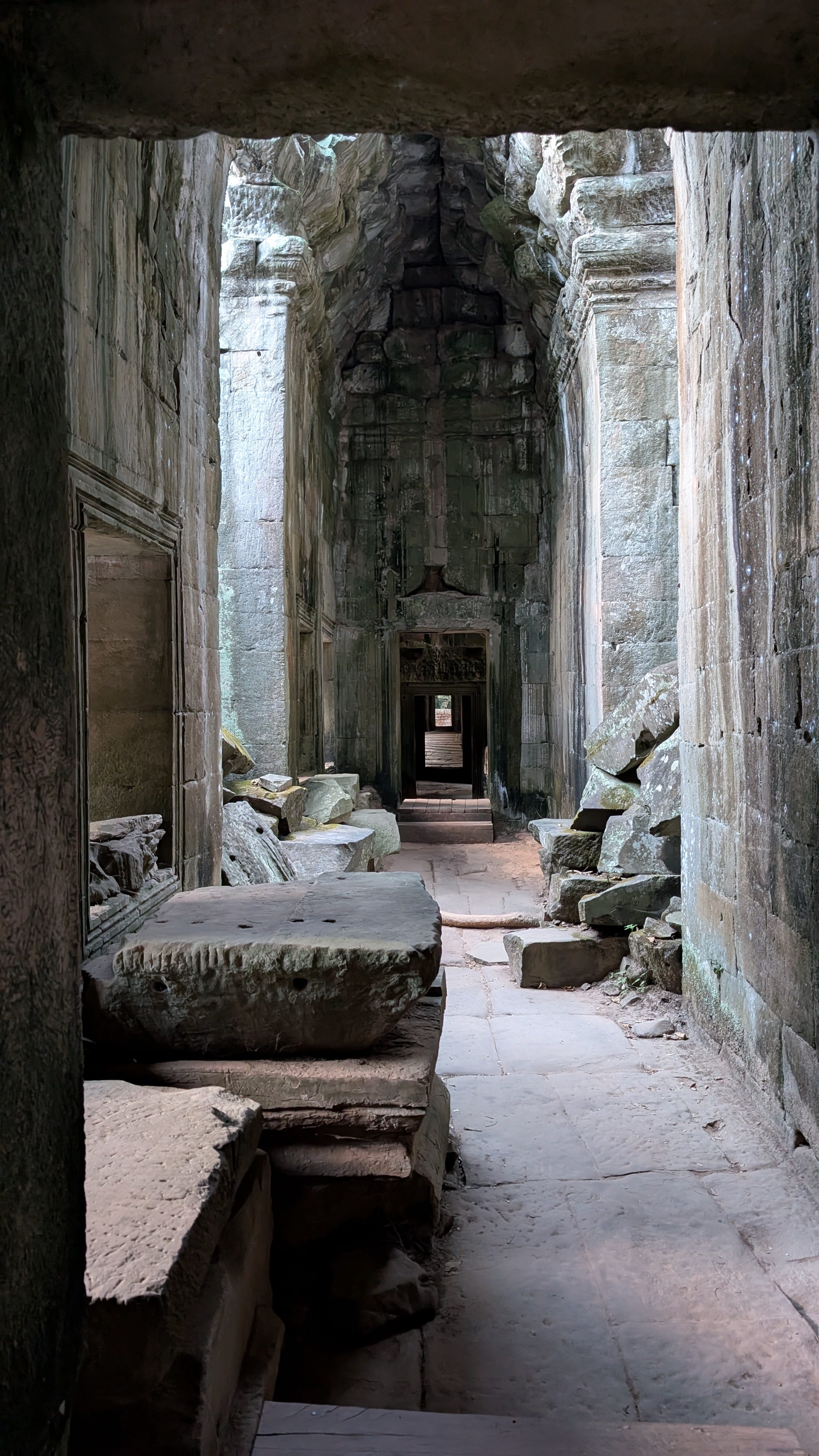
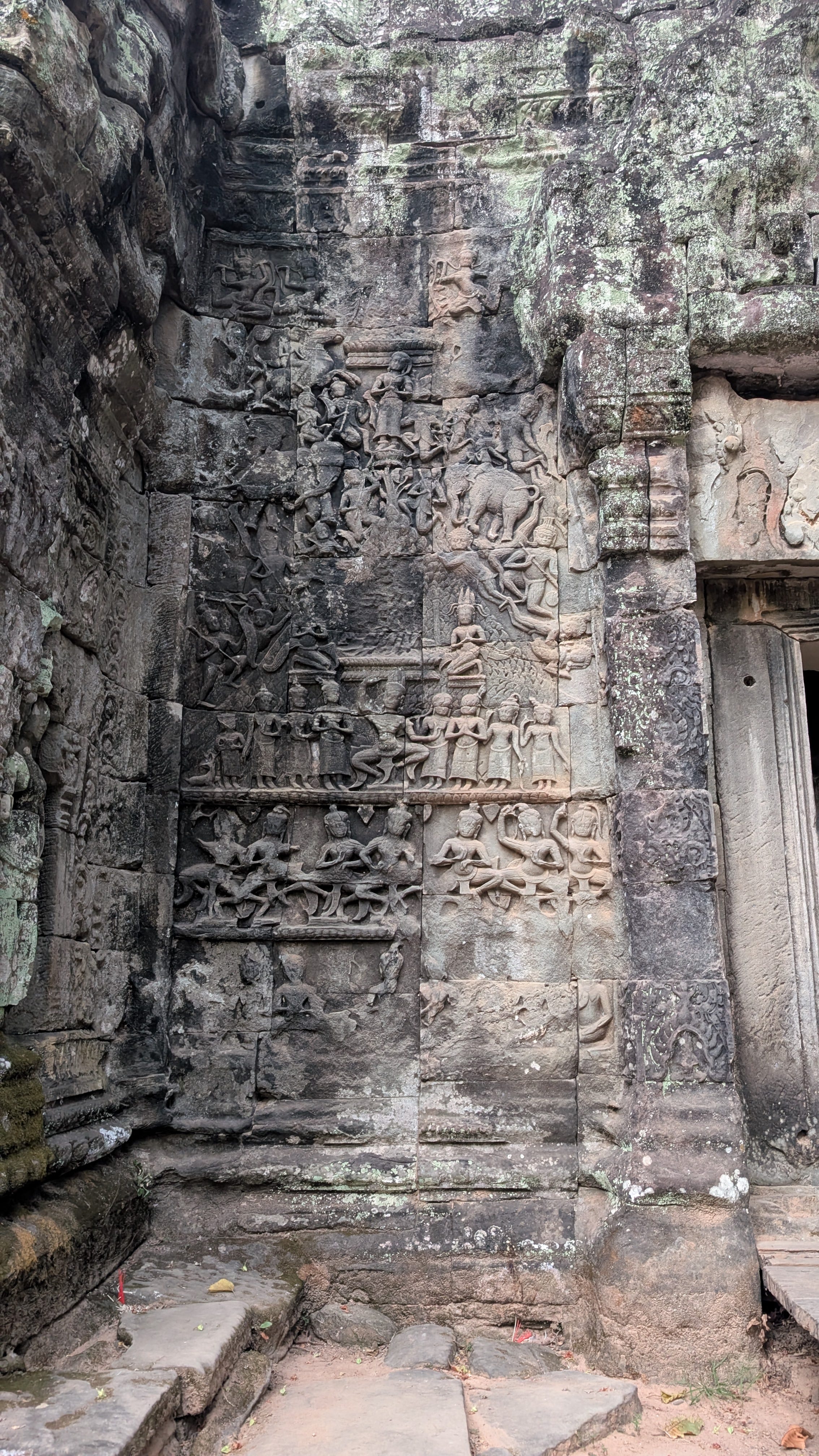
It was fascinating to see the remnants of the detailed carvings that once covered the structures. Once again we are seeing how encounters between cultures--in this case Hindu and Khmer--have been encoded in the architecture.
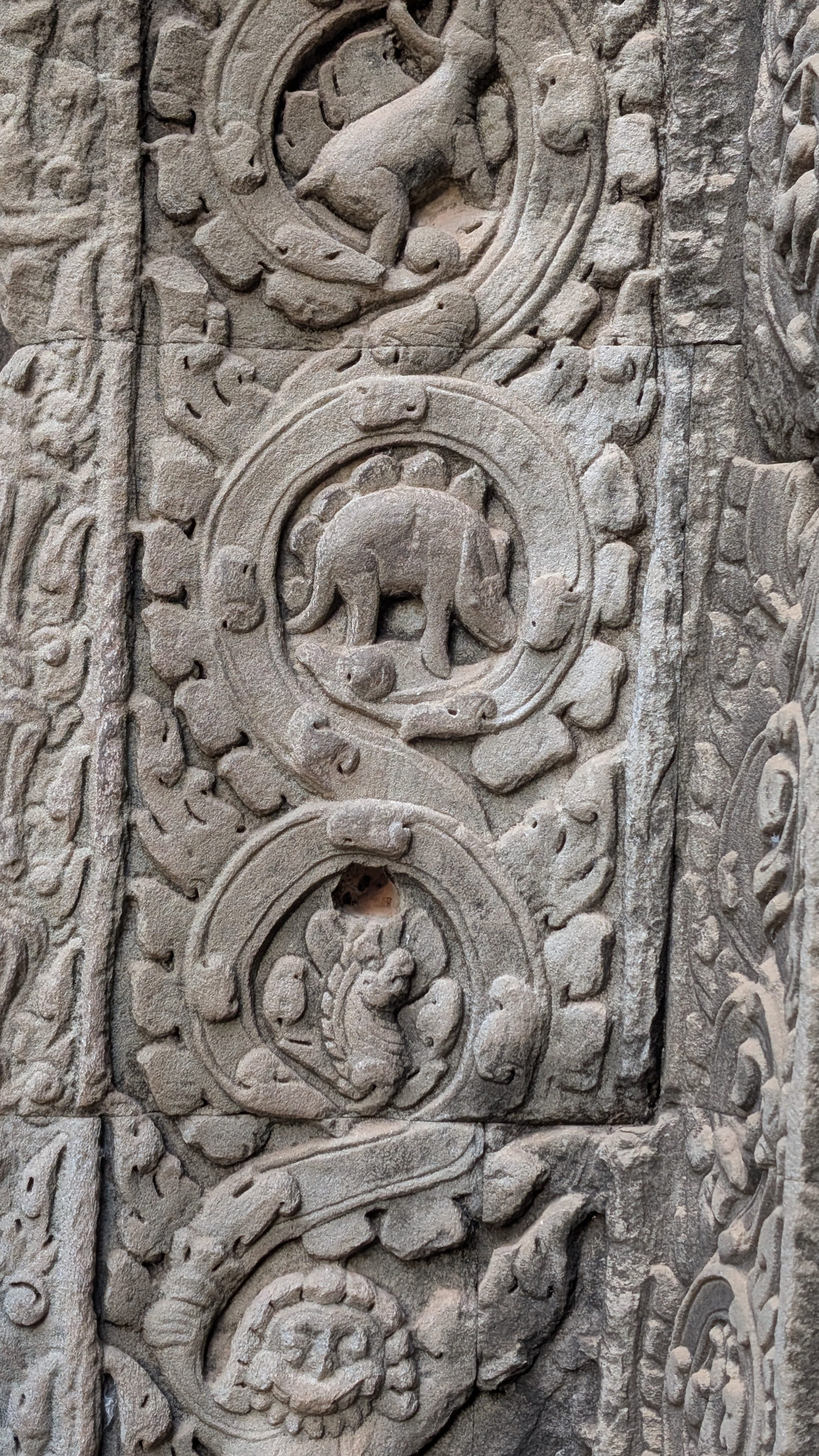
This “stegosaurus” is one of the most popular images at Ta Prohm.
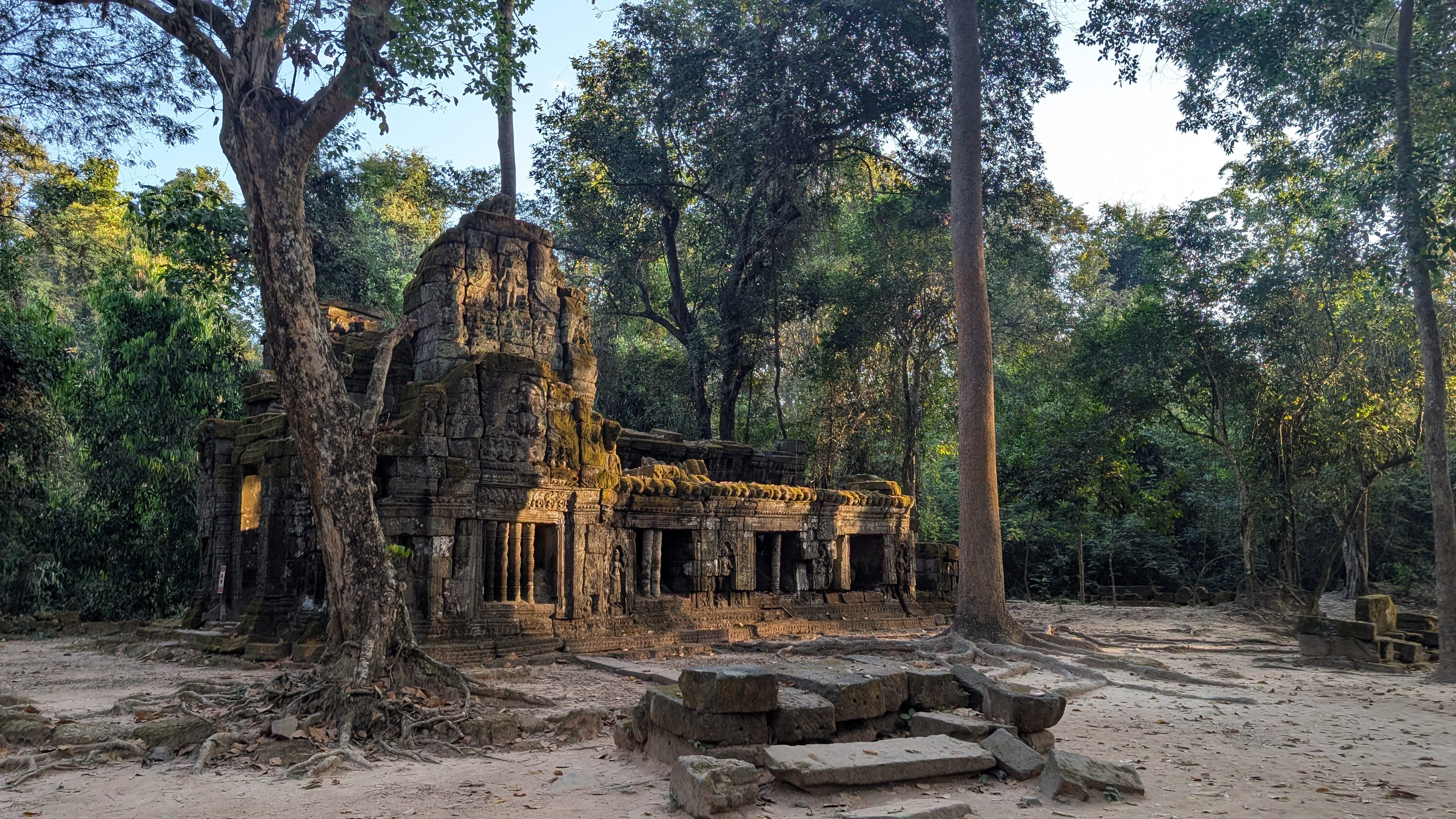
After that magical experience, we left the complex as the morning light was turning gold and large groups of tourists were arriving.
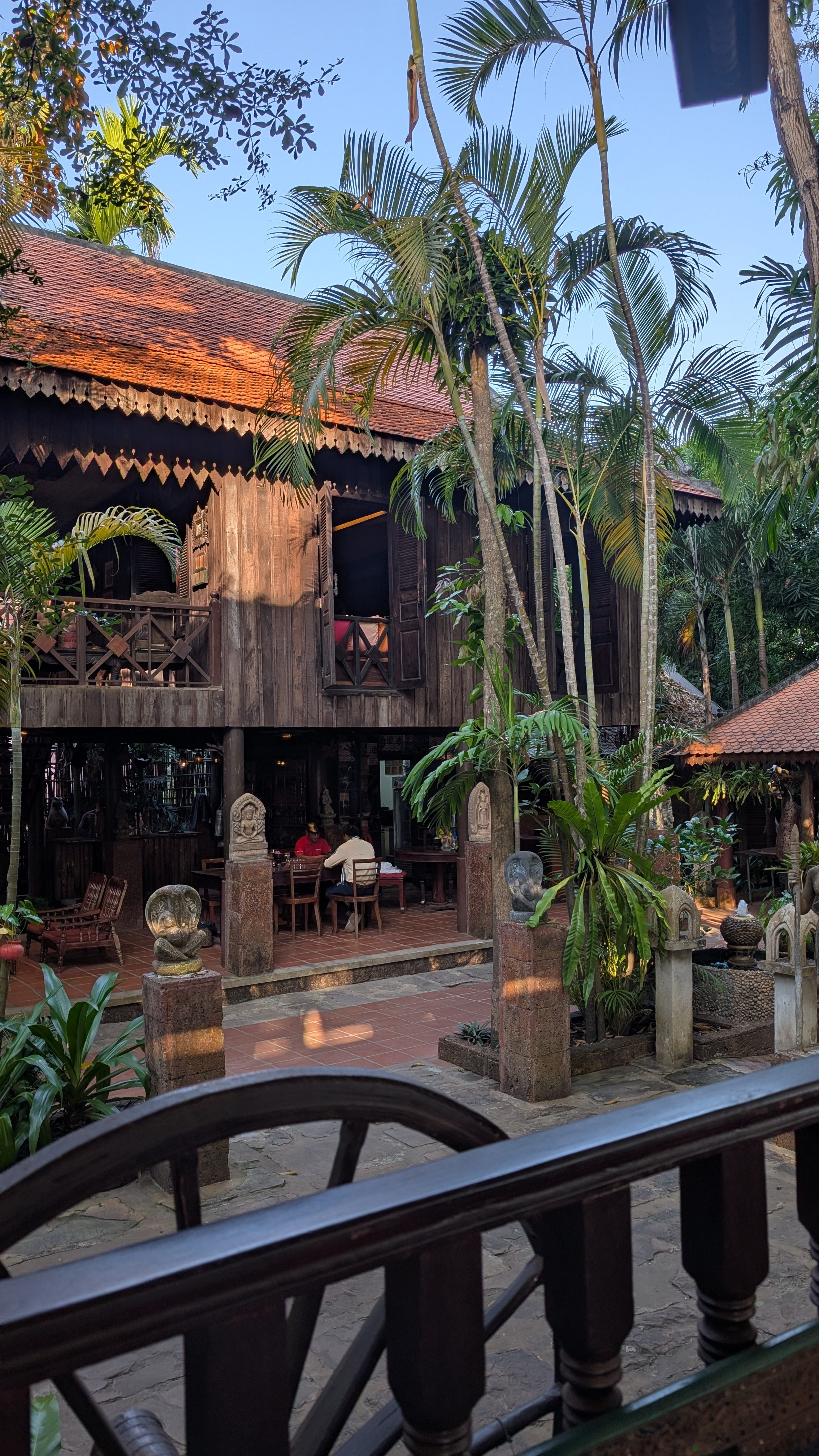
For breakfast, Nimol took us to a lovely historic home, built of teakwood and surrounded by gardens and sculptures.
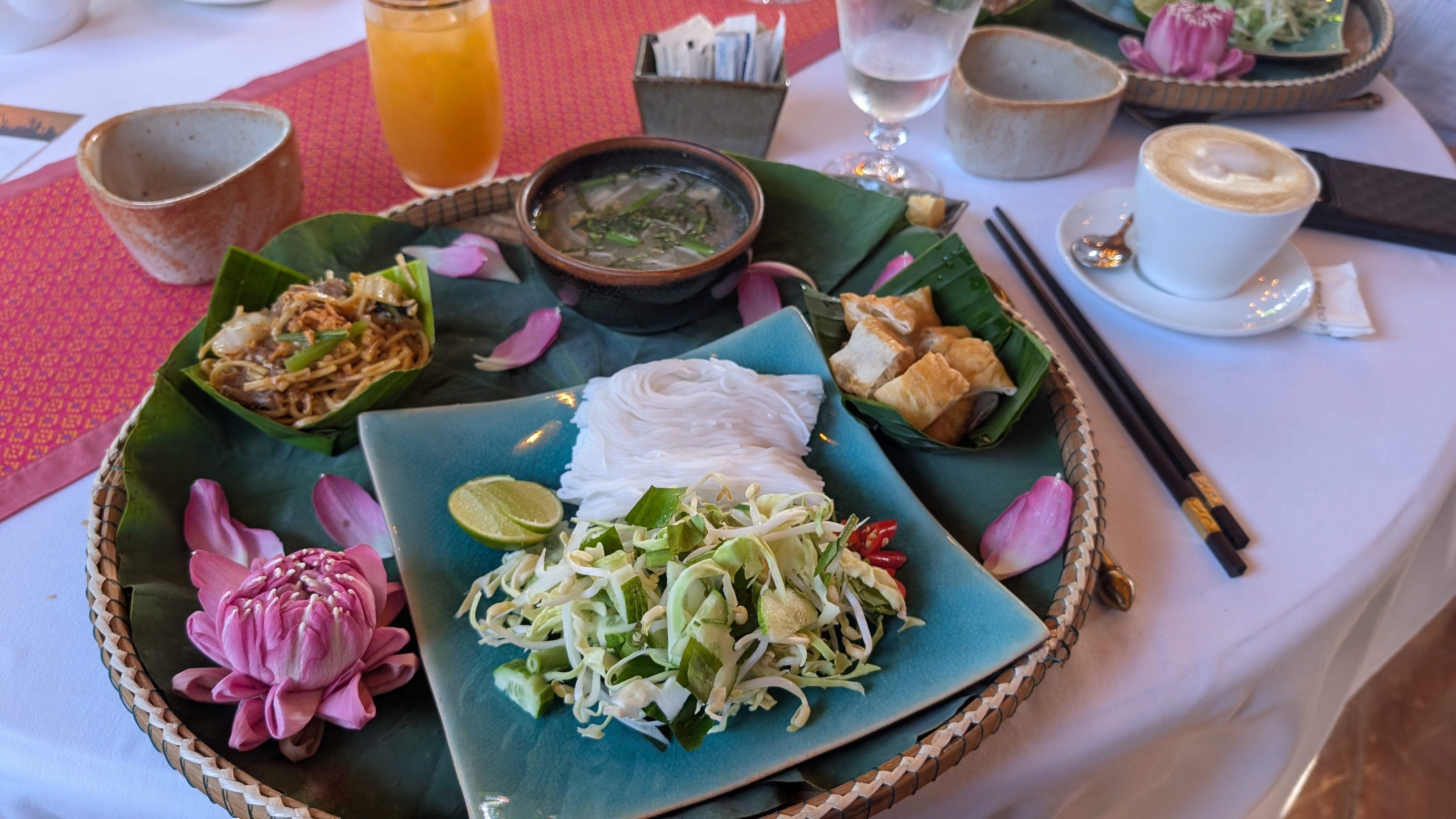
After starting us off with excellent croissants and cappuccinos, they served us a sampler of Cambodian breakfast foods including chicken broth with mushrooms and greens along with tiny pieces of baguette to soak in it, stir-fried egg noodles with beef, and rice noodles and cabbage to eat with a soup made of fish paste and turmeric.
Well fortified, we headed for Angkor Thom.
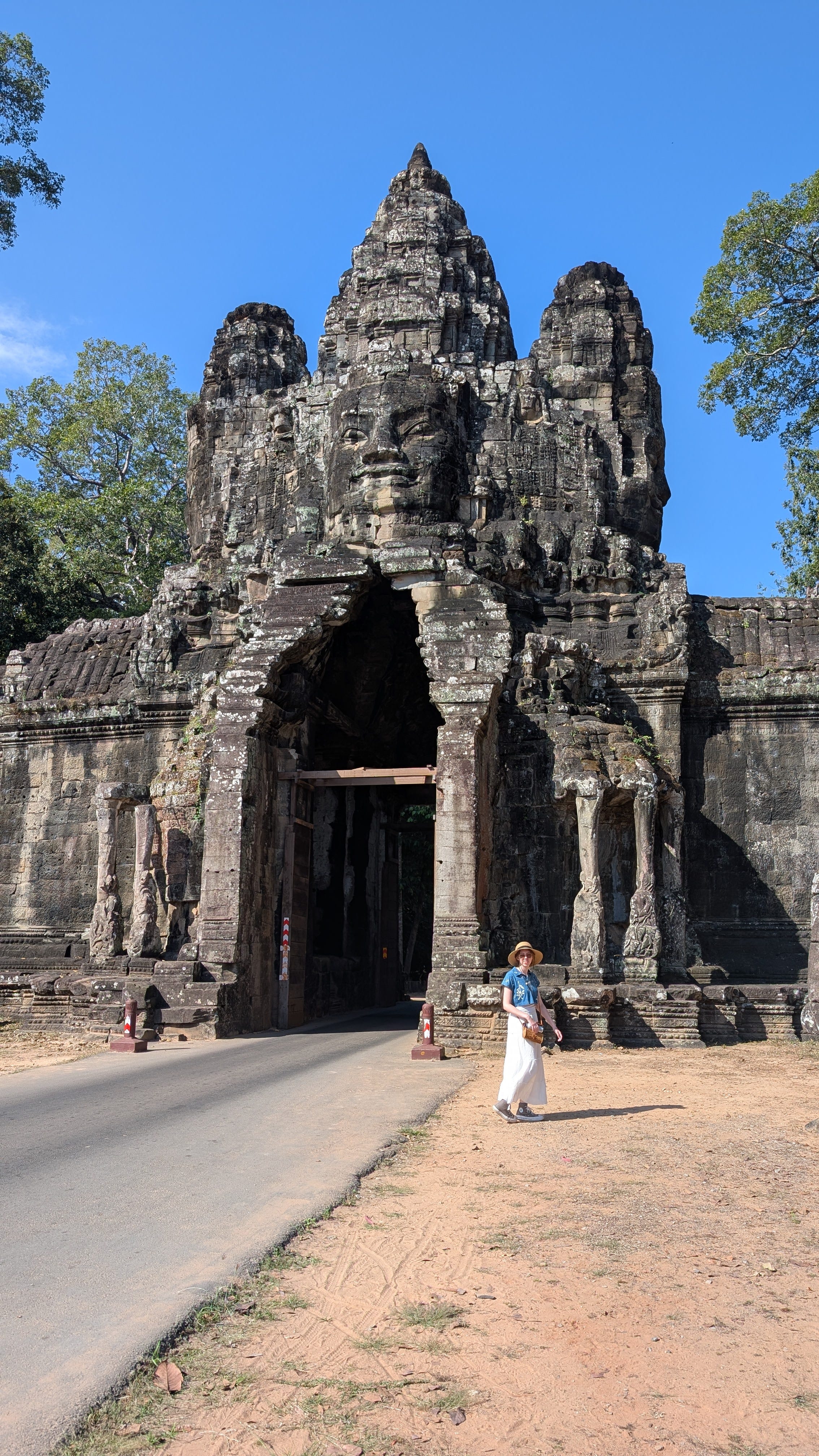
This was once a vast city, surrounded by a moat and massive walls. It held as many as 750,000 inhabitants inside and more in the surrounding area, making it the largest city in the world in its heyday in the late 12th century.
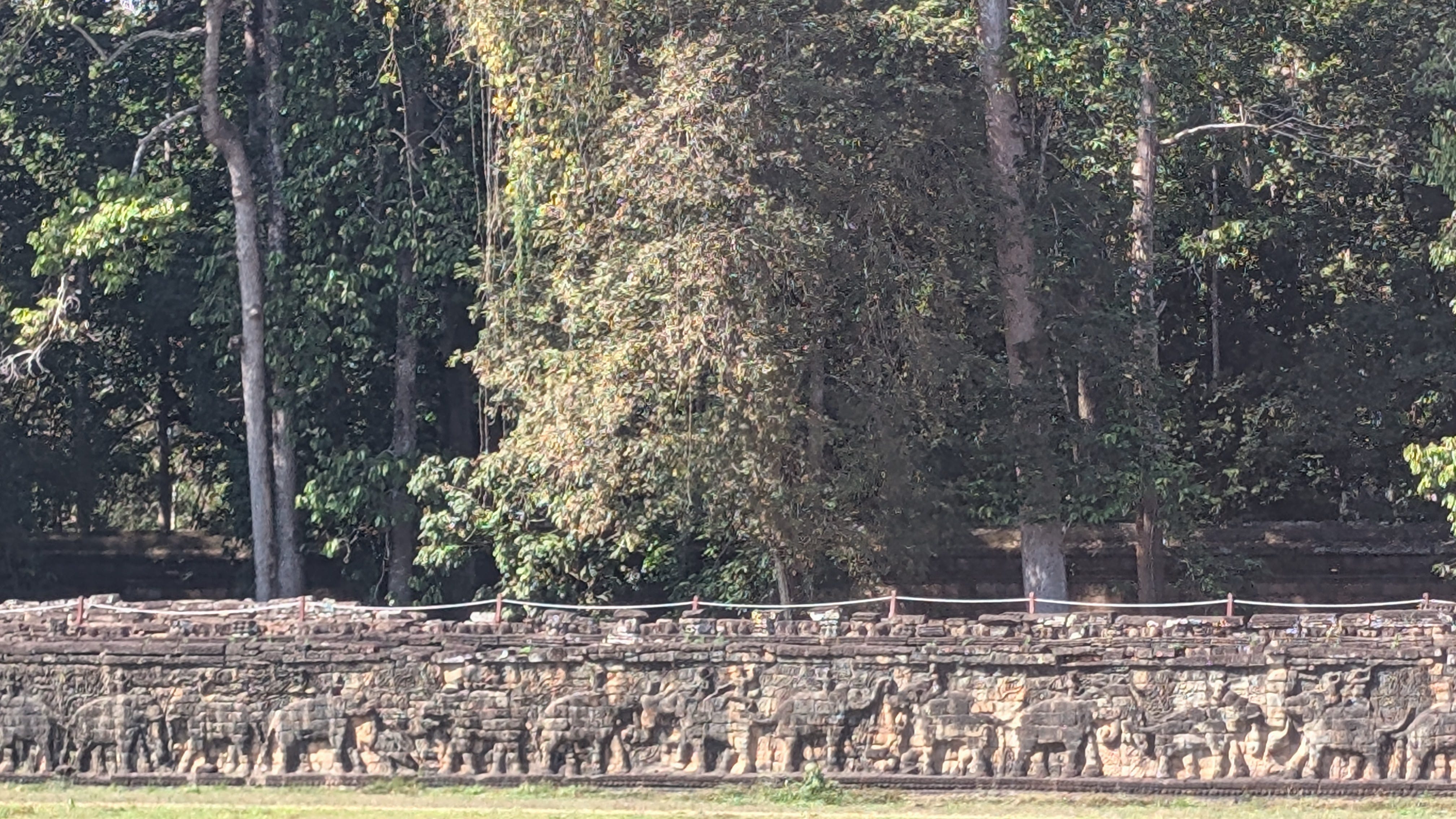
The Terrace of Elephants is 350 meters long and served as a base for a large audience hall and as a walkway from which the king could review his massive army.
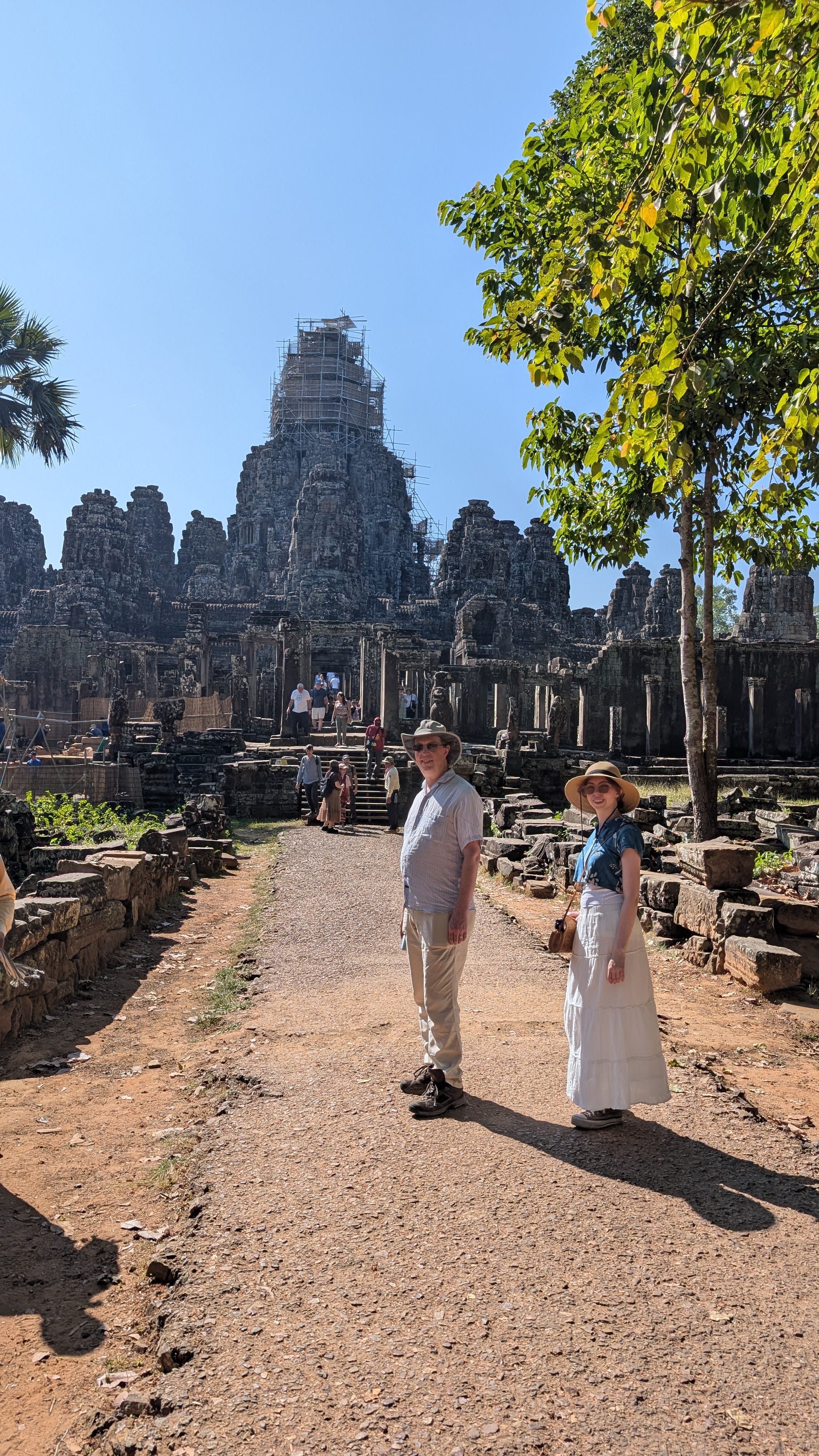
The Bayon was the central temple of Angkor Thom.
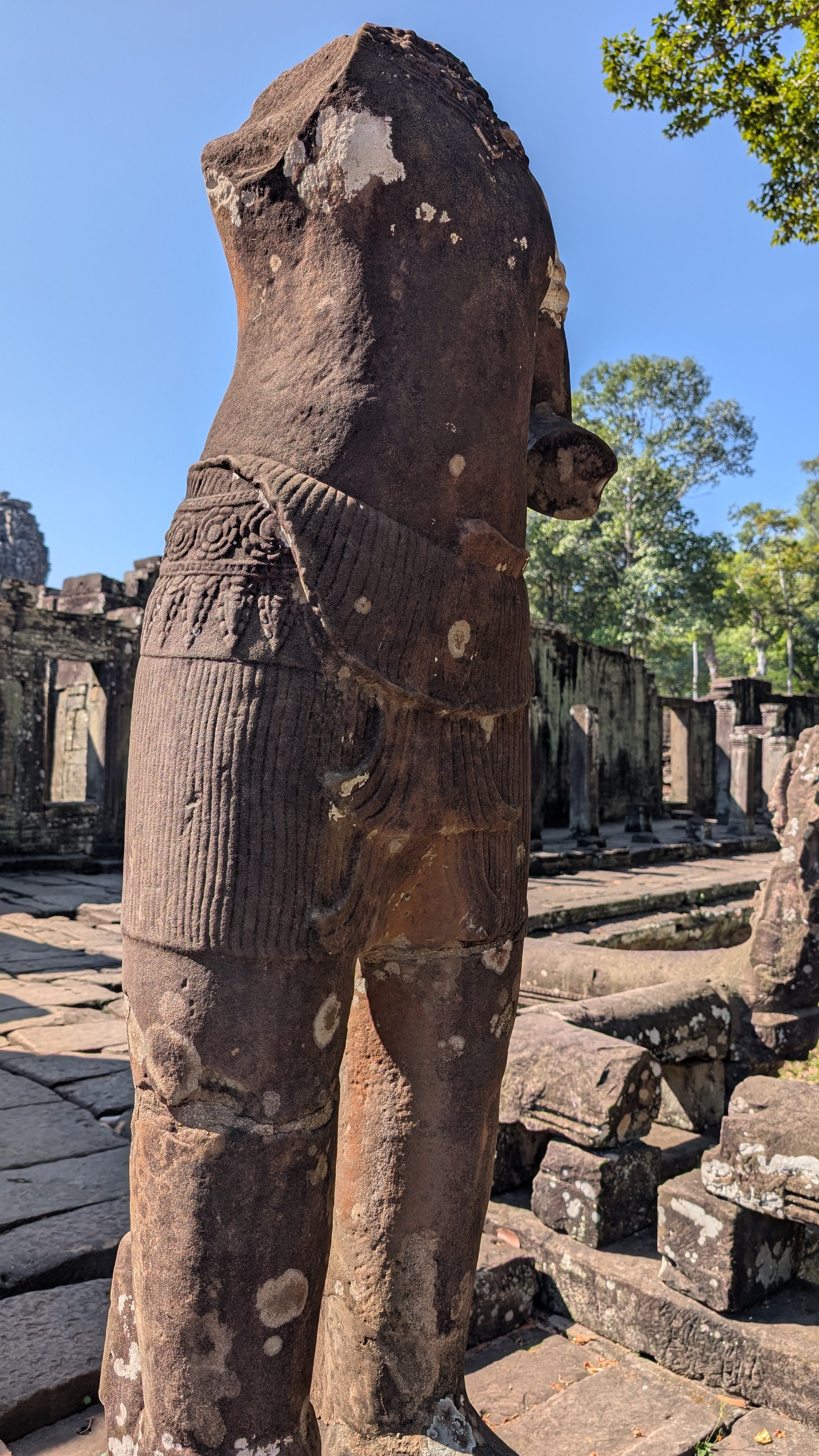
This is one of the few free-standing sculptures remaining in the temple complex. The pleats and details of the figure’s wrap give it a sense of life and movement that I really enjoy.
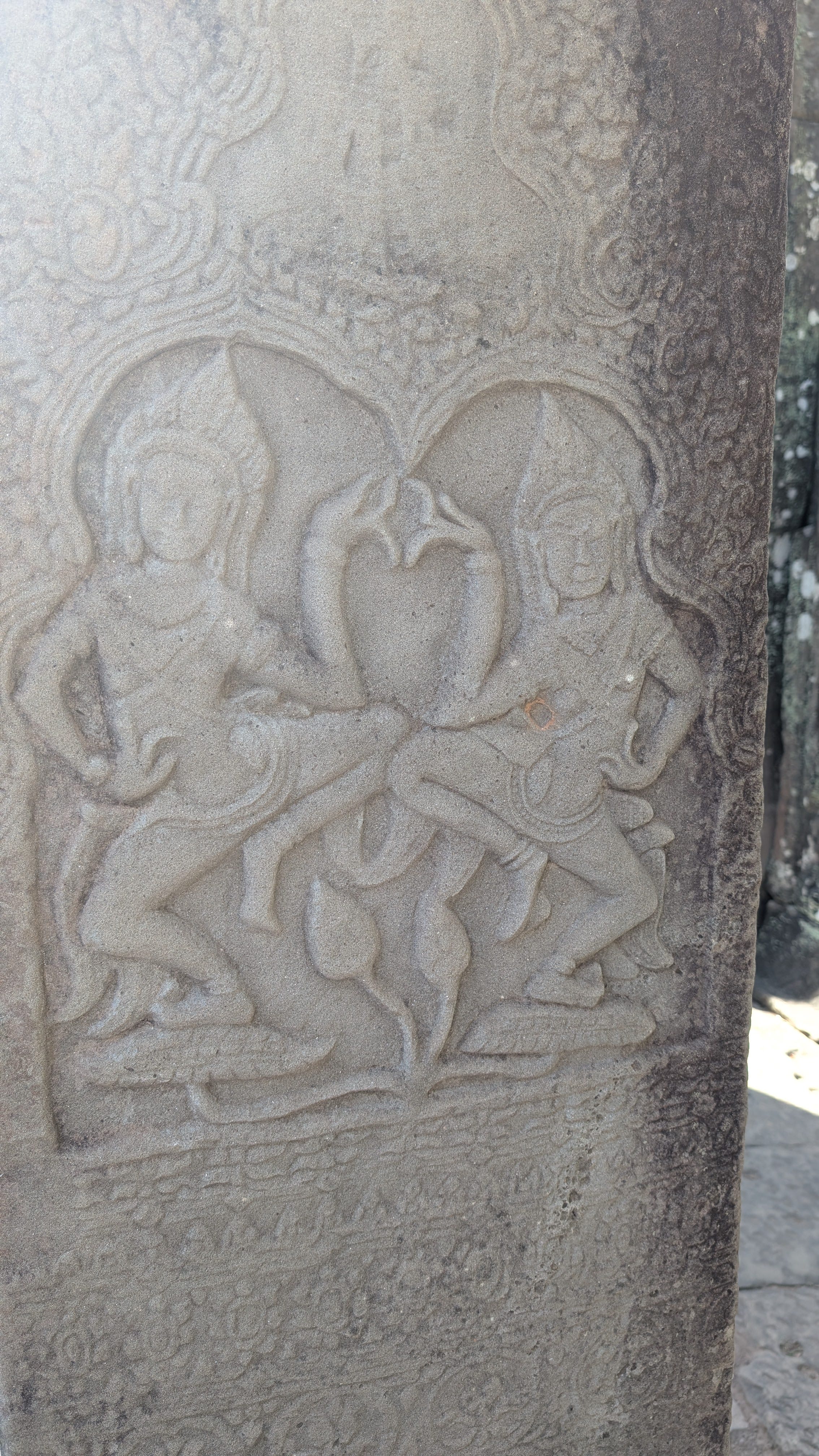
Many of the elaborate carvings have been used as references by traditional schools of dance.
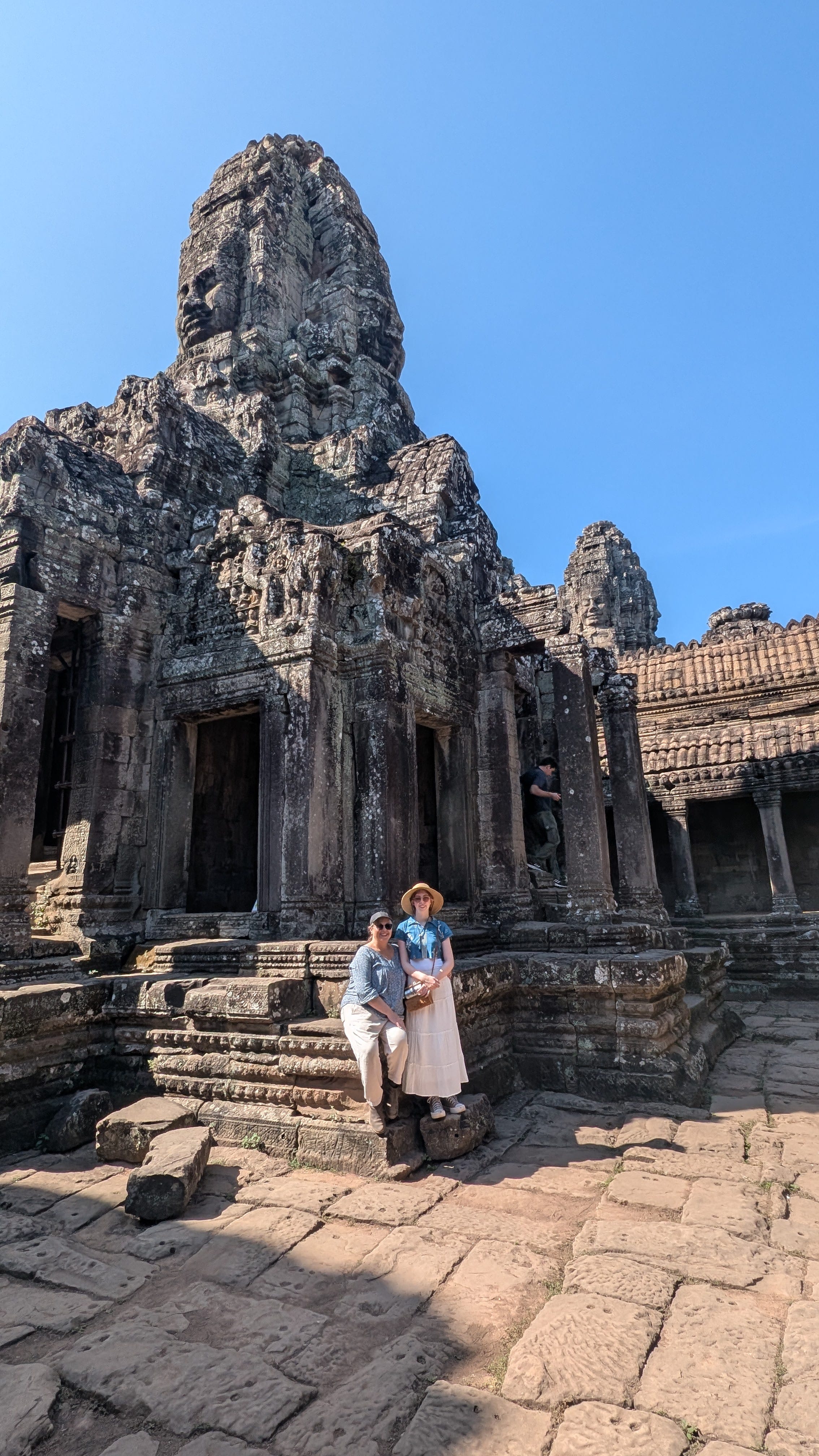
The most distinctive feature of the complex are the large heads on the towers. While experts debate exactly which religious symbolism they were designed to represent, most agree that they probably depict King Jayavarman VII, during whose reign the temple was constructed.
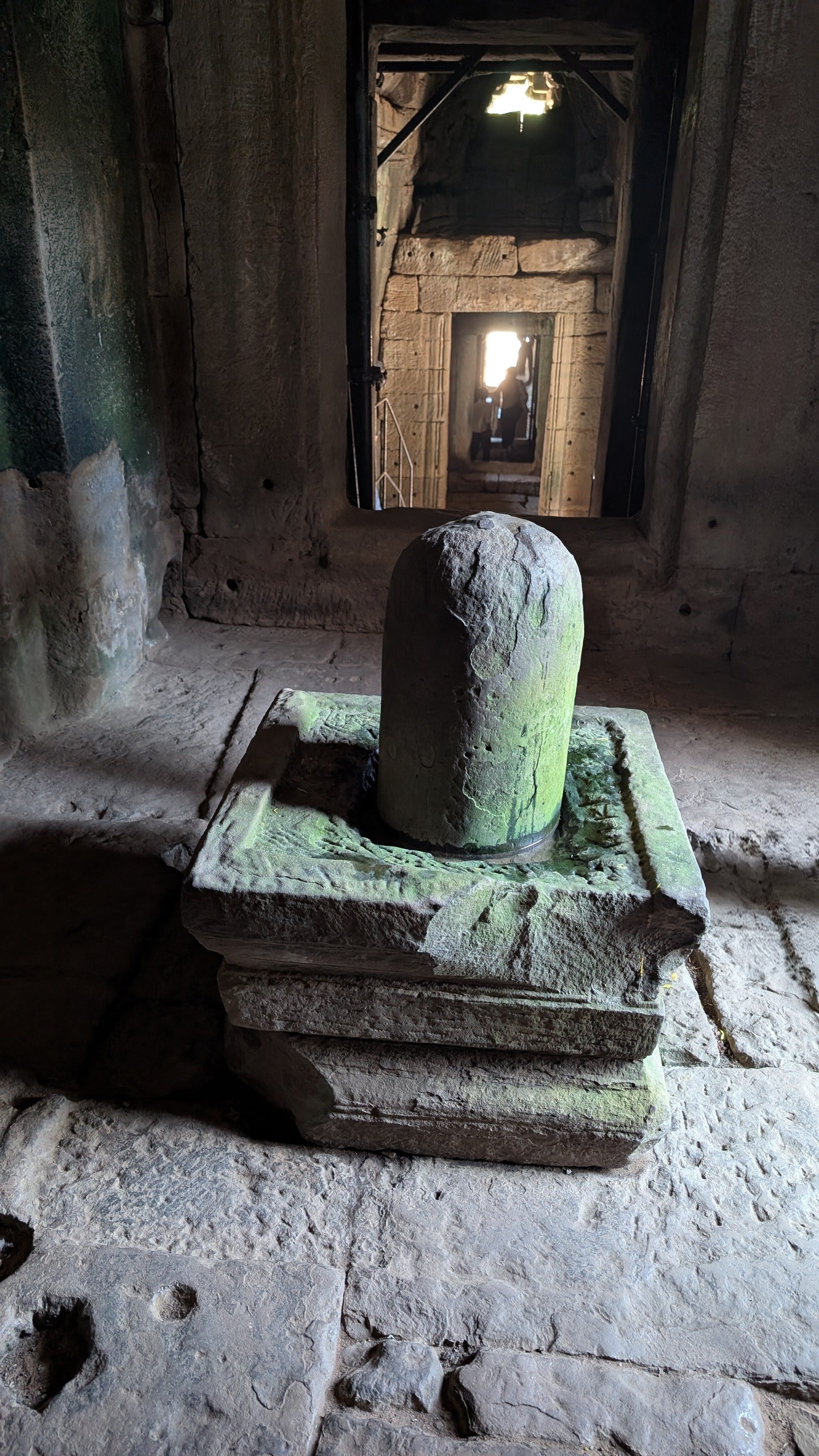
This lingam survives from one of the periods of Hindu ascendency.
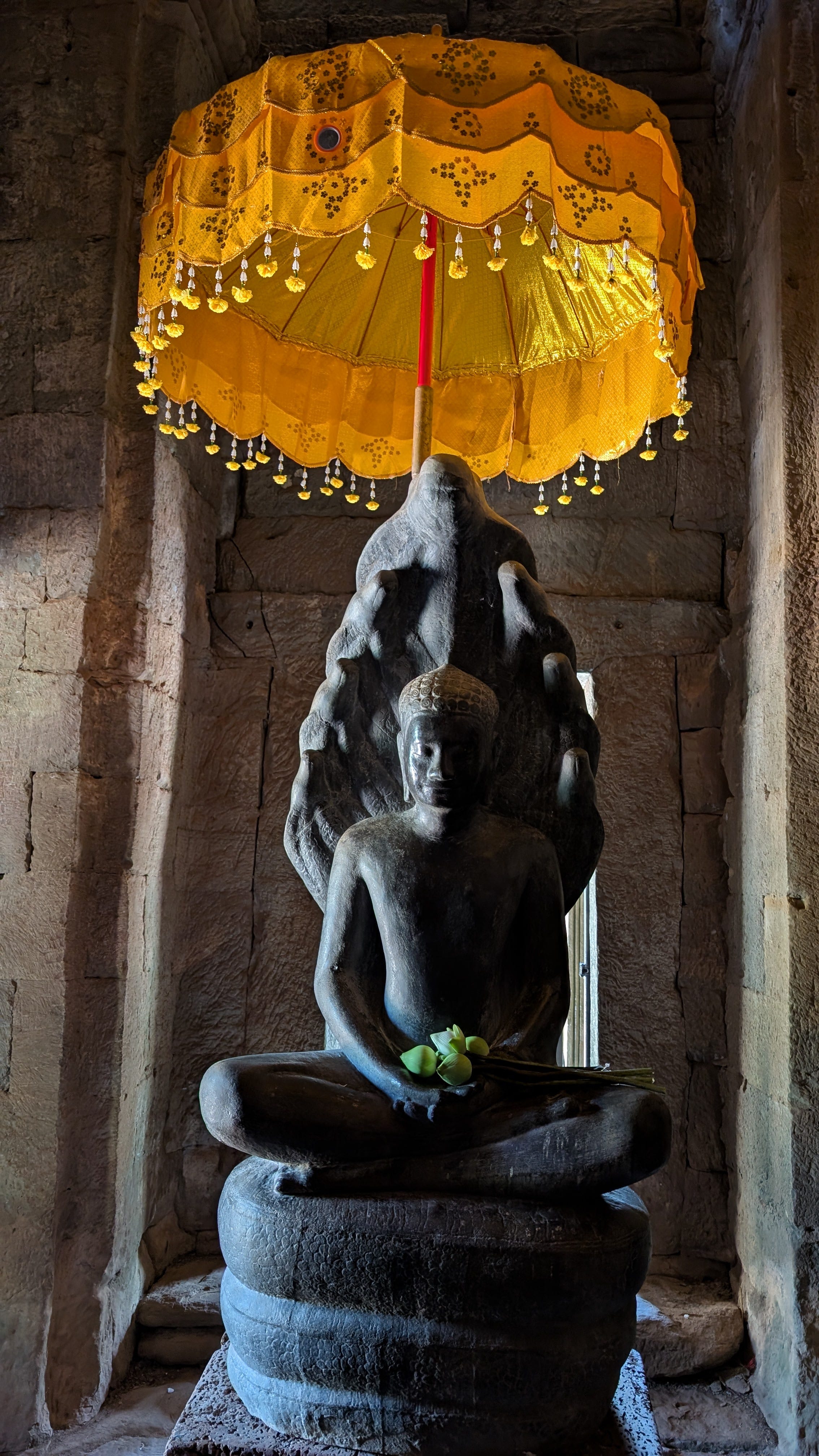
This image, on the other hand, reflects the Theravada Buddhism that spread through Cambodia in a later period. It manifests a real sense of peace in the midst of bustling tourists.
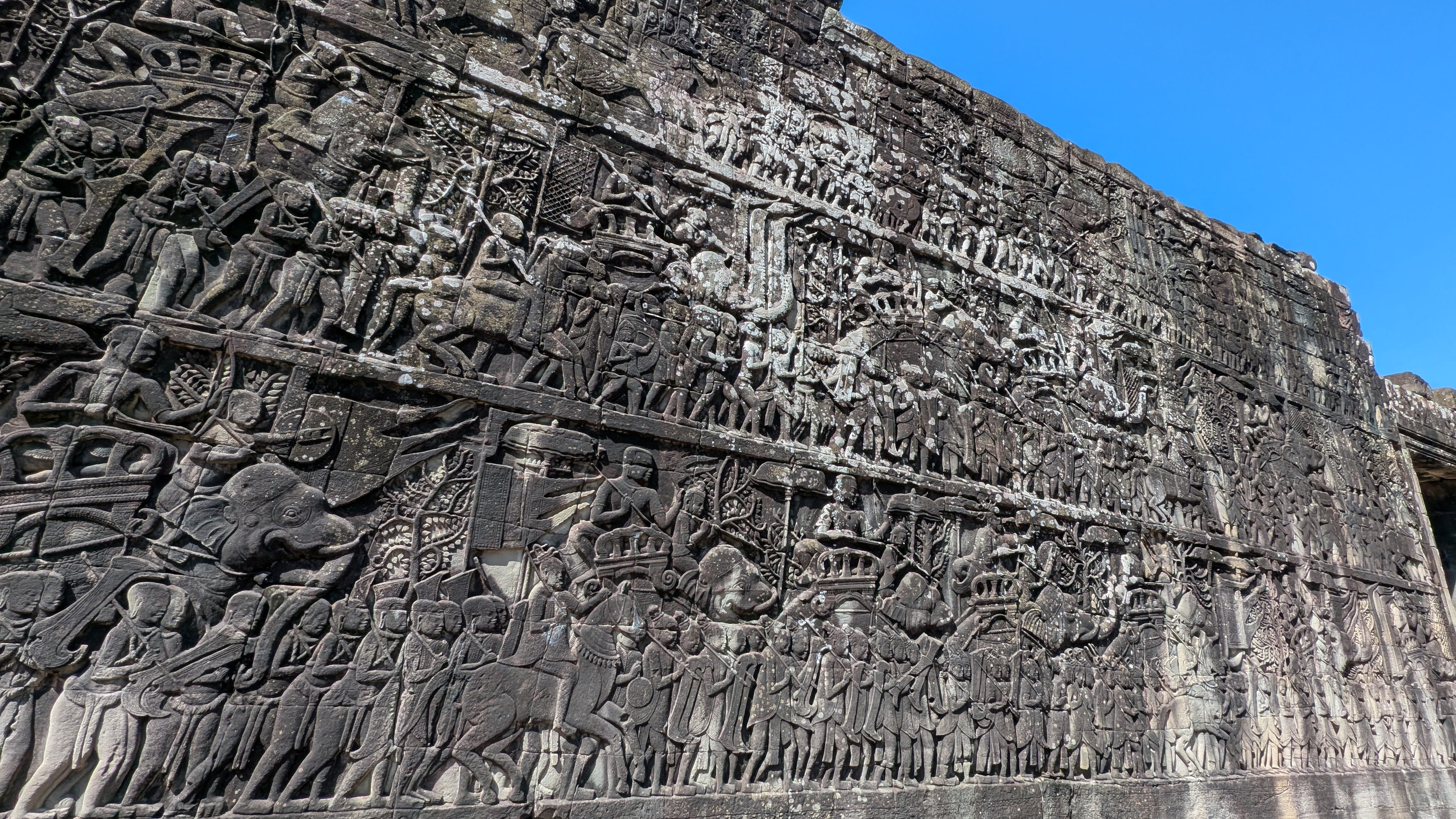
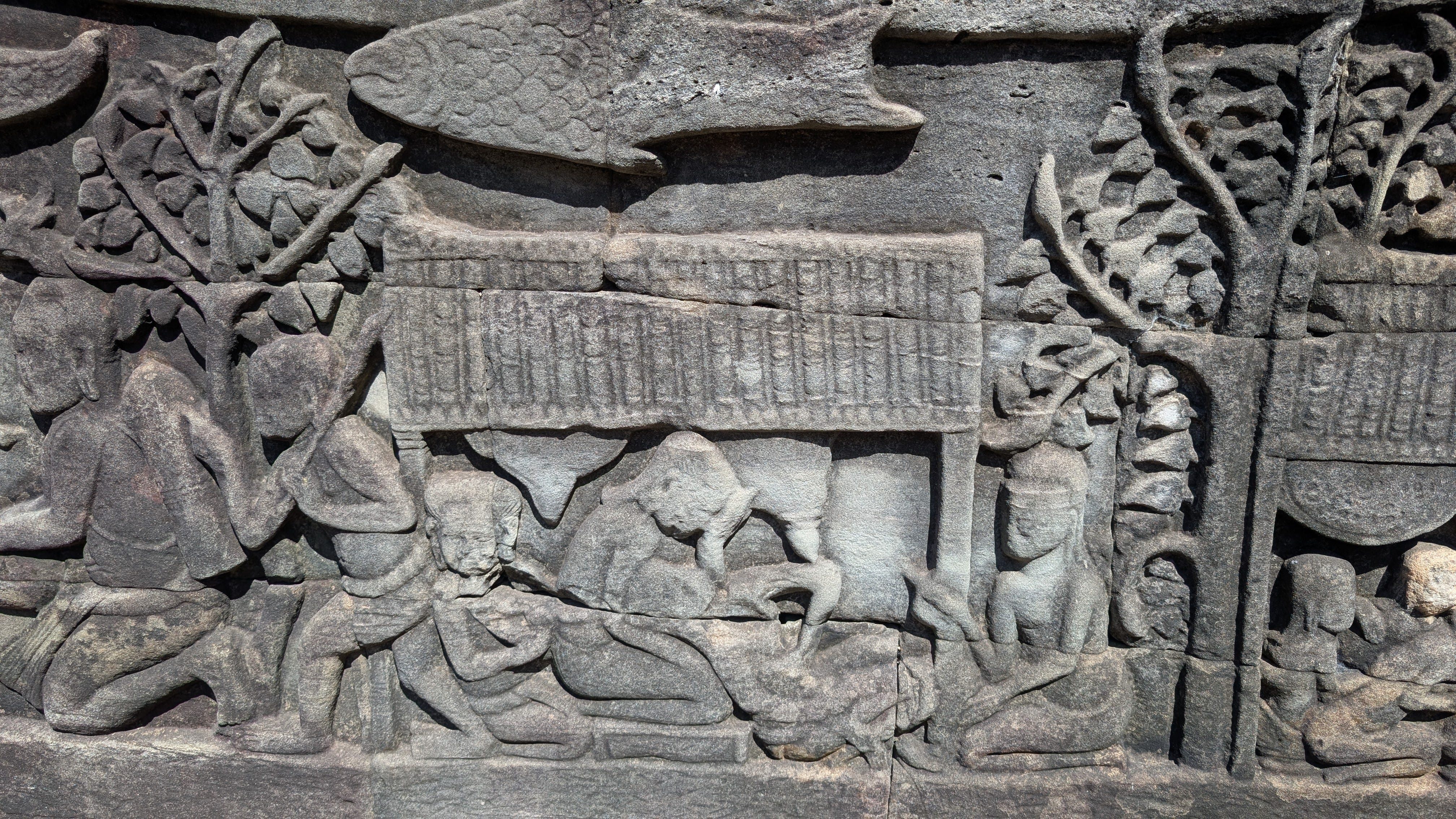
The walls of what was once a covered terrace depict scenes of military might, as well as everyday life. One of my favorites was the image below of a woman giving birth, attended by a midwife.
By the time we'd finished there, we were ready to eat again. The tour operator had booked a table for us at Malis, widely regarded as one of the best Cambodian restaurants in the world.
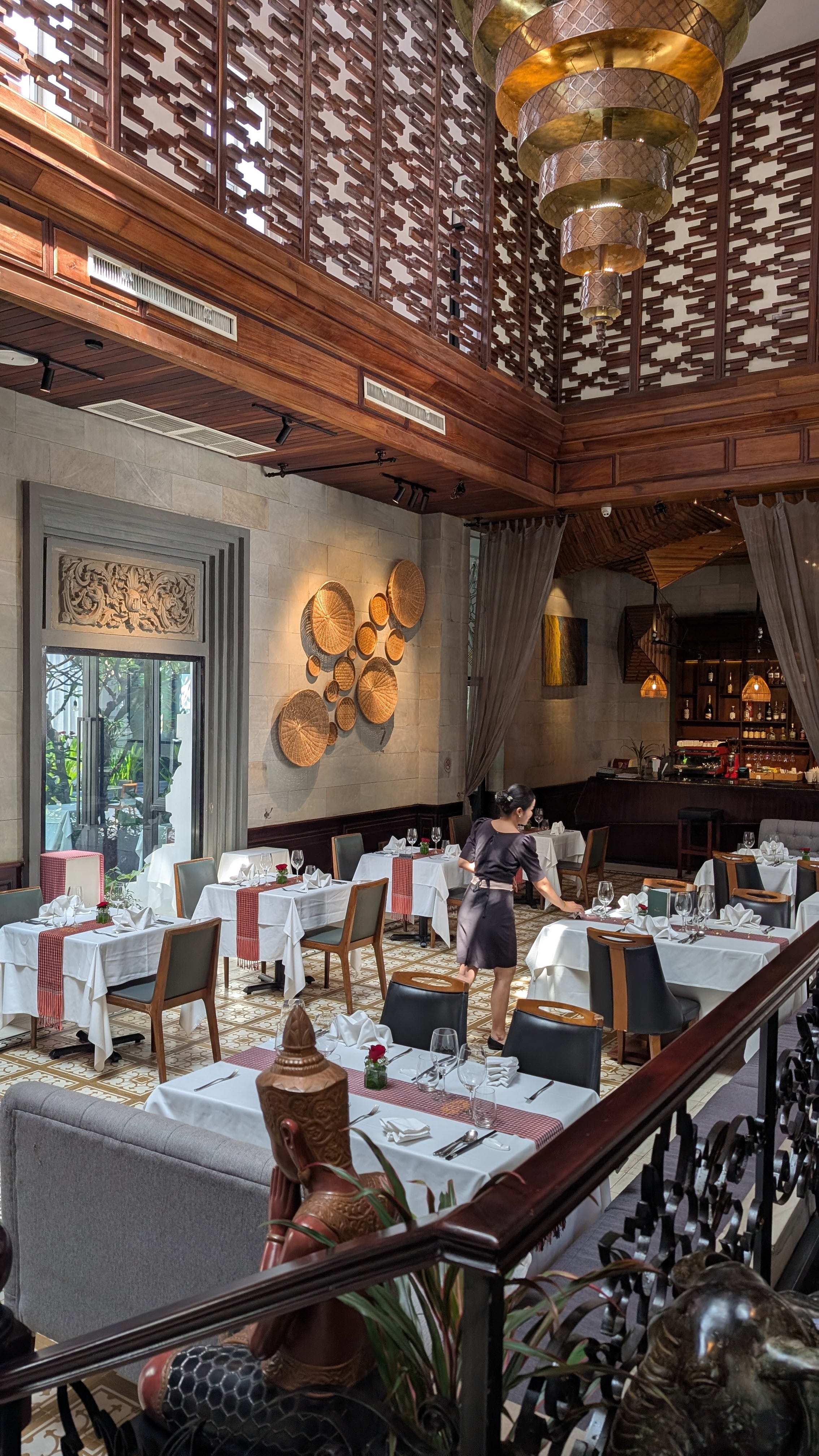
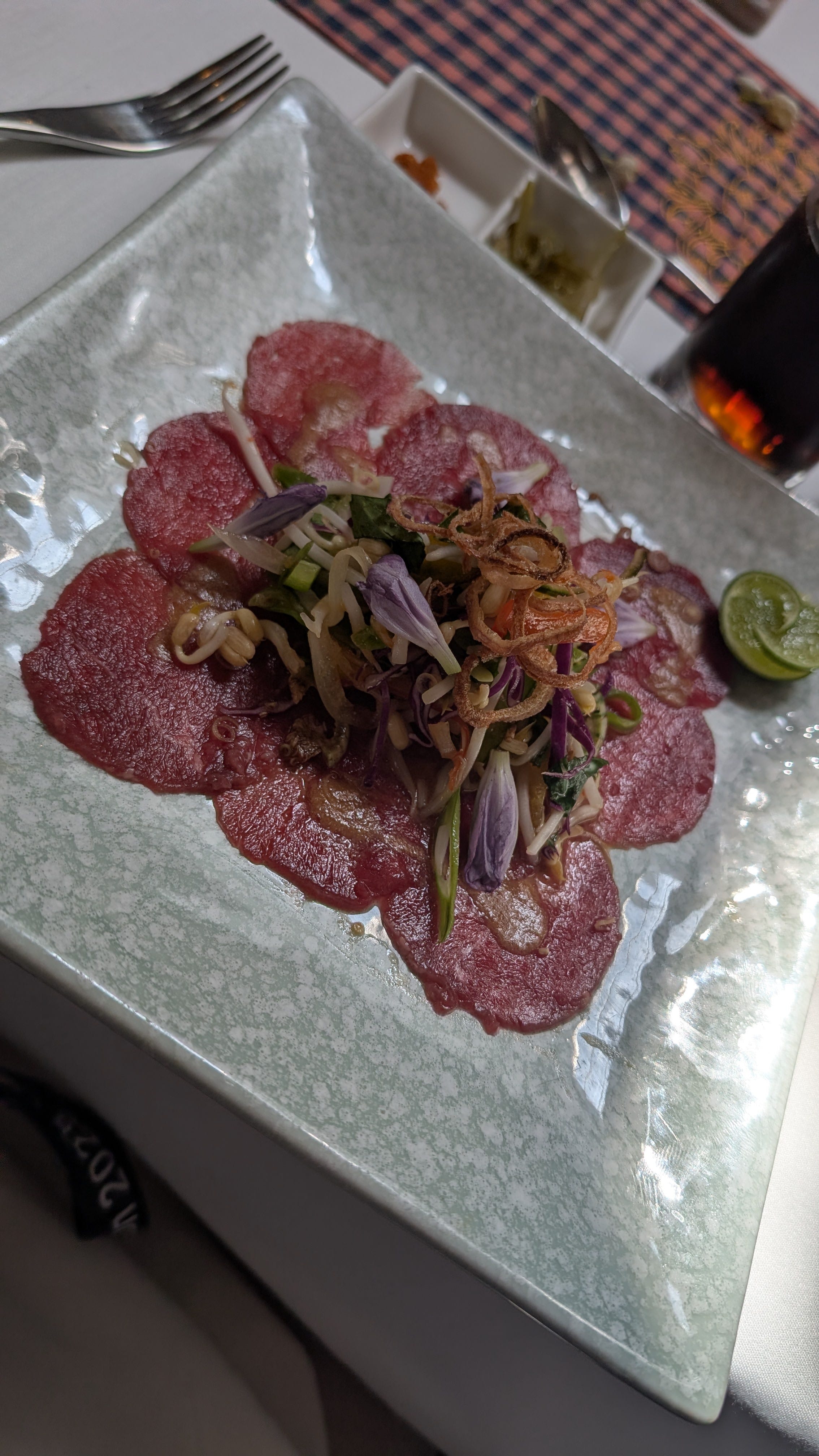
Chef Luu Meng has done an amazing job of presenting traditional Cambodian dishes and ingredients with the flair of French preparation and presentation. Our green papaya salad with beef was in the form of a carpaccio, garnished with a wonderful variety of textures.
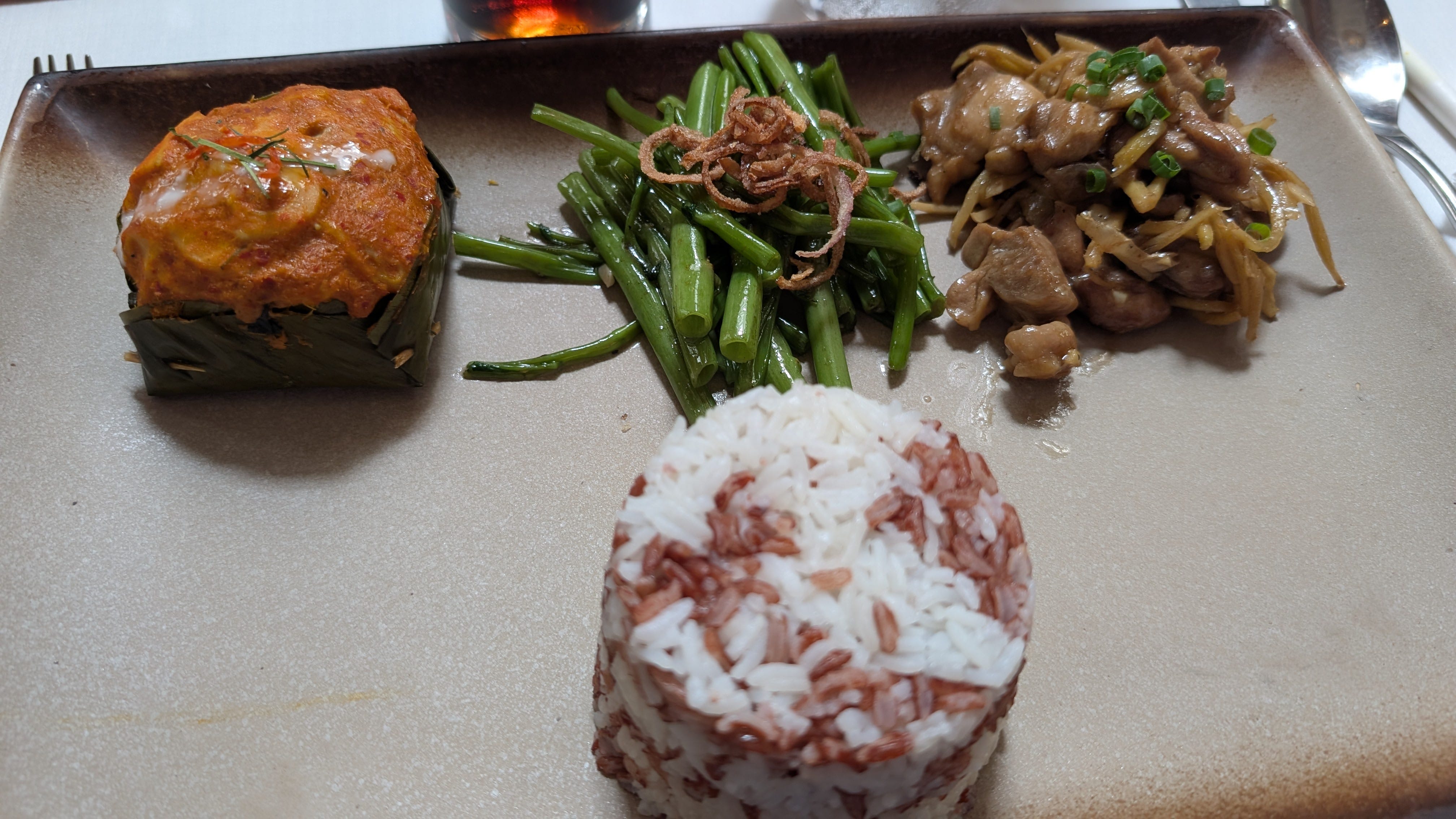
Our main was a sampler of fish amok, sauteed morning glory, and stir-fried chicken thighs with ginger, each refined to concentrate the incredible flavors.
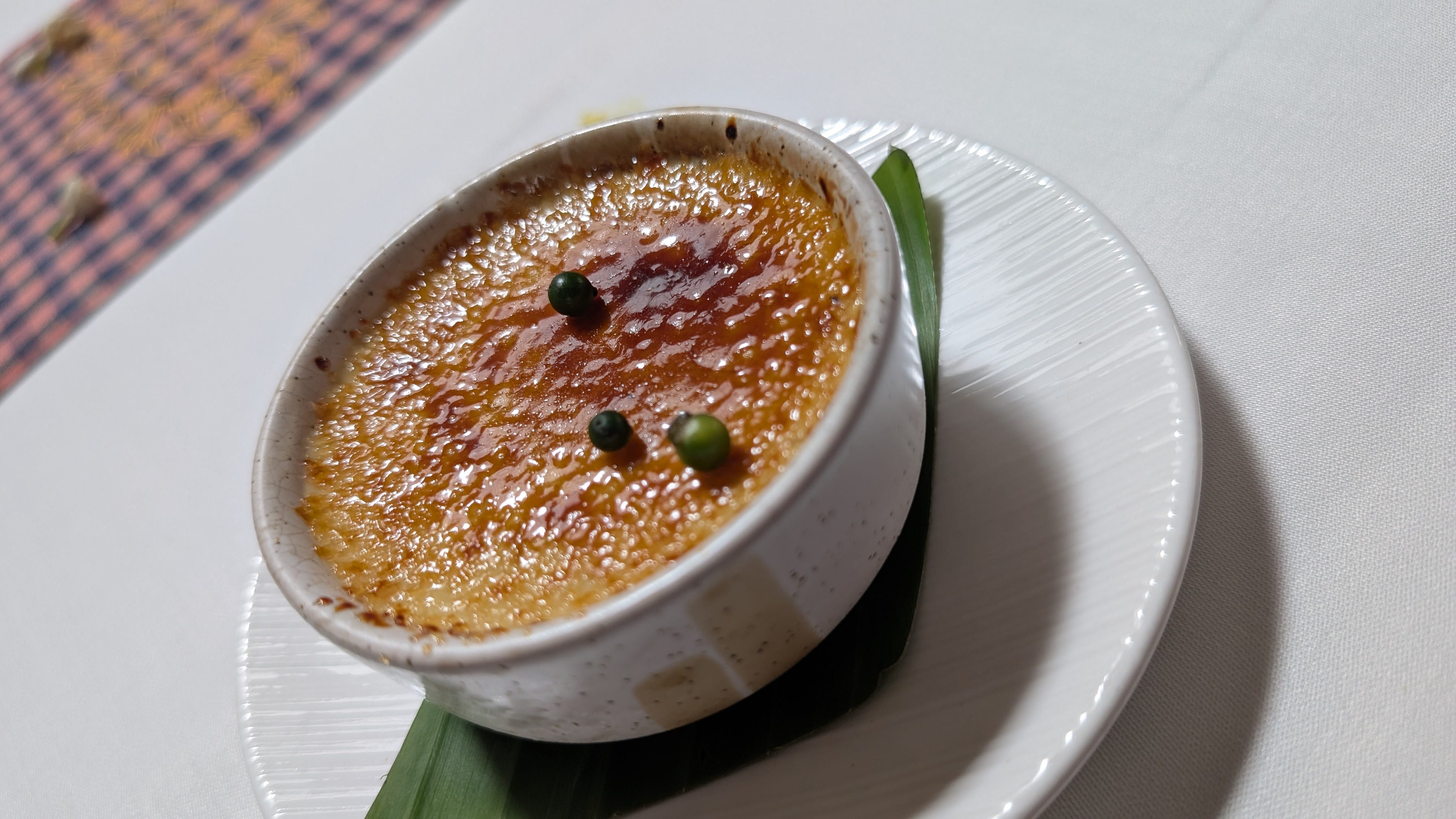
But the absolute highlight of this excellent meal was the crème brûlée made with Kampot pepper, a particular local cultivar of black pepper. It was an incredible combination of flavor and texture, perfectly combined.
And that was just the first half of the day!
So many echos of our day in the Yucatan touring Chichén Itzá! The breakfast food looks so tasty - more like Asian dinners here, and your lunch looked spectacular! Hope your positive report will inspire more tourists to see and taste the wonders of Cambodia.
For the next reader who becomes too curious (with help from ChatGPT):
At its height in the 11th–12th centuries, the Khmer Empire centered on Angkor was a highly centralized hydraulic state, dependent on divine kingship to mobilize mass coerced labor for maintaining vast irrigation systems. That system became structurally fragile when religious authority shifted away from the god-king toward Theravada Buddhism, undermining the legitimacy of forced labor without replacing it with a new administrative model. When severe droughts and floods struck in the 14th century, the under-maintained water infrastructure failed, rice production collapsed, and Angkor depopulated. Militarily weakened, the Khmer state lost its western heartlands to rising Thai kingdoms, culminating in the sack of Angkor by Ayutthaya in 1431 and a permanent retreat southward, reducing Cambodia from a continental power to a small buffer kingdom.
For the next four centuries Cambodia survived without real sovereignty, steadily losing territory and institutional capacity until colonial rule froze its borders without rebuilding the state. Whatever limited recovery followed independence was annihilated by the Khmer Rouge (1975–1979), whose attempt to erase modern society destroyed the educated class, institutions, and social trust through mass murder. Modern Cambodia’s poverty is therefore not a mystery or recent failure: it is the cumulative result of an early collapse of a labor-intensive empire, centuries of geopolitical attrition, and a late-20th-century catastrophe that eliminated the human capital needed for recovery.