
Outside the Temples

In between temple visits we did a few other activities during our two days in Siem Reap.
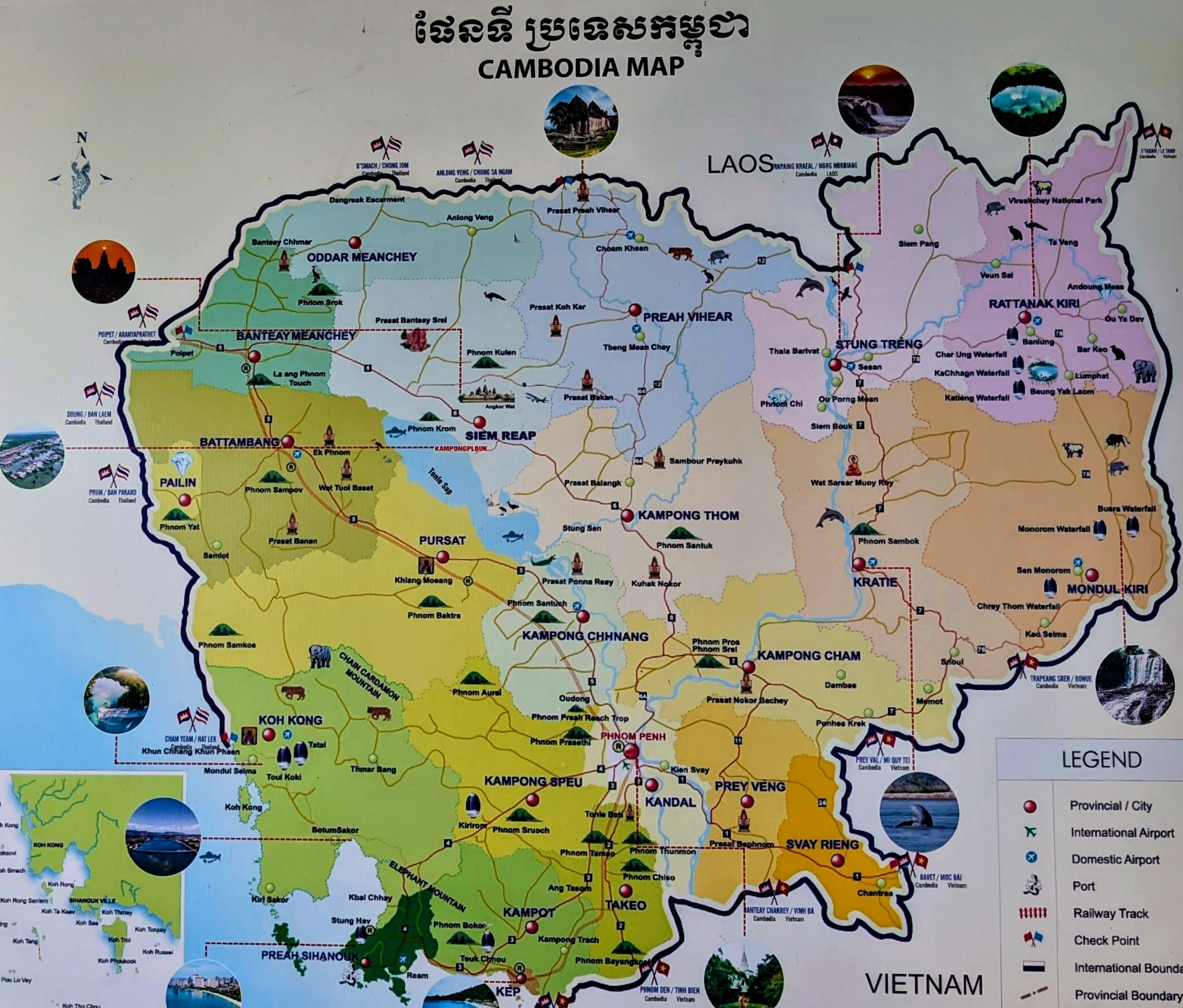
Tonlé Sap is the largest freshwater lake in Southeast Asia and just a few miles from Siem Reap. We drove out through the rice paddies along the irrigation canals.
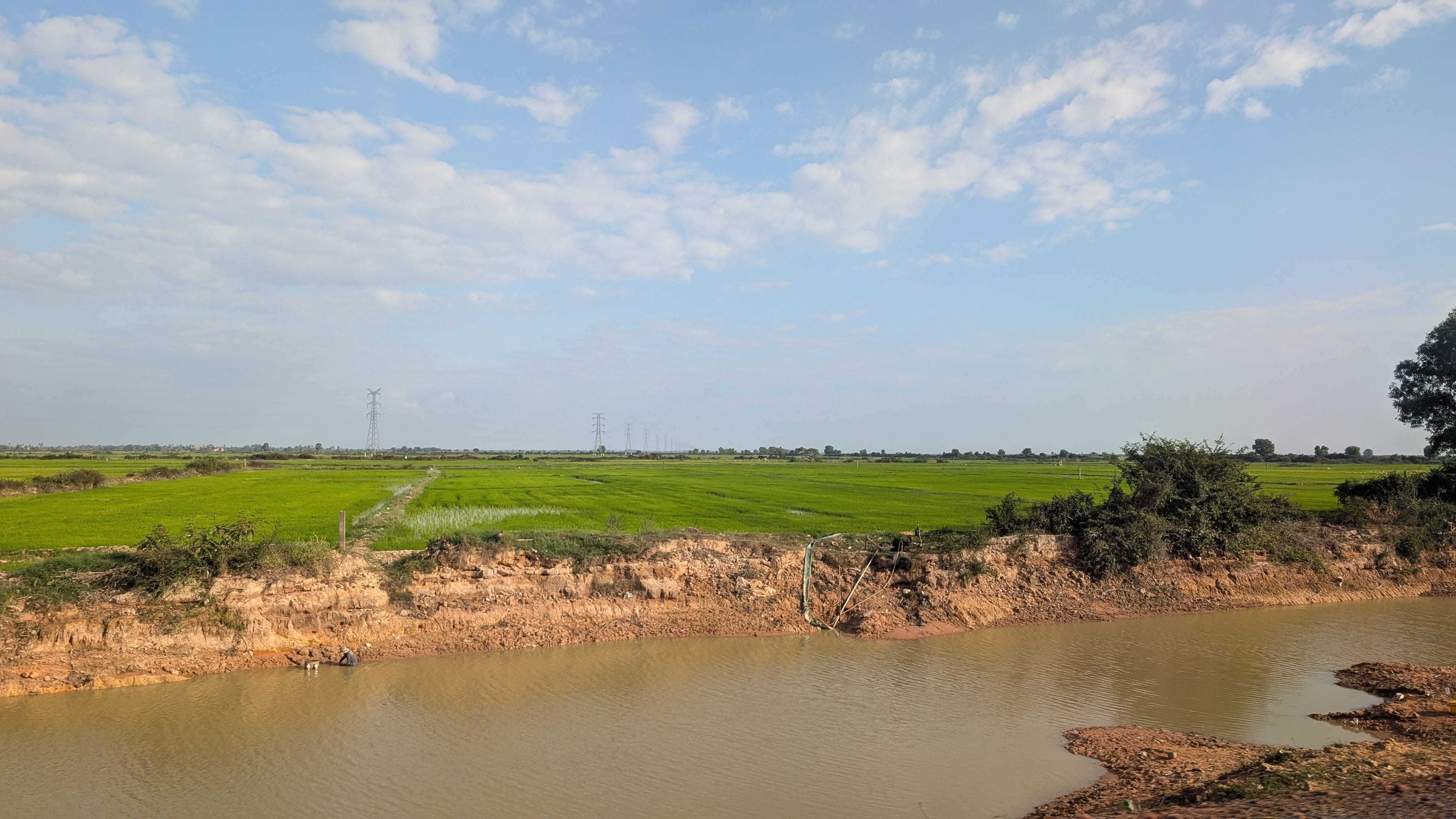
Eventually those canals widen and we could board a boat to take us out to the lake.
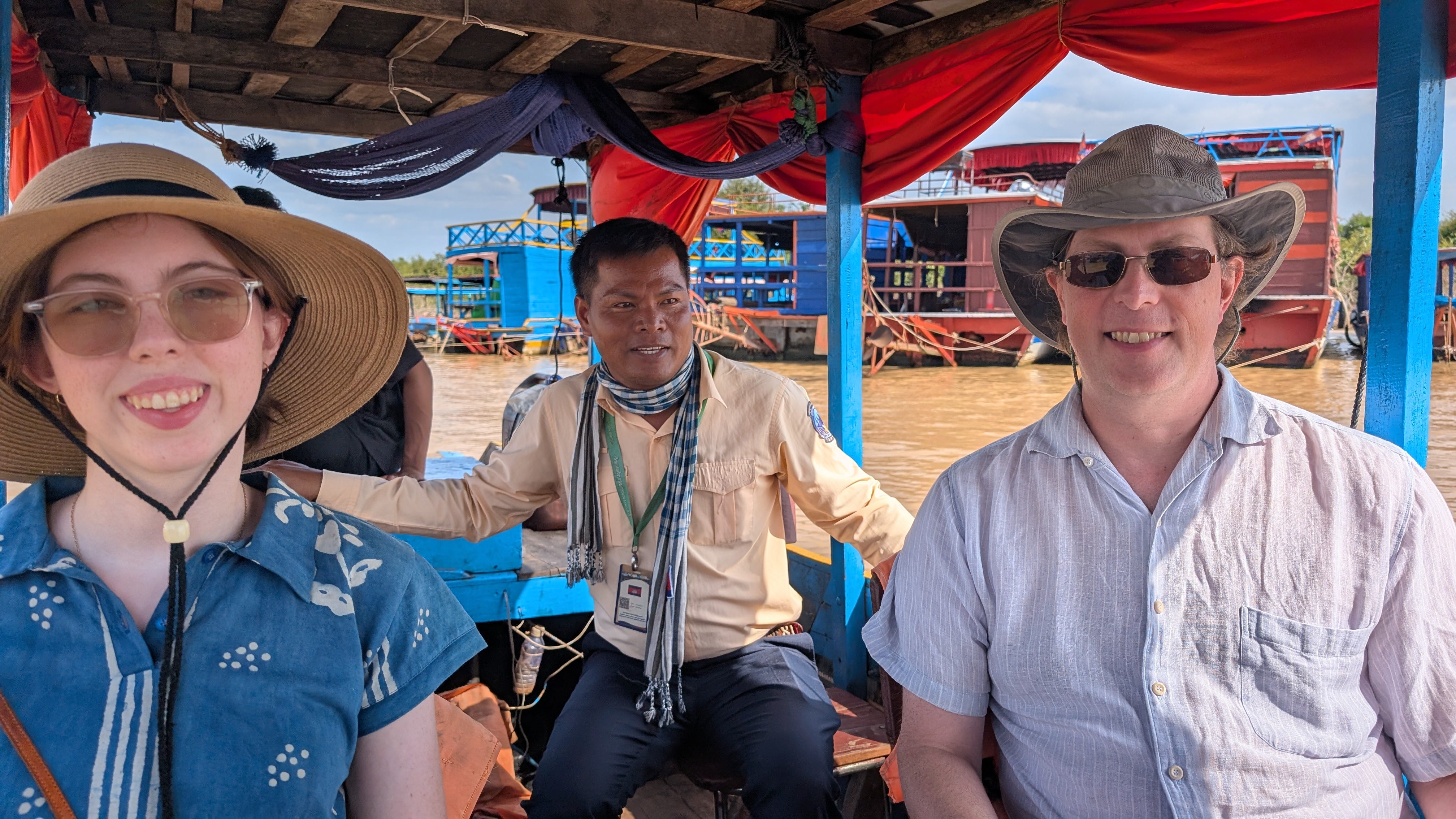
The lake is a major source of fish and accounts for more than half of the protein consumed in Cambodia. Its size is very seasonal, rising up to 10 meters during an average rainy season. The houses of the fishing villages along the waterways are raised on stilts to keep them above the flood.
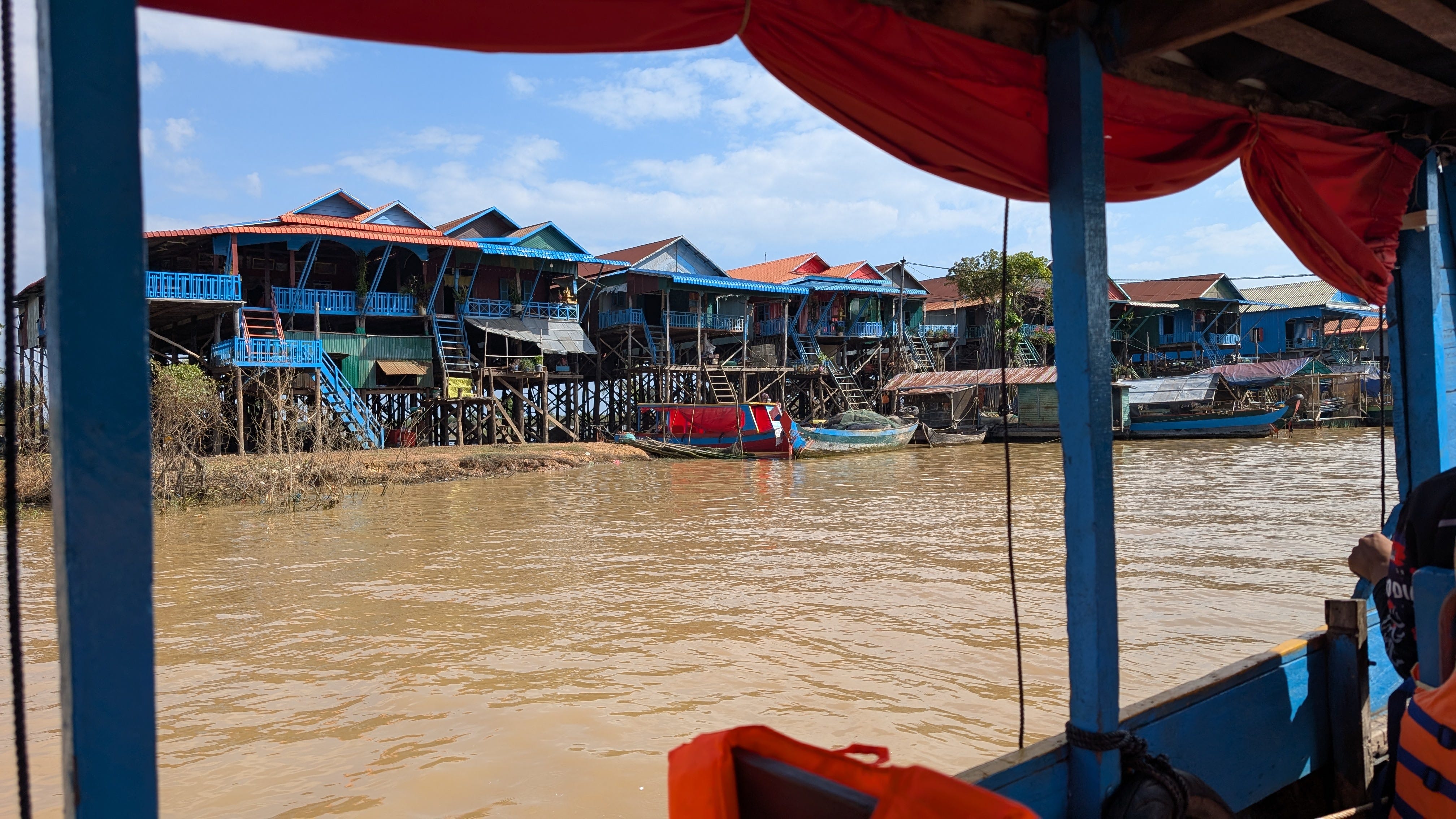
The villages are also protected by a vast forest of the tallest mangrove trees I've seen. We saw many small canoes navigating through the maze of trunks.
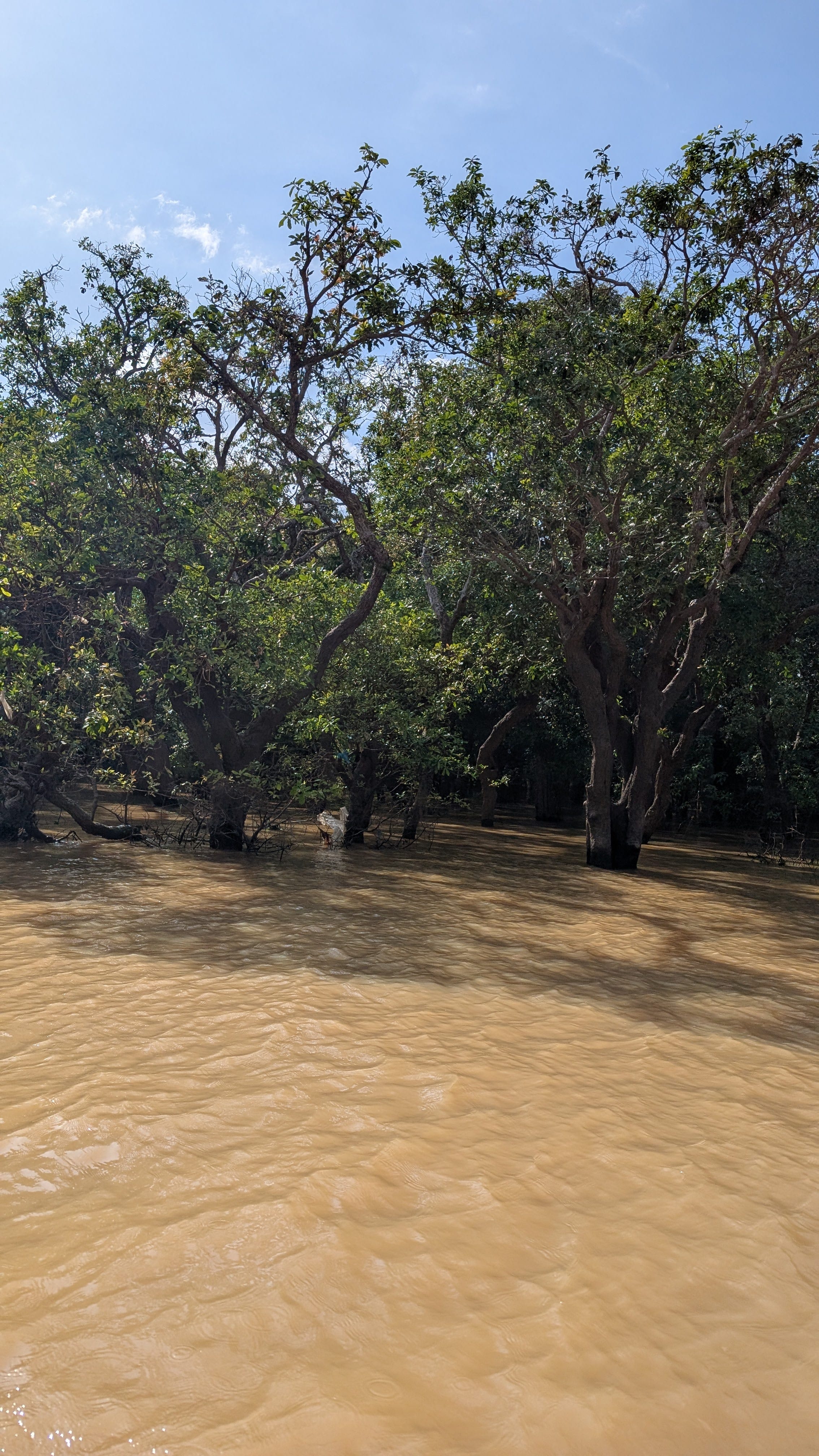
At last we reached the mouth of the canal and passed out into the lake, where our boat pulled up at one of the floating platforms.
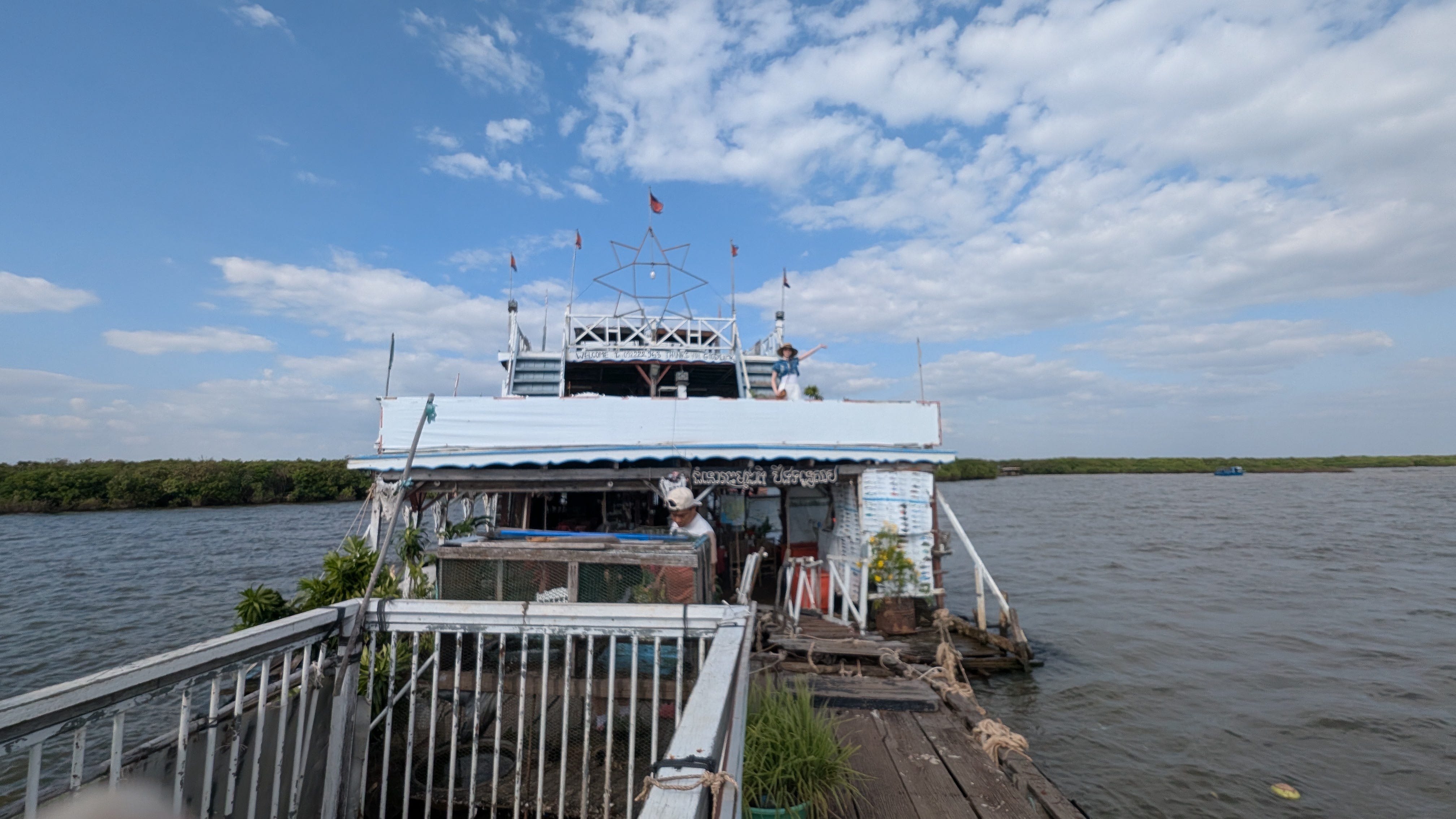
We had a beautiful view of the water, with the far shore just visible. The lake serves as a natural flood reservoir for the whole Mekong River, with the Tonlé Sap River reversing its flow in the rainy season to insulate the lower stretches from excessive flooding. There is some concern that the new high dams upstream, like the one we saw under construction in Laos, may interfere with this process.
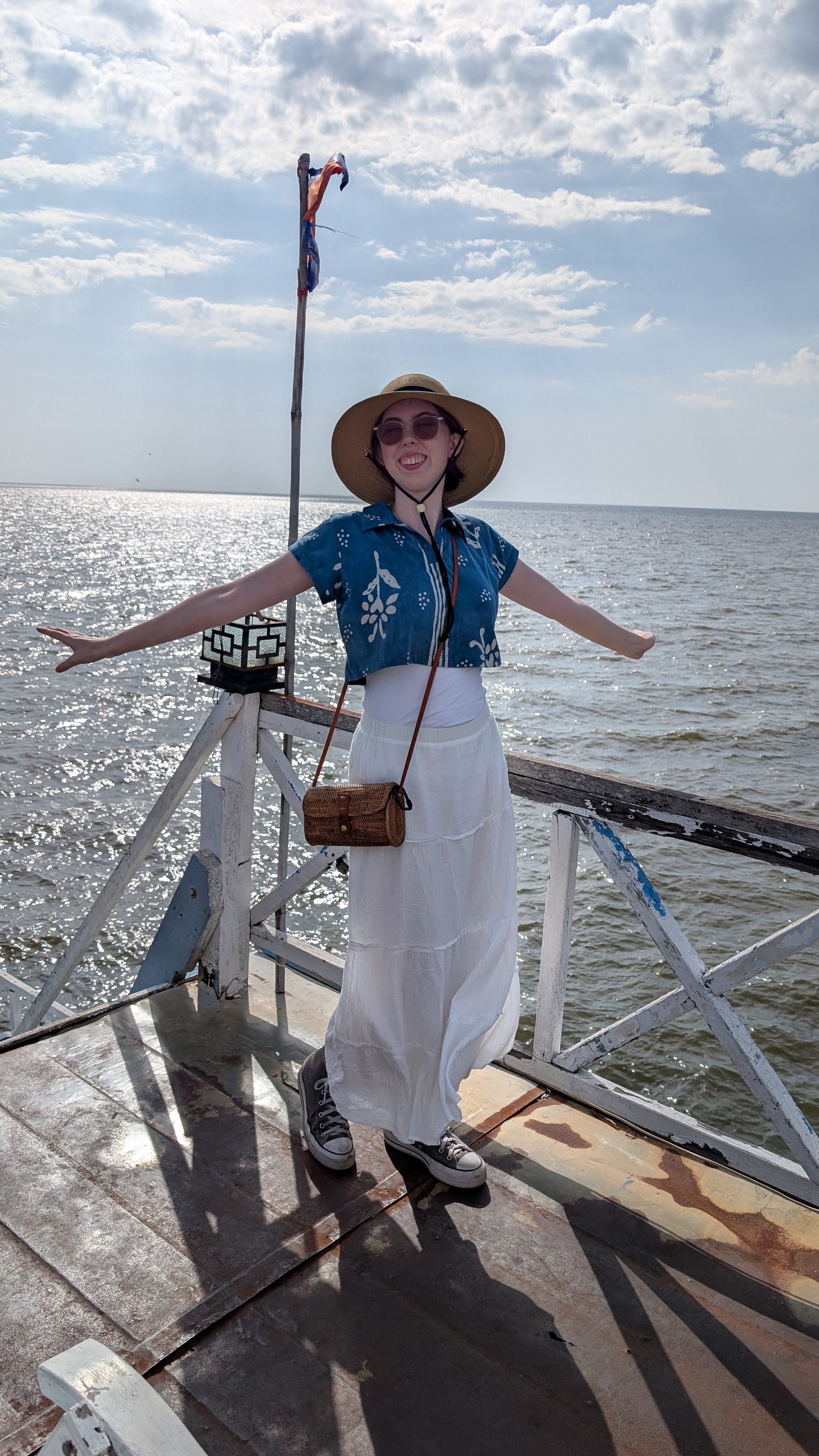
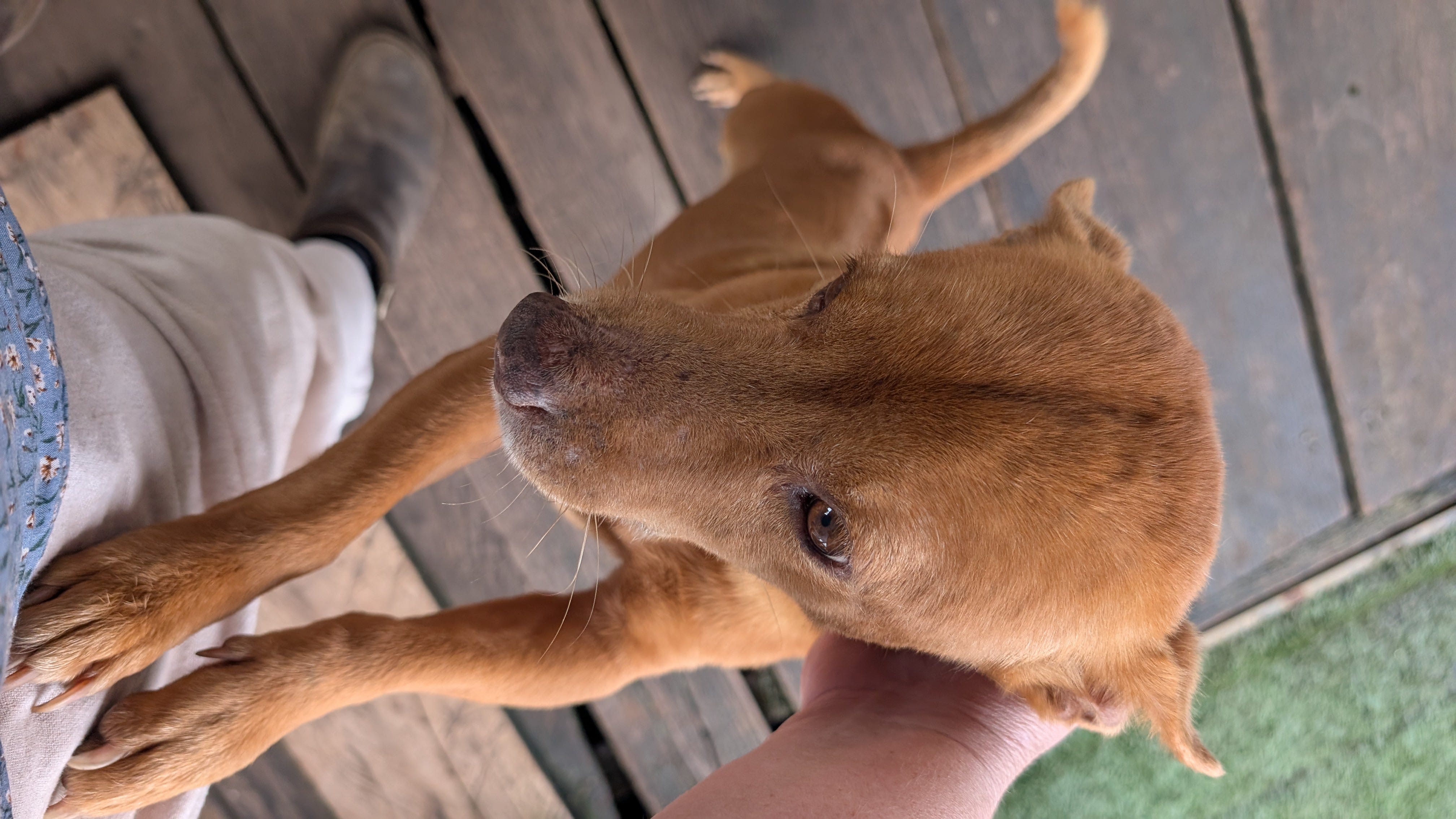
On the platform we enjoyed the view, used one of the sketchier toilets we've encountered, and visited the various animals there, including crocodiles, turtles, and bunnies in enclosures. Alice bonded with one of the cats, and I got to pet this very friendly doggo.
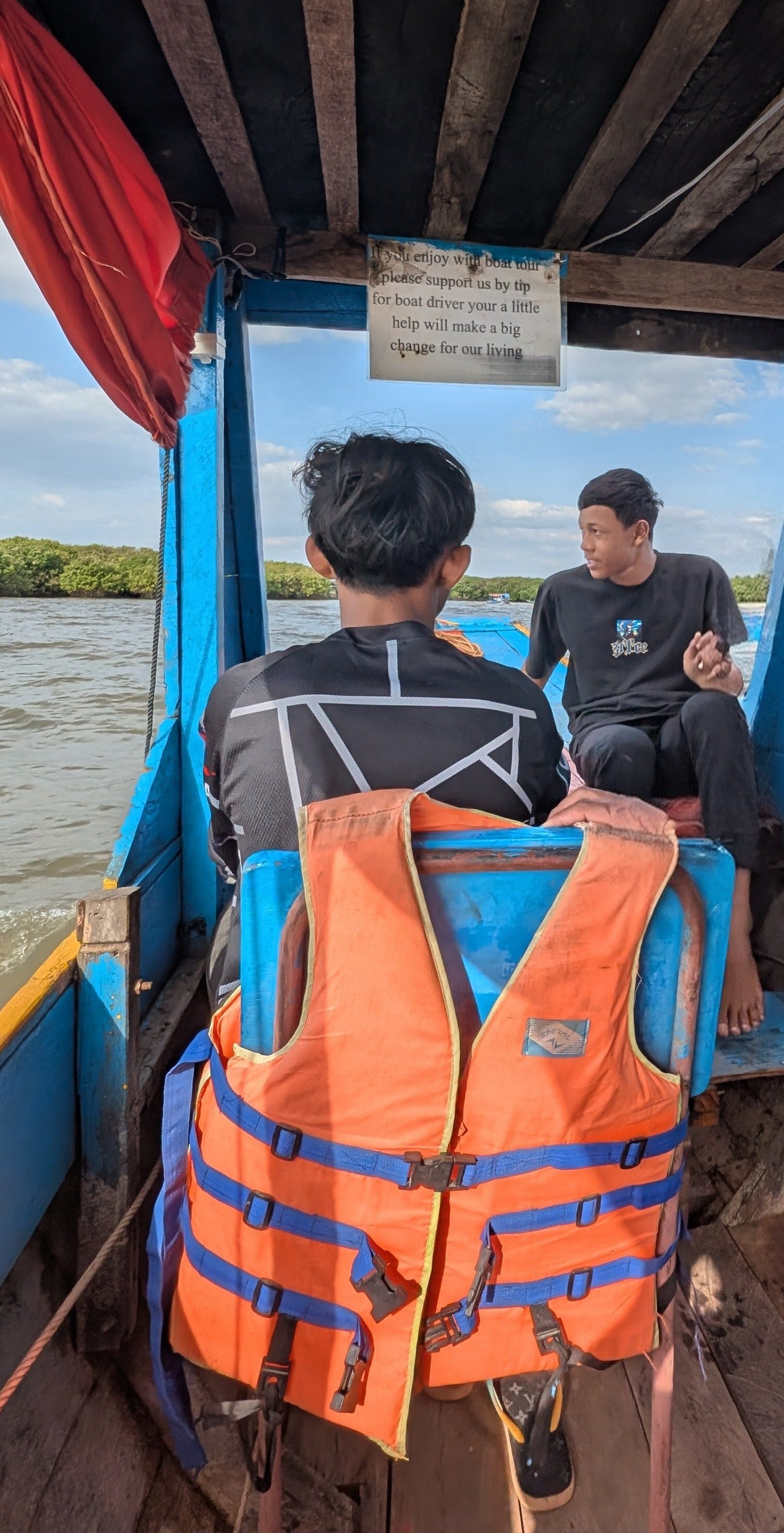
Eventually we climbed back aboard and headed back to the landing. Our boat was crewed by these two boys, maybe 14 or 15 years old. The Cambodian population is very skewed, agewise, with over half of them under 22 and the median age only 25. (By comparison, the median age in the US is approaching 40.) We could really see that, with children performing adult roles, and signs in tourist locations discouraging exploration of the local kids.
Another excursion took us to the APOPO Visitor Center, where we got to meet the Hero Rats they train to locate landmines.
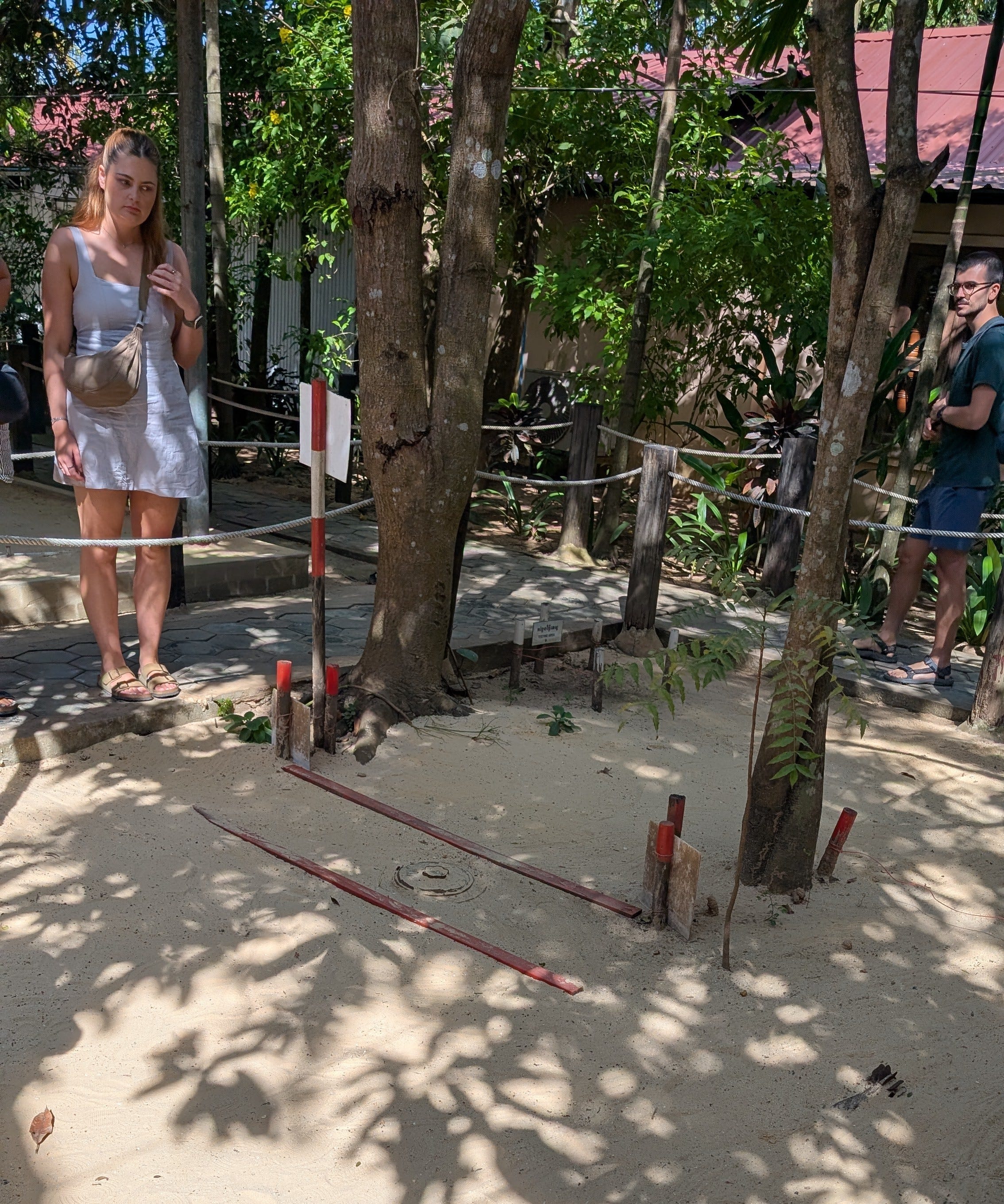
We got an introduction to their training process and the challenges presented by active remnants of the war. In one area they showed us deactivated anti-personnel and anti-tank mines, as well as ammunition dropped by aircraft.
The rats they use are Giant African Pouched Rats, trained in Tanzania and use in eight countries to sniff out munitions and also tuberculosis. Their pouches are in their cheeks, like chipmunks, not on their bellies like marsupials.
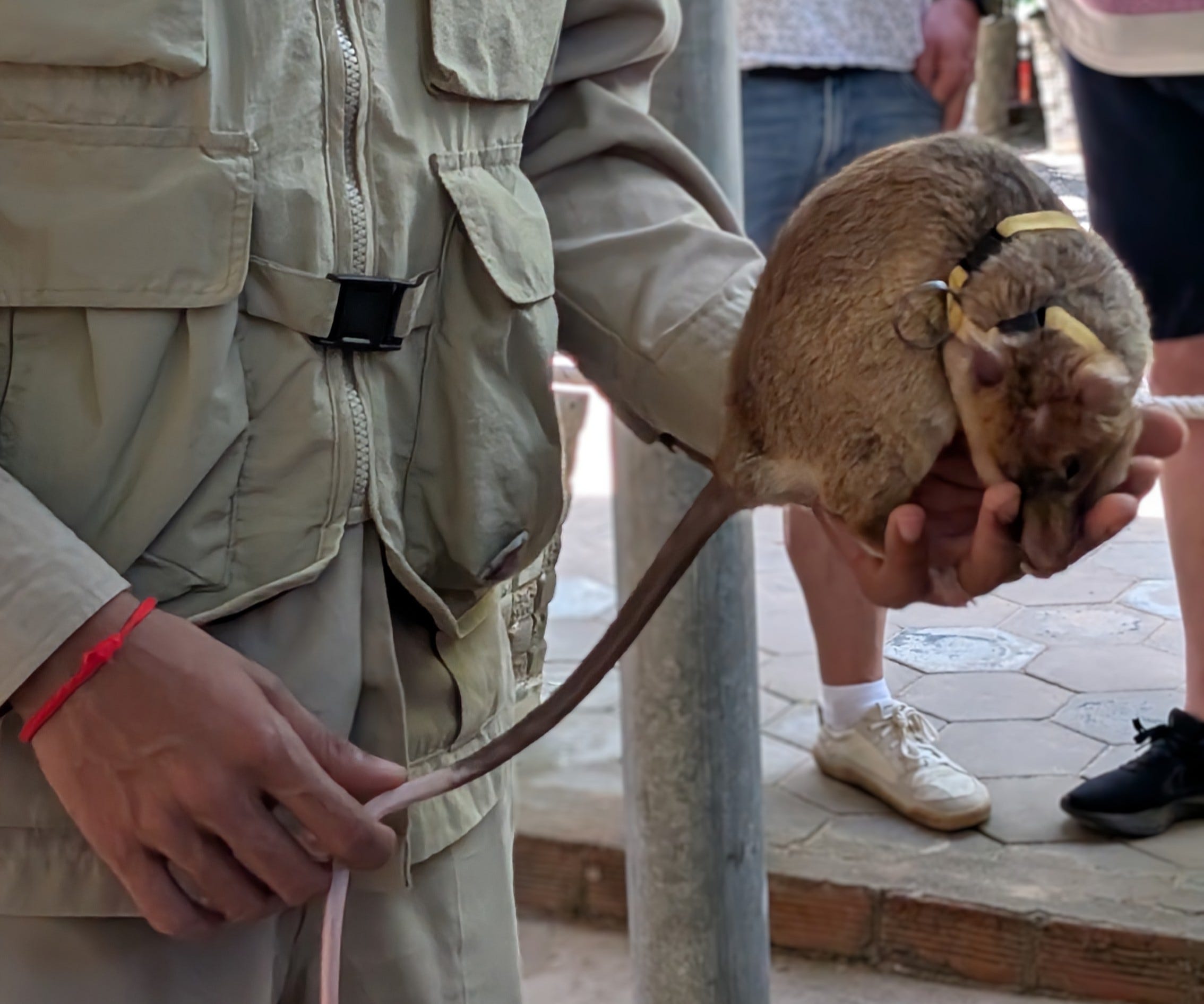
We got a demonstration of how their handlers guide them through minefields, rewarding them for each item they find with treats of peanuts and bananas. I was interested to learn that before they are taken out, their ears and tails have to be slathered with sunscreen, since they are not naturally diurnal. They only work in very short shifts and are done by 9:00 am. They work for three weeks and then get one week back at the center for rest and training reinforcement.
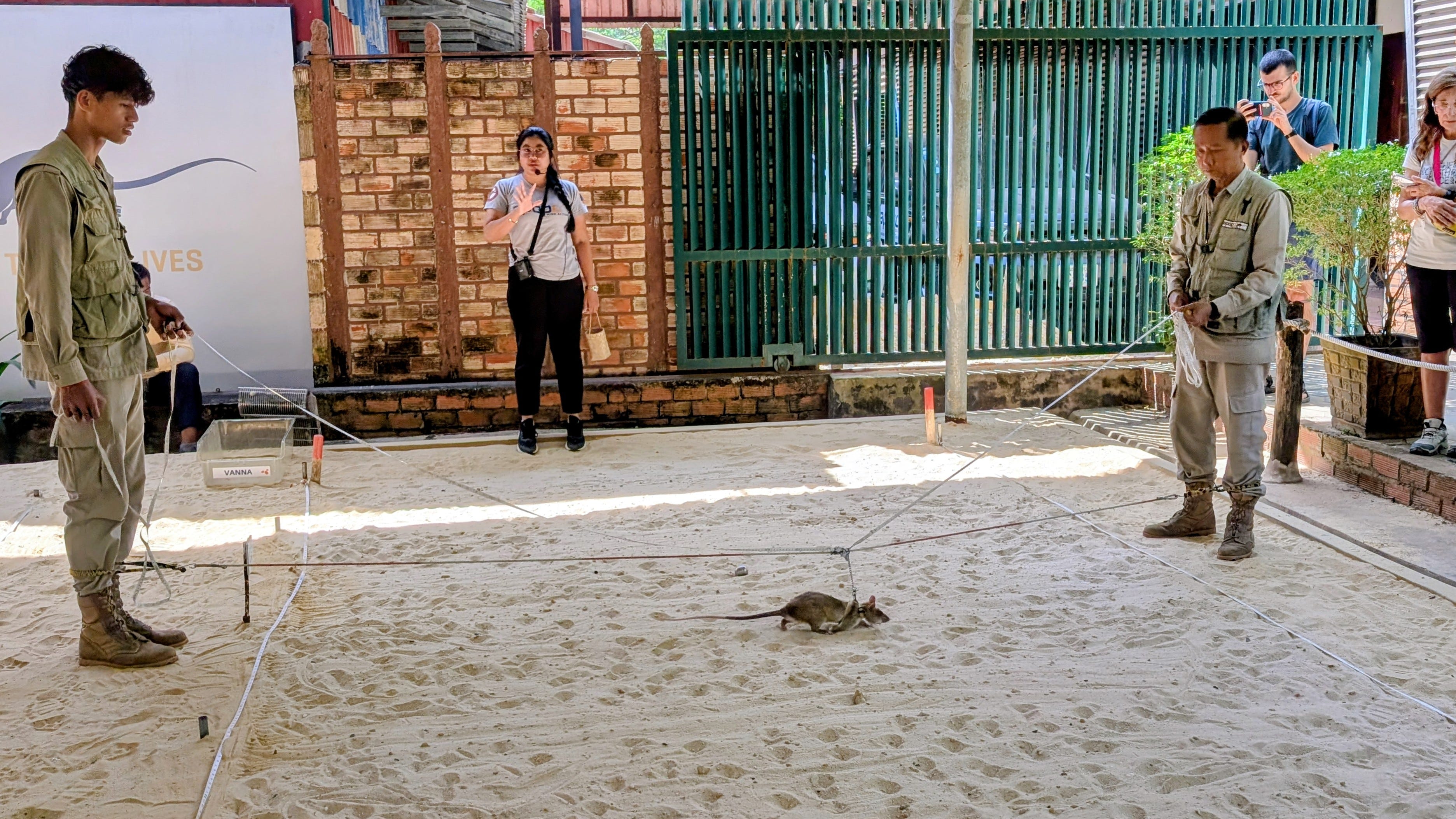
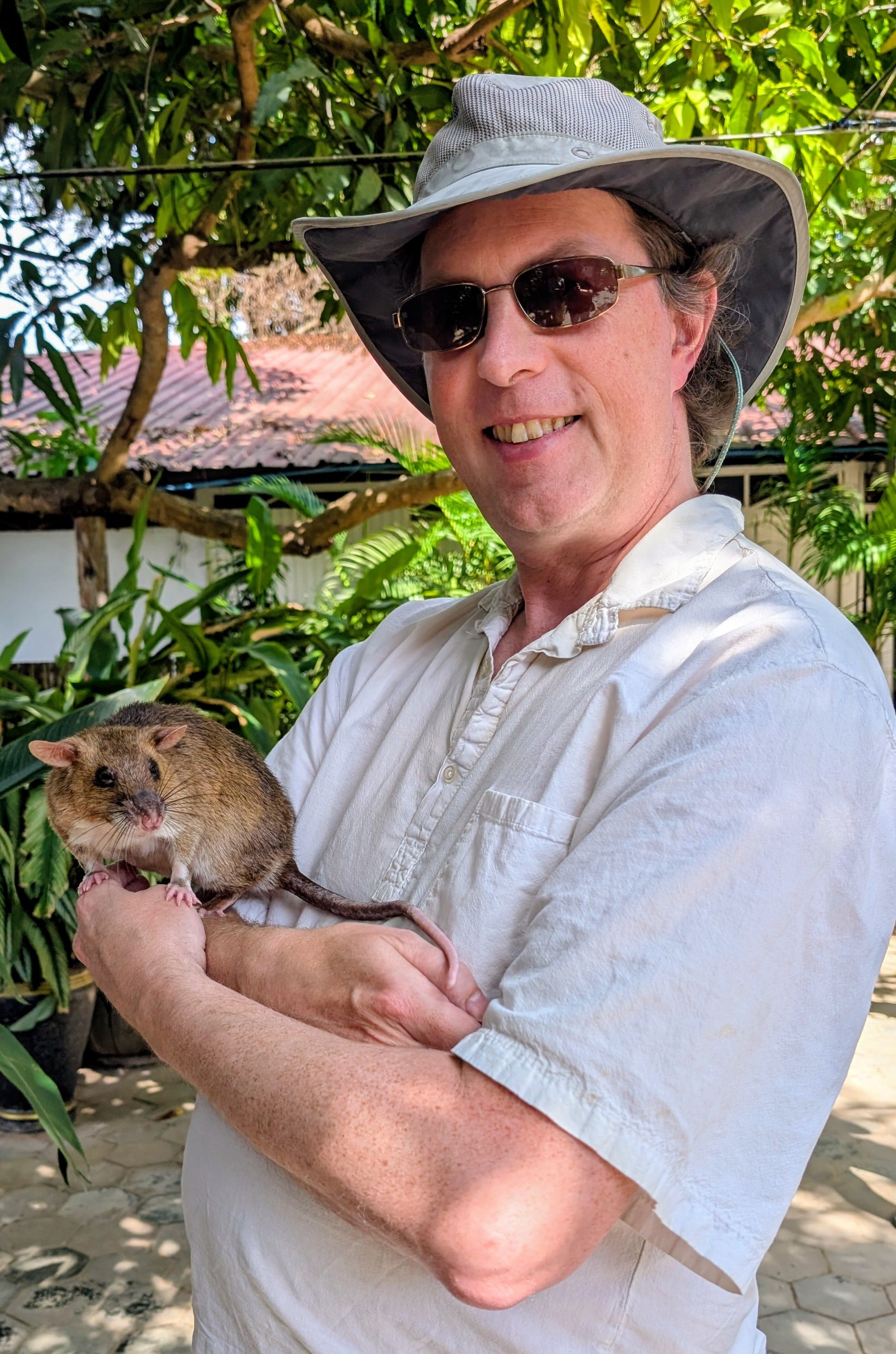
After the demo we got the chance to hold one of the rats. The ones at the visitor center have flunked out of their training, but are very sweet.
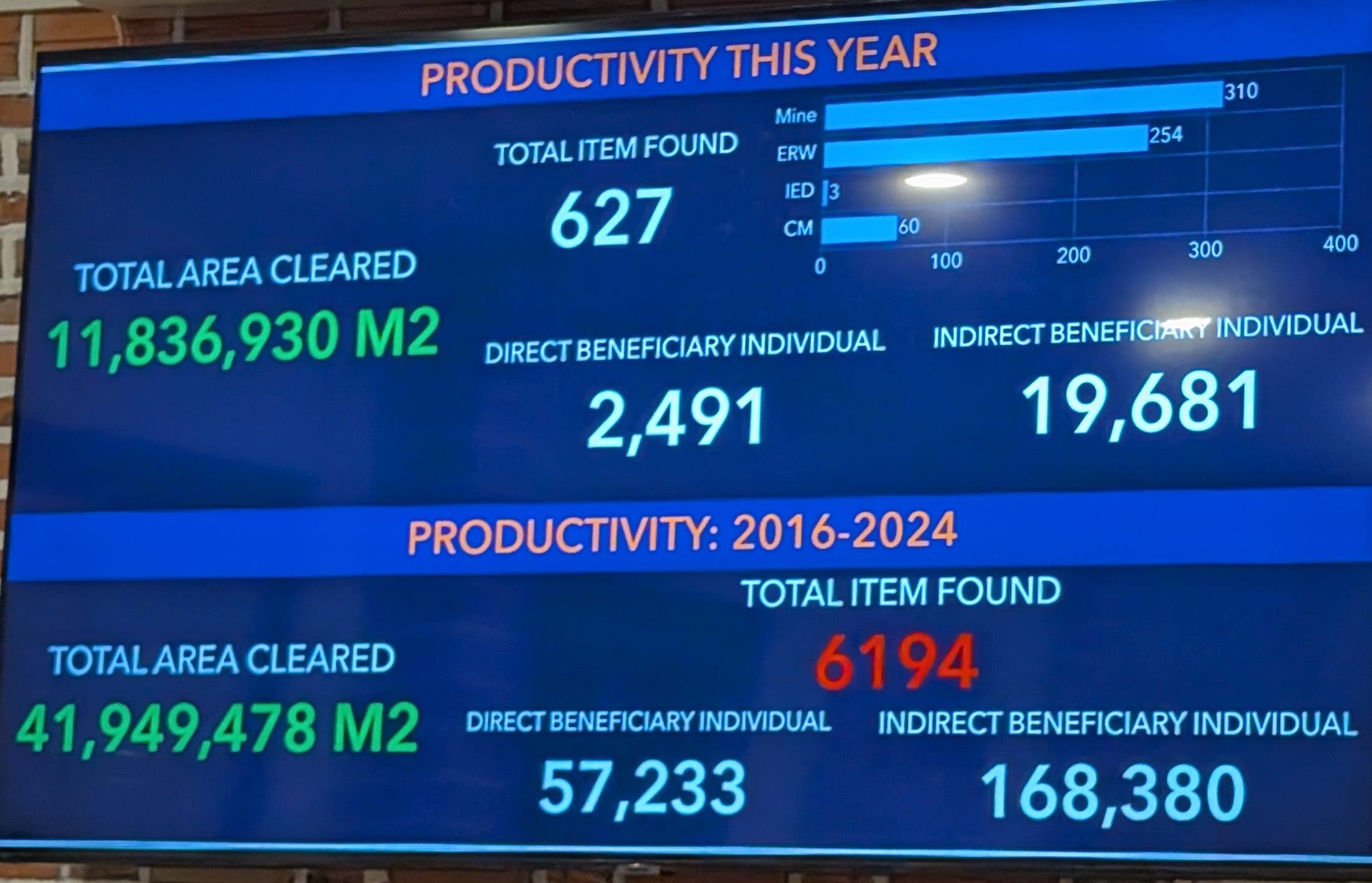
The tour ended with a short film about their work and slides from APOPO’s annual report, detailing their impact in Cambodia since 2014.
Our final excursion was a food tour by tuk-tuk. Rather than street food, this was a progressive supper at four different local restaurants.
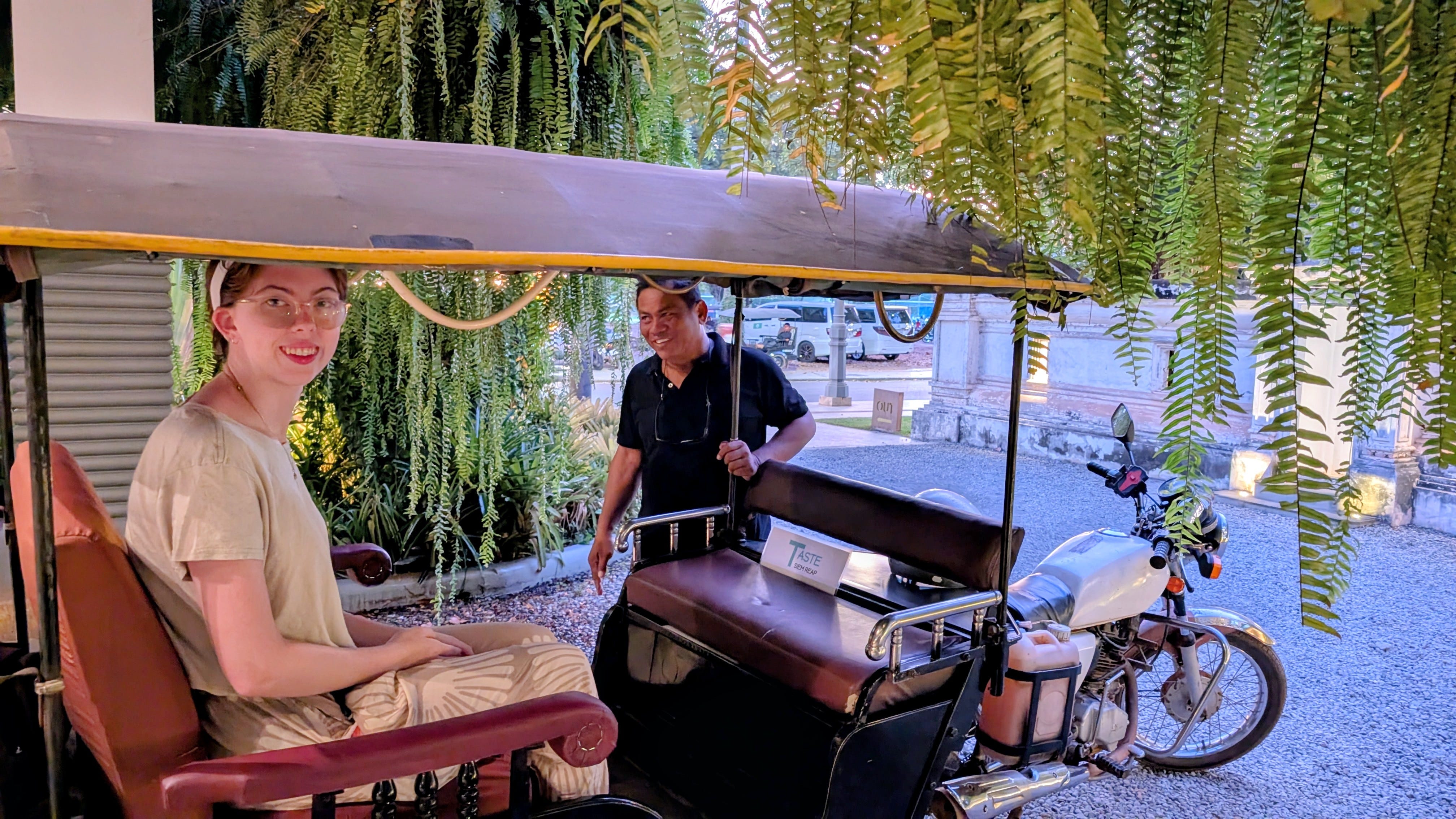
Borin, our guide for the evening, drove us to each place, where a table would be waiting for us. The tab was all handled through the tour company, so we just swanned in, enjoyed a course of delicious food, waved goodbye, and headed in to the next place. It was all so easy and made me wonder if it would be possible in Boston.
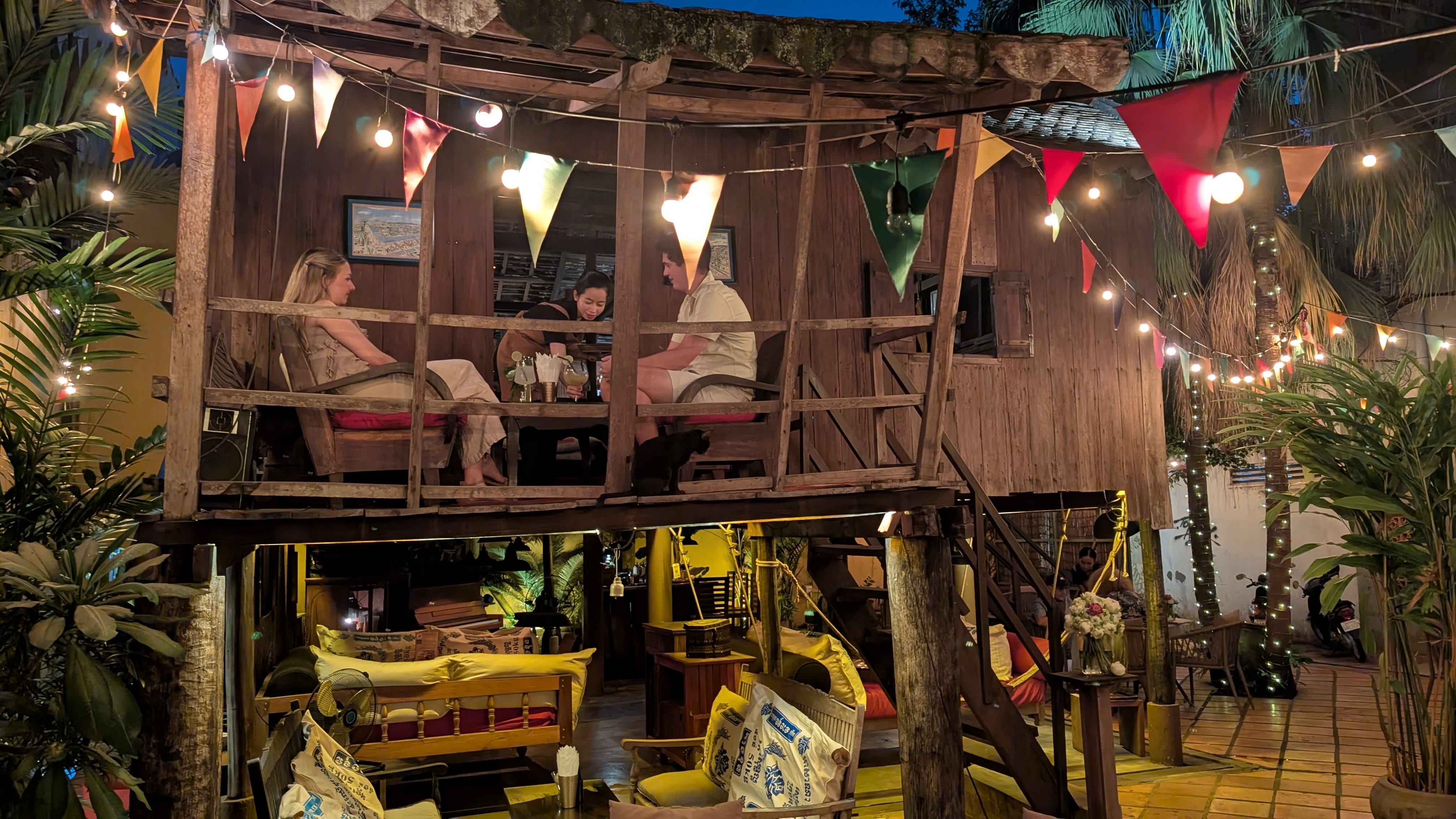
The first stop was a drink at Asana, a Khmer cocktail bar located in an old wooden house. They make their own gin and their menu features drinks made with local herbs.
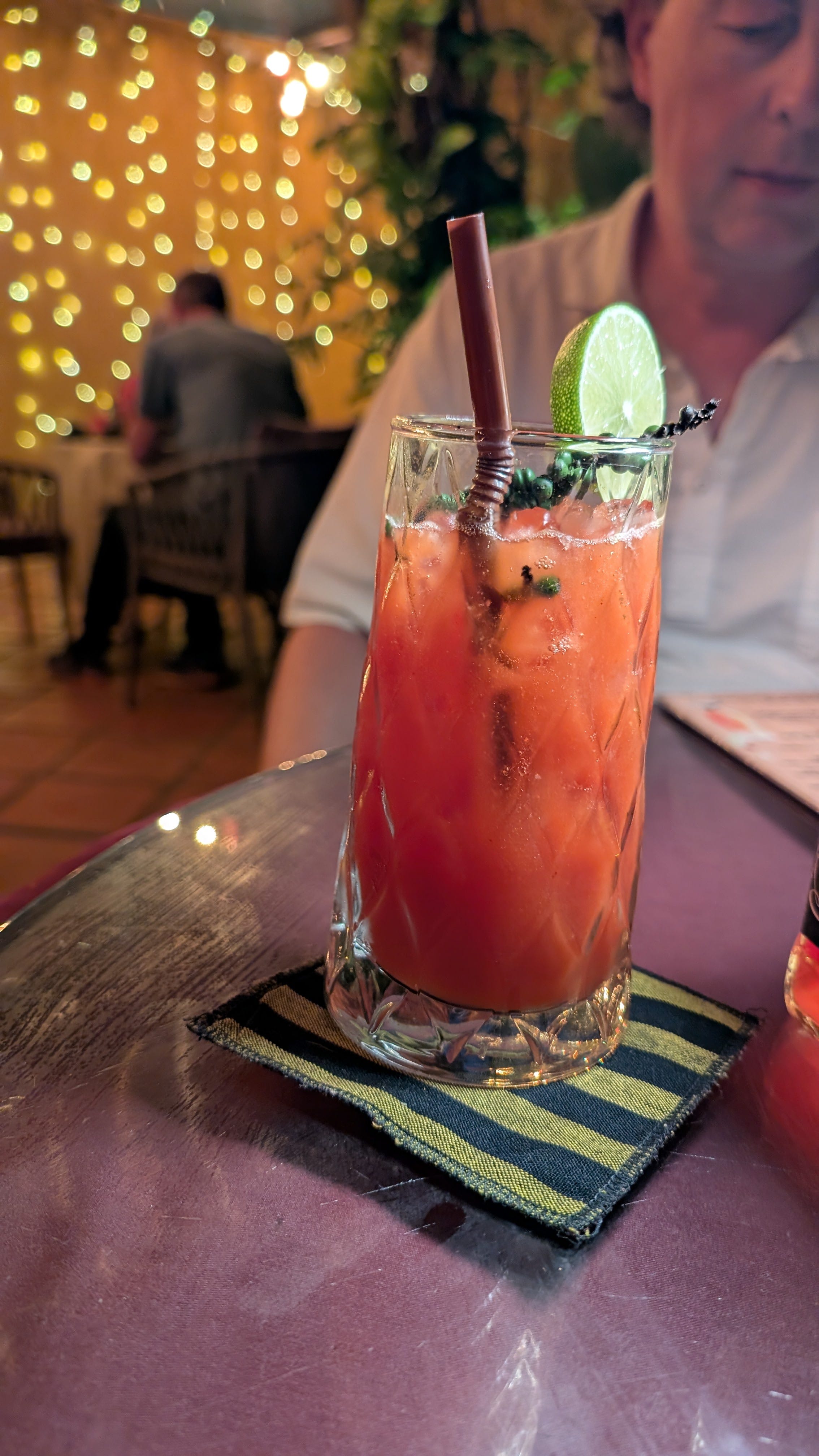
My Bloody Pari (pari meaning angelic being) included Kampot pepper and was surprisingly light and very tasty.
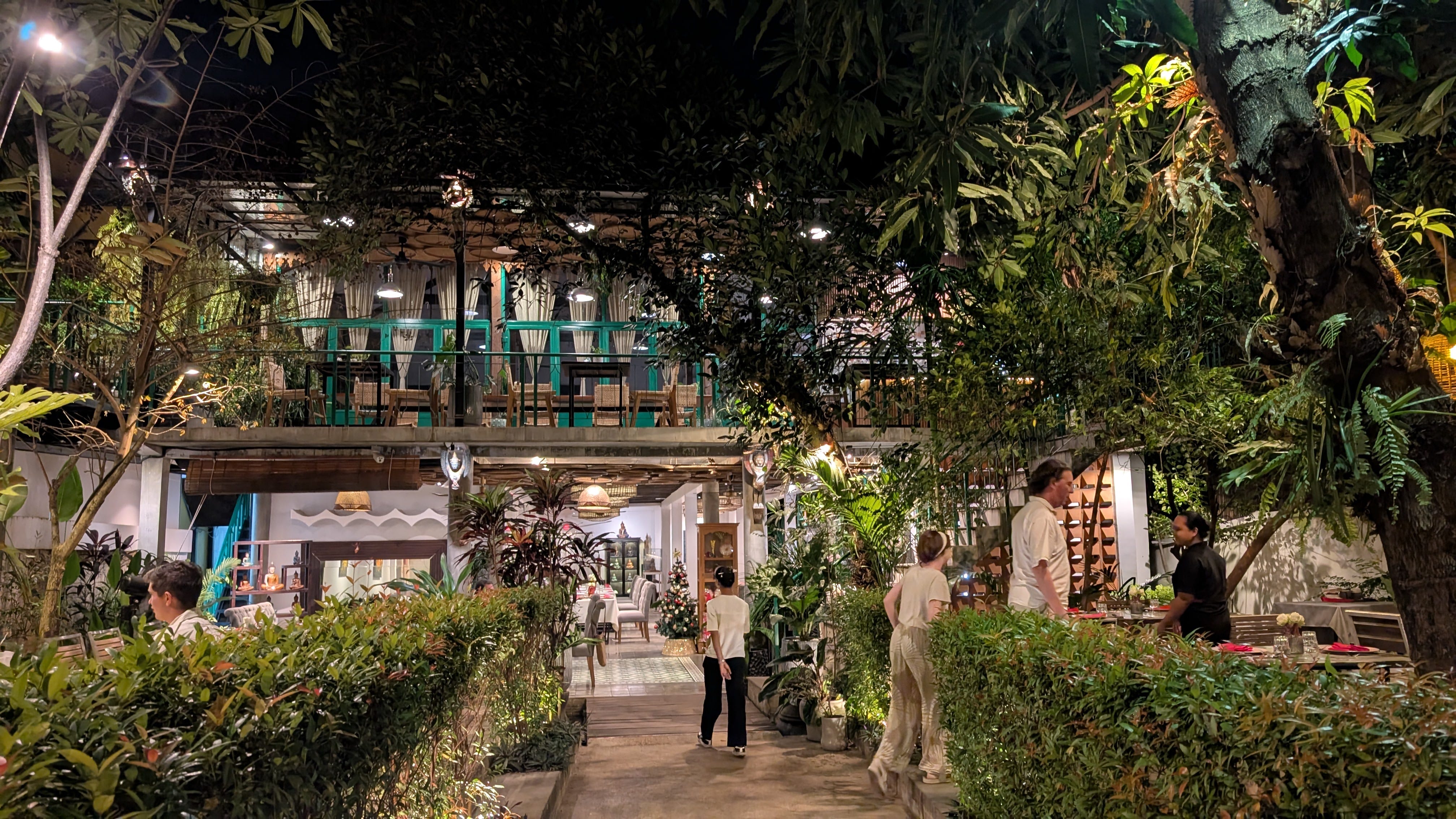
For our starters we moved on to Mahob, where we dined at a table in the garden surrounding the restored house.
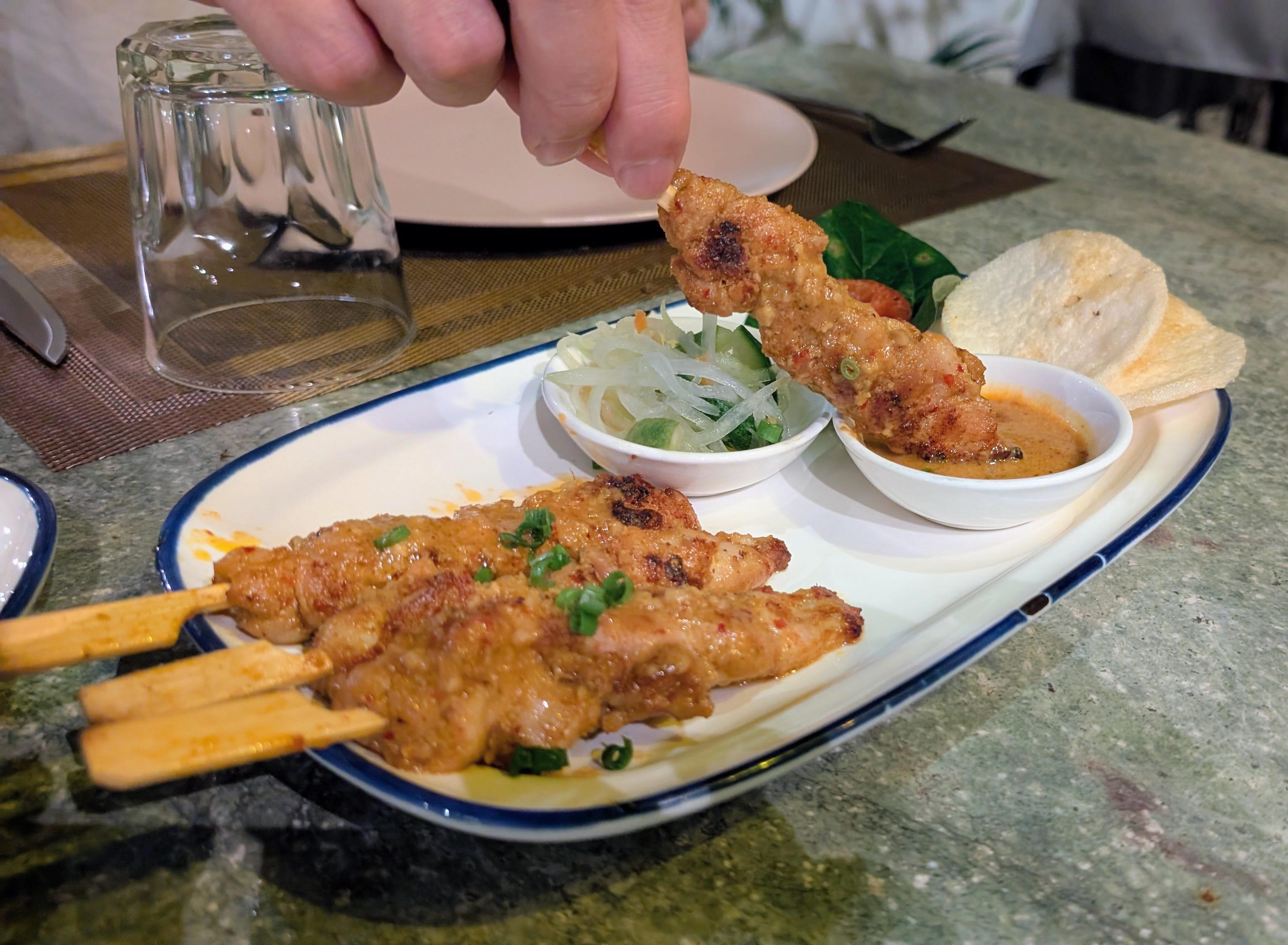
We had three dishes: seafood salad, fresh spring rolls, and excellent satay chicken skewers.
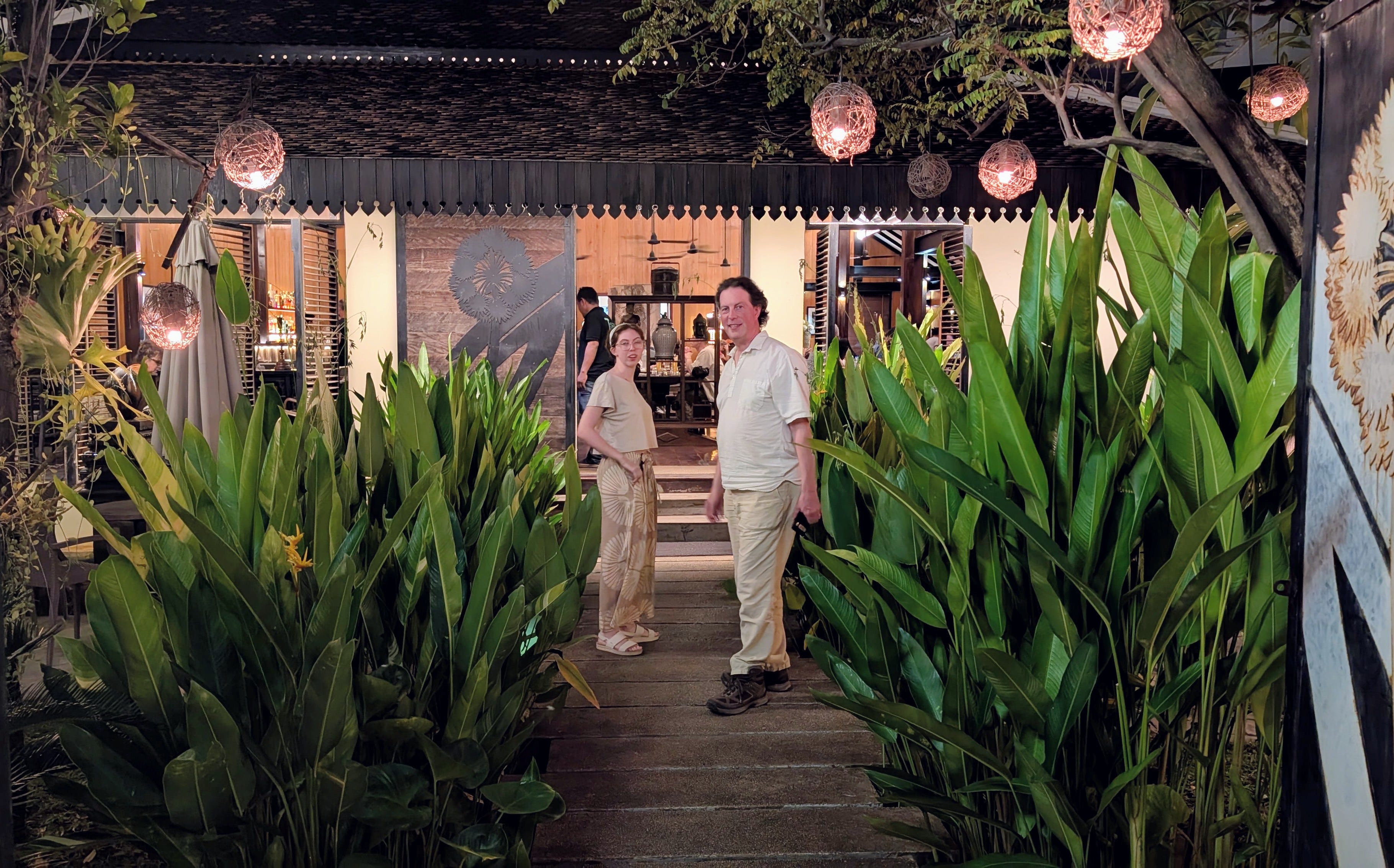
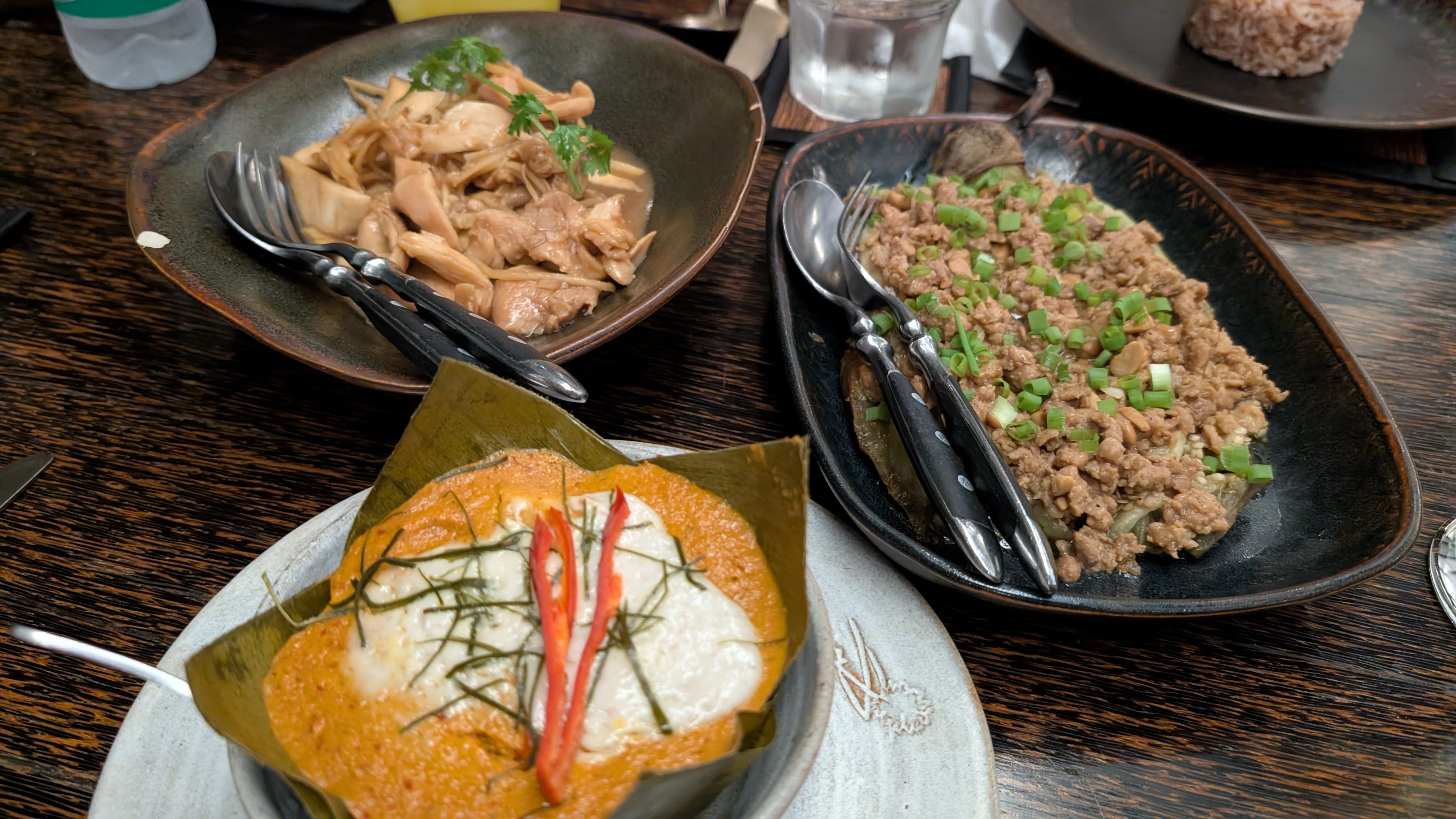
Our main course was served at Sugar Palm. We got their take on stir-fried chicken with ginger, fish amok, and pork with incredibly sweet and tender eggplant.
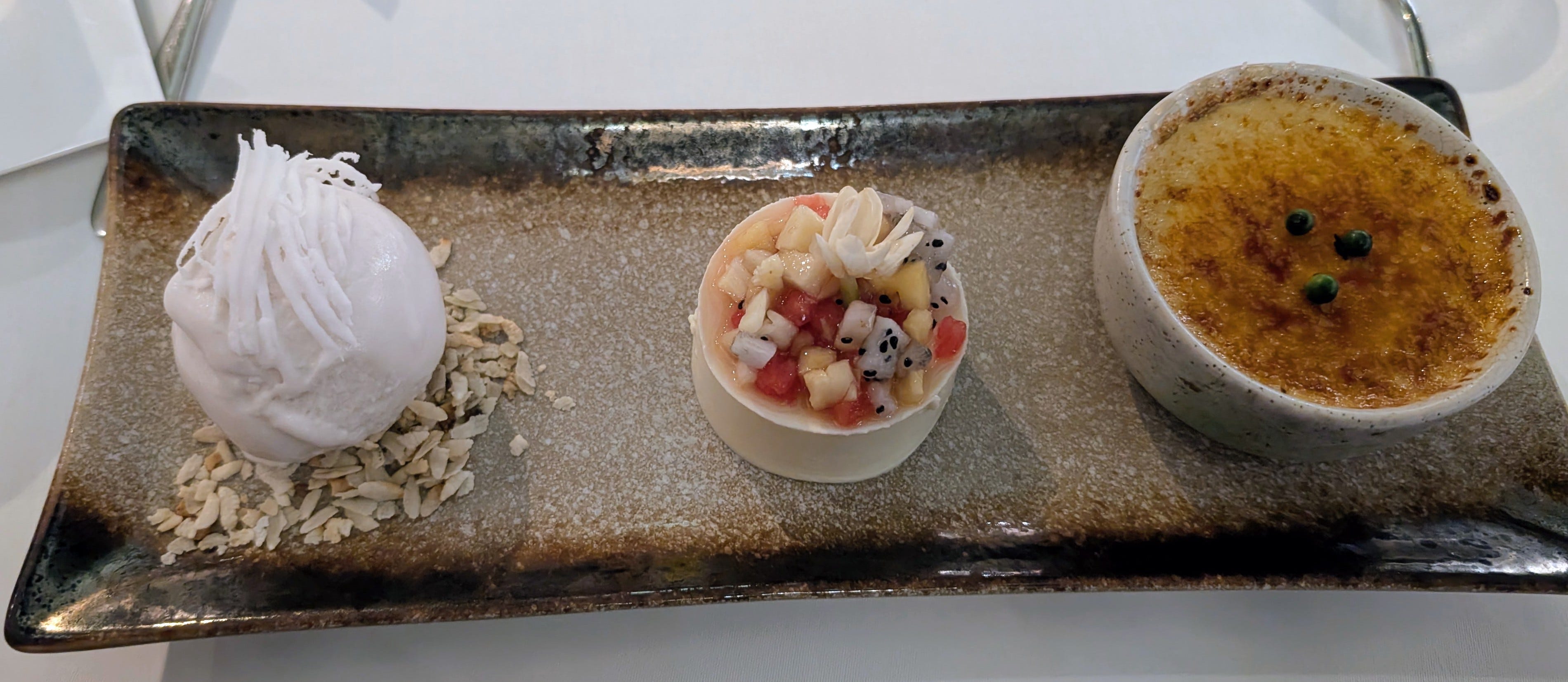
For dessert we wound up back at Malis, where we got to have the Kampot pepper crème brûlée again, along with jasmine panna cotta and coconut ice cream.
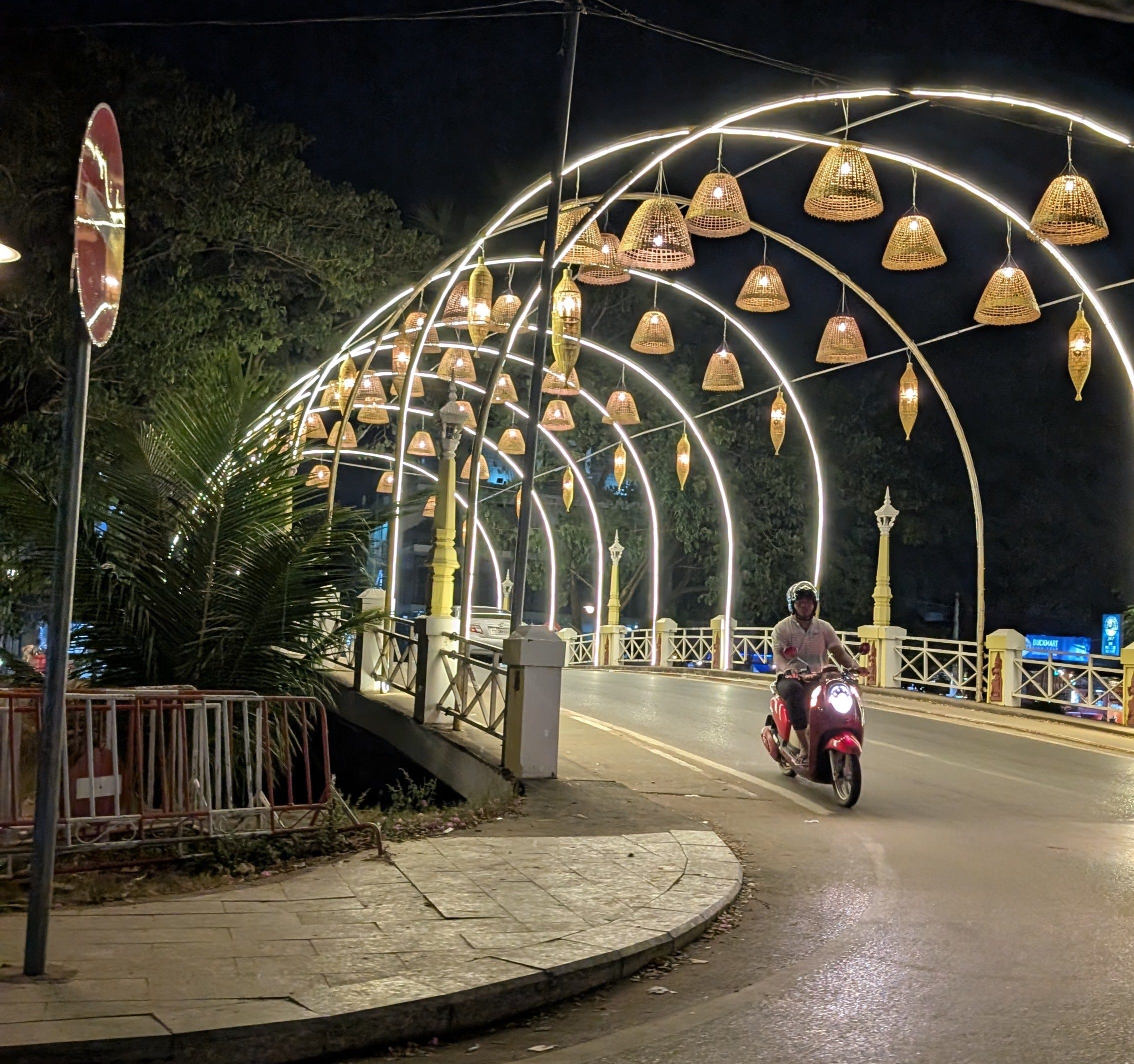
After that sweet ending to a lovely evening we headed back through the lamplit streets for one last night at Shinta Mani.
The temples were certainly our reason for visiting Siem Reap, but there were lots of other things to do and see. We were very sorry not to have more time in which to continue exploring Cambodia.
The rats are fascinating! So cool to learn more about that.
Also, HAPPY BIRTHDAY, E!!!!! Sending all the love.
Beautiful water, fascinating rats and fabulous food!