
Hello, Hanoi!

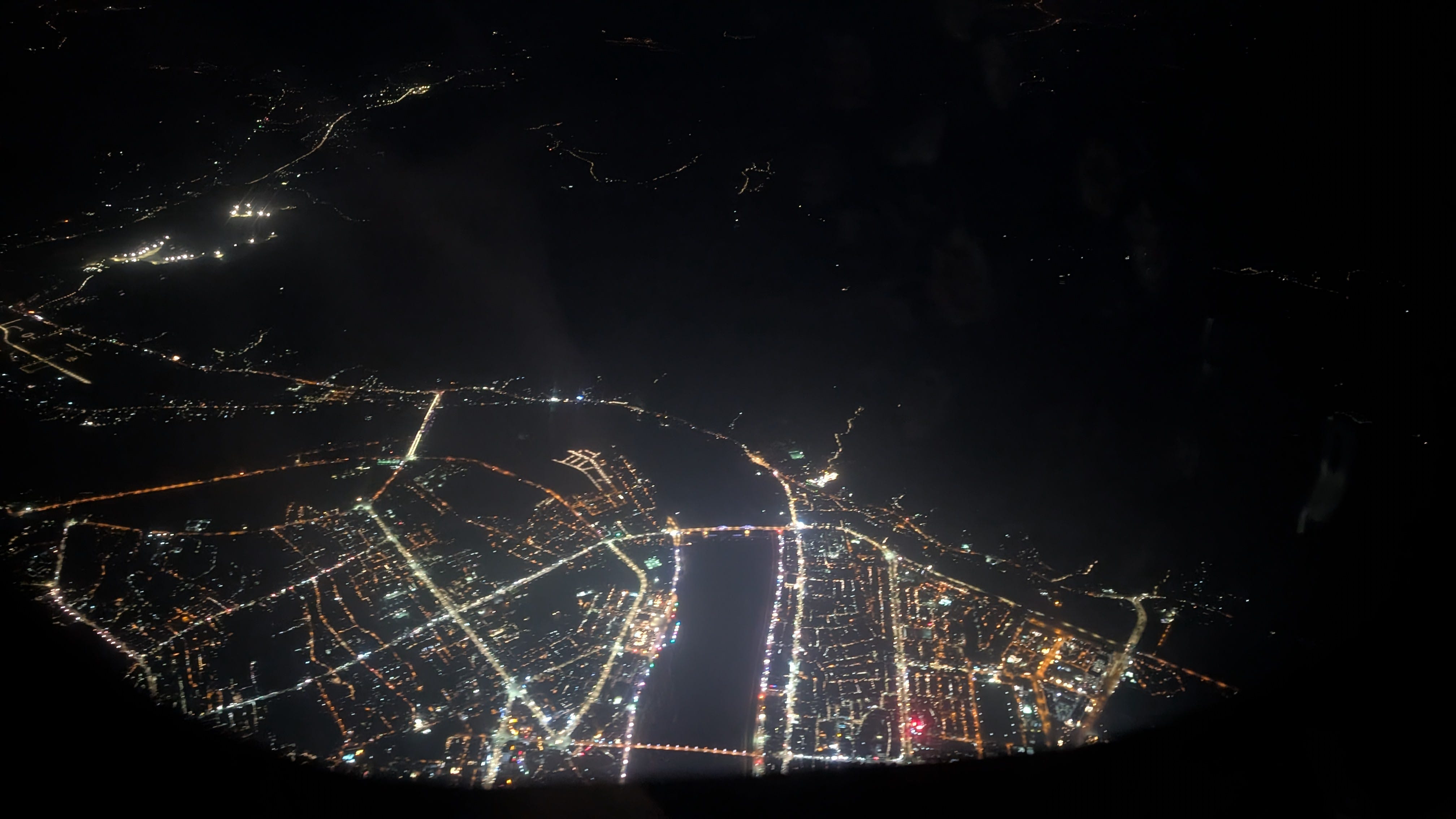
We had an easy flight from Luang Prabang and got a good view of Hanoi from the air.
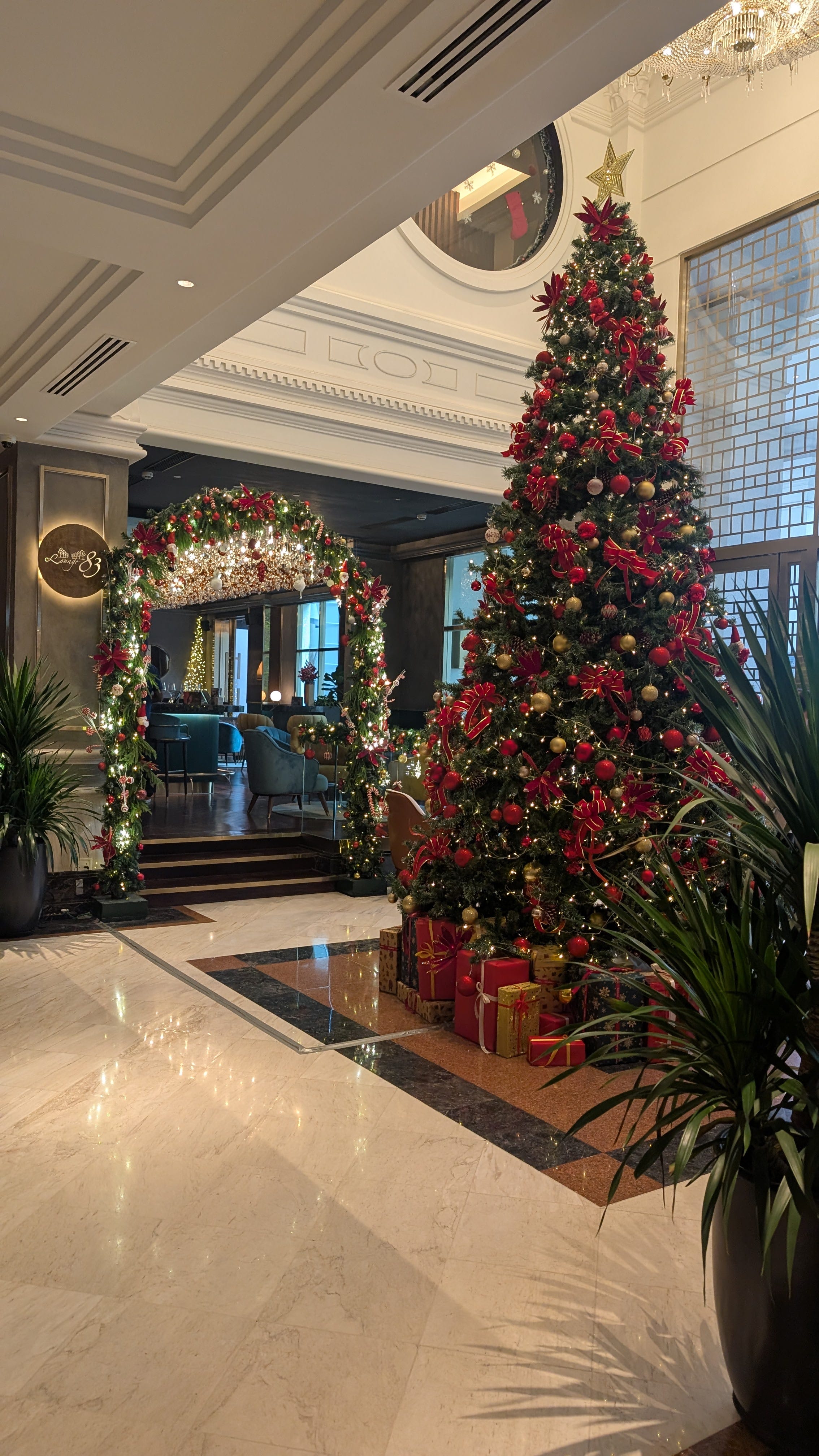
Our local guide, Jimmy, met us at the airport and saw us checked in at the Movenpick Hanoi, which was all decked out for Christmas.
We had an excellent dinner at O Macanese, the hotel's restaurant specializing in Portuguese/Macau fusion.
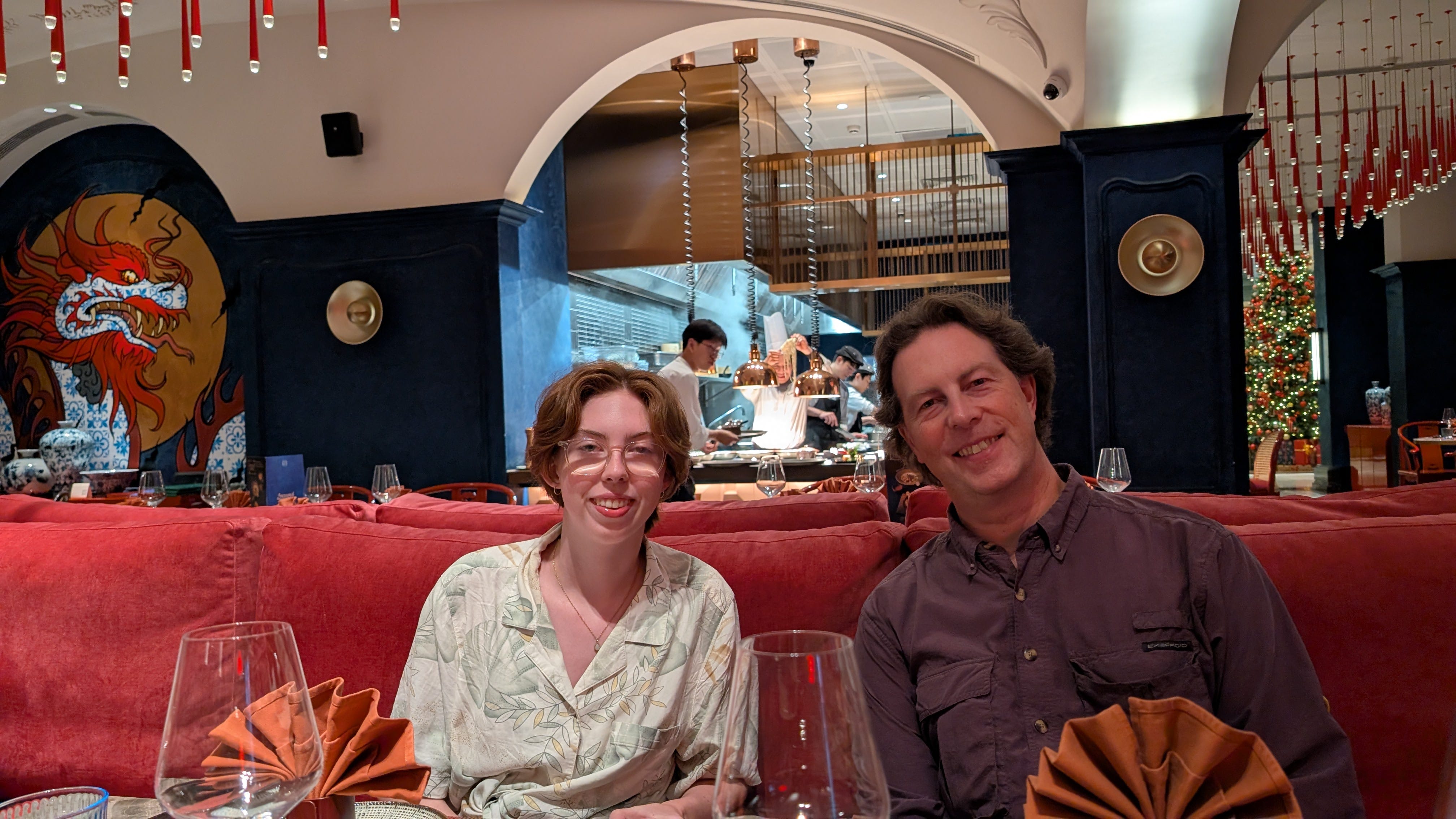
Alice was very excited about their soup dumplings and after several other tasty dishes we split an order of pasteis de nata, which made us nostalgic for our time in Lisbon so many countries ago.
Jimmy picked us up in the morning and took us out to see something of the city.
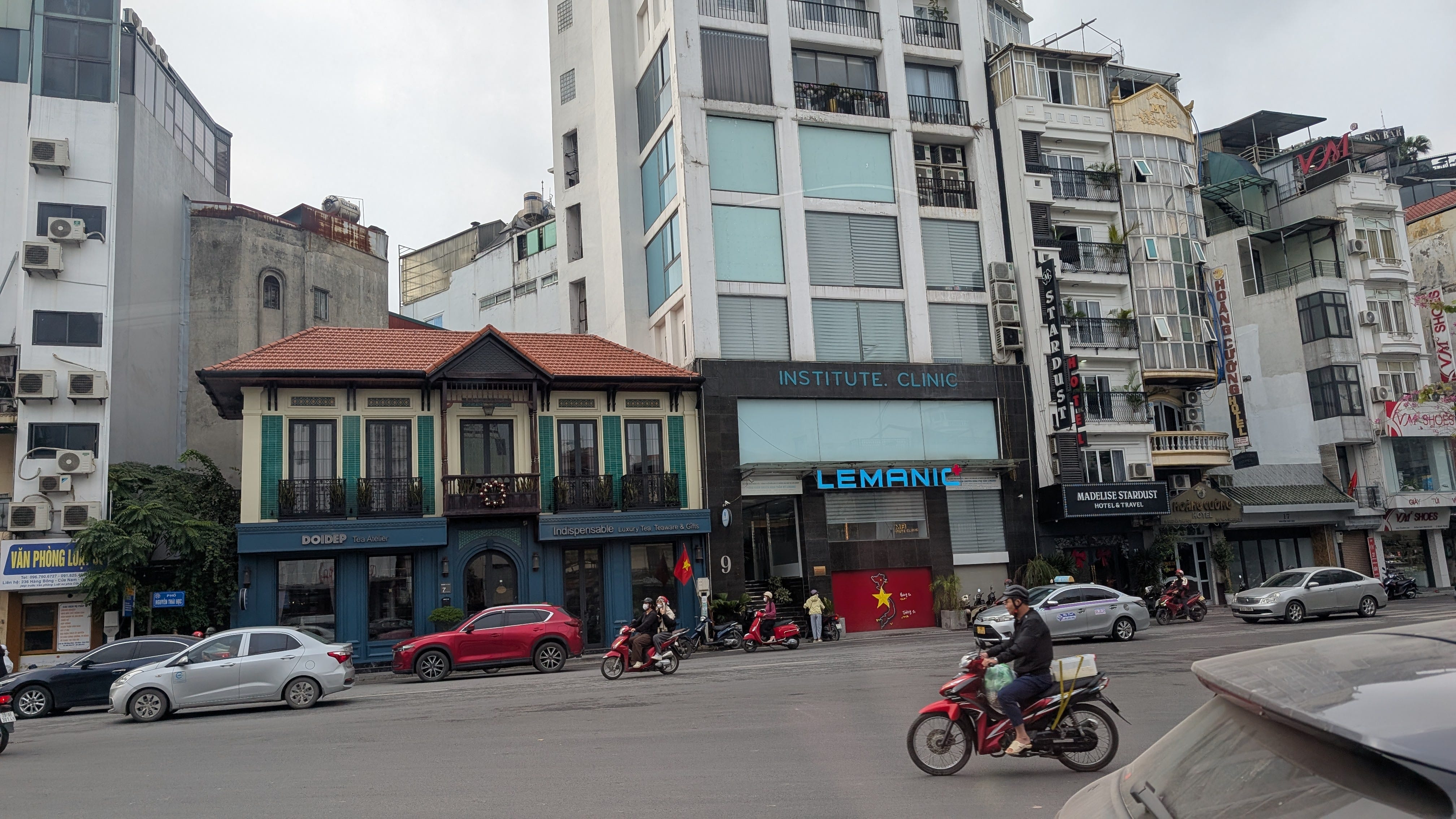
One of the immediately noticeable things is that old and new are very much intertwined here. Old Vietnamese houses and French colonial architecture rub shoulders with modern shops and highrises all along the streets.
To get a closer view of the old town we boarded bicycle rickshaws that are known here as cyclos.
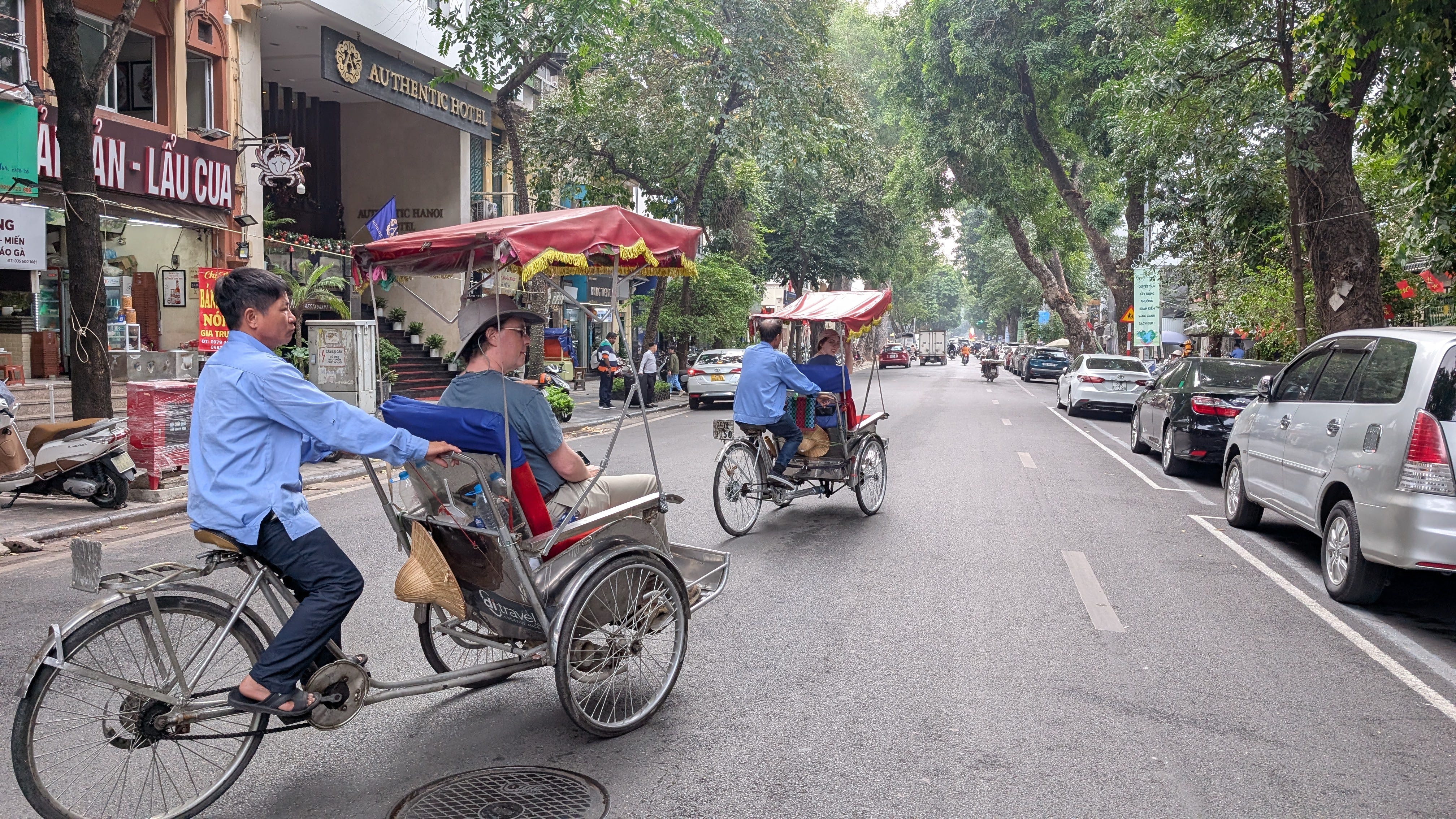
Along the Hoan Kiem Lake, we passed by the Tuong Dai Quyet Tu Monument, commemorating the bravery of local people during the war for independence.
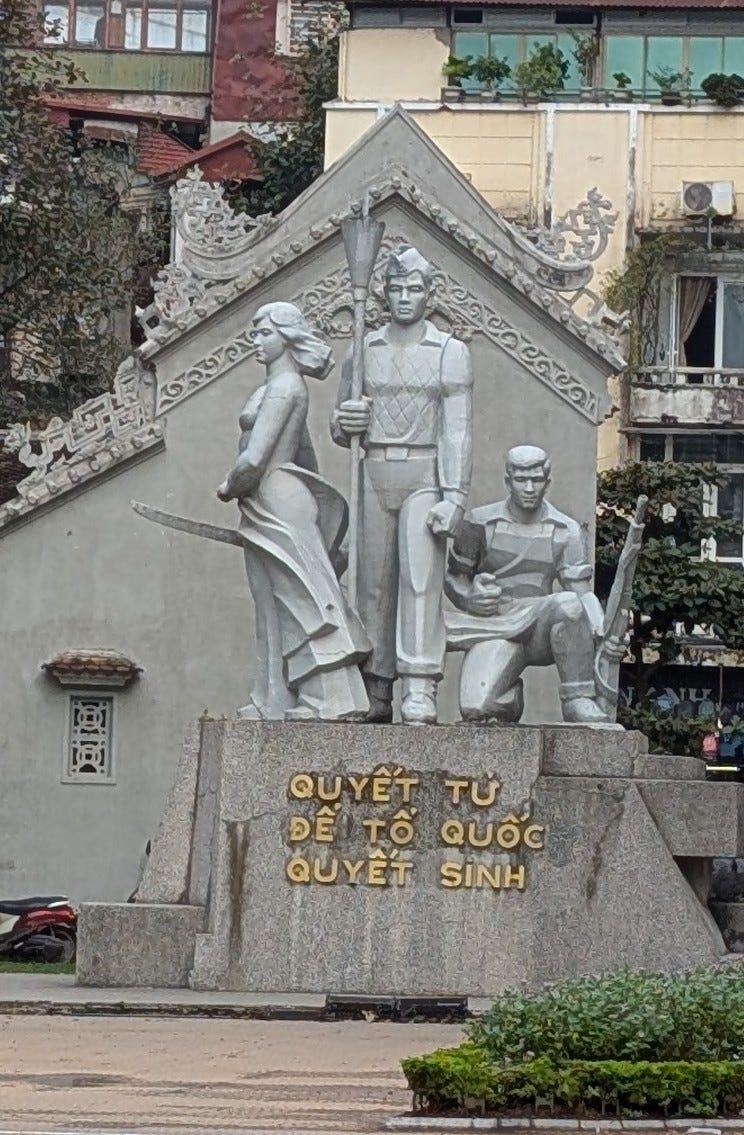
There were beautiful lanterns decorating the Golden Bell Theatre, which offers performances of folkloric dance in the evenings.
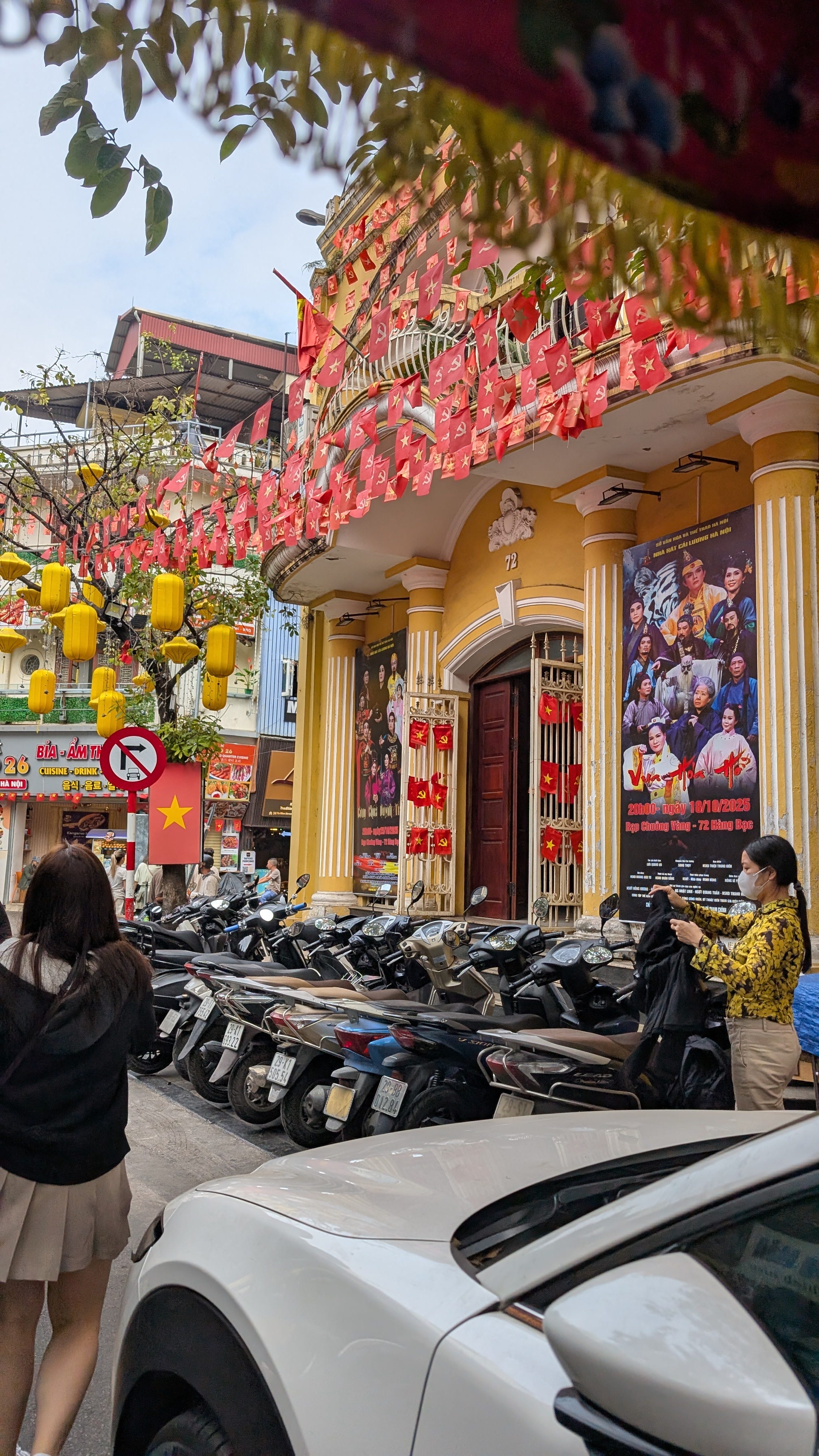
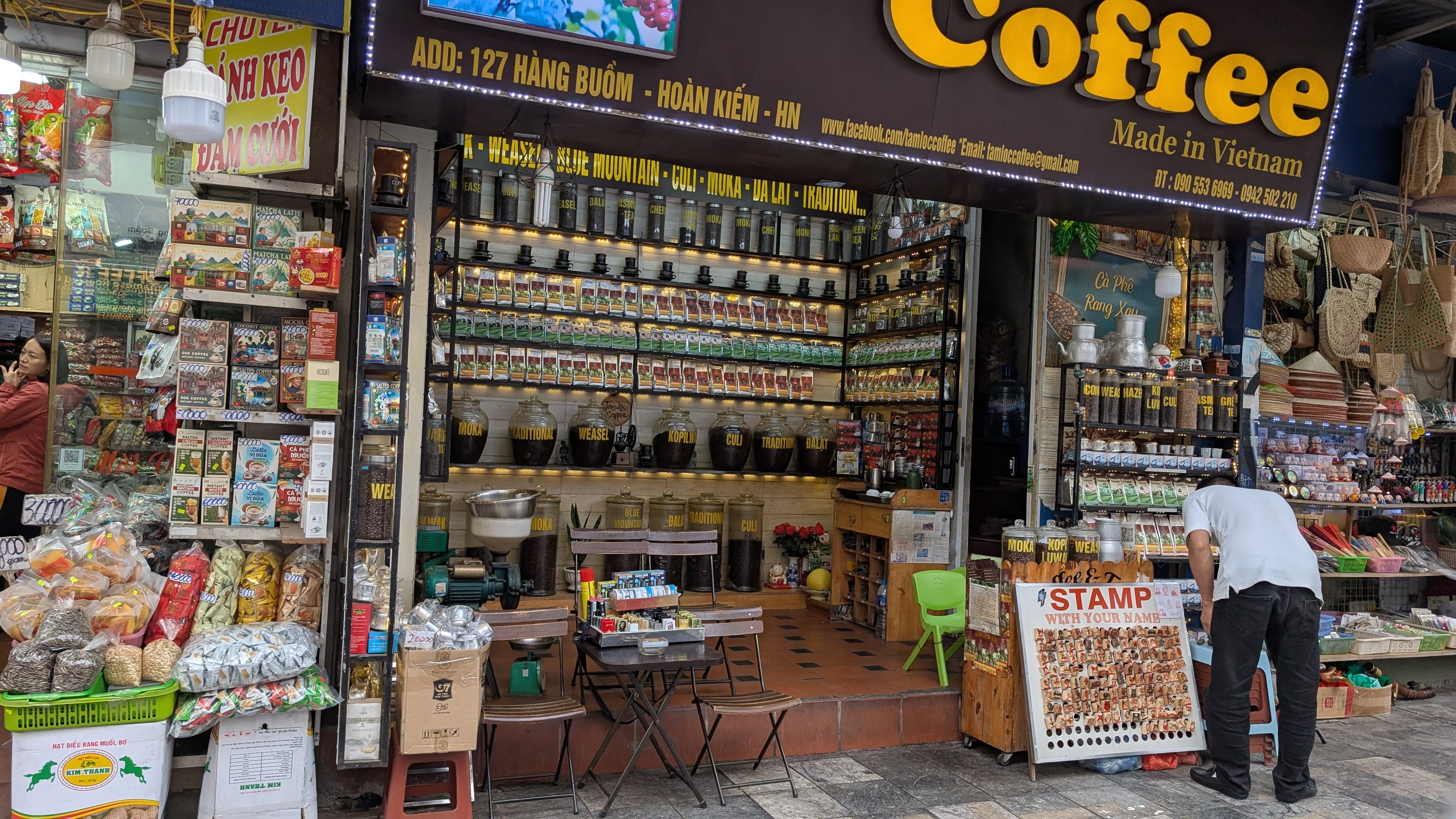
Like the markets of Morocco and India, but with much wider streets, the shops here are clustered according to their merchandise.
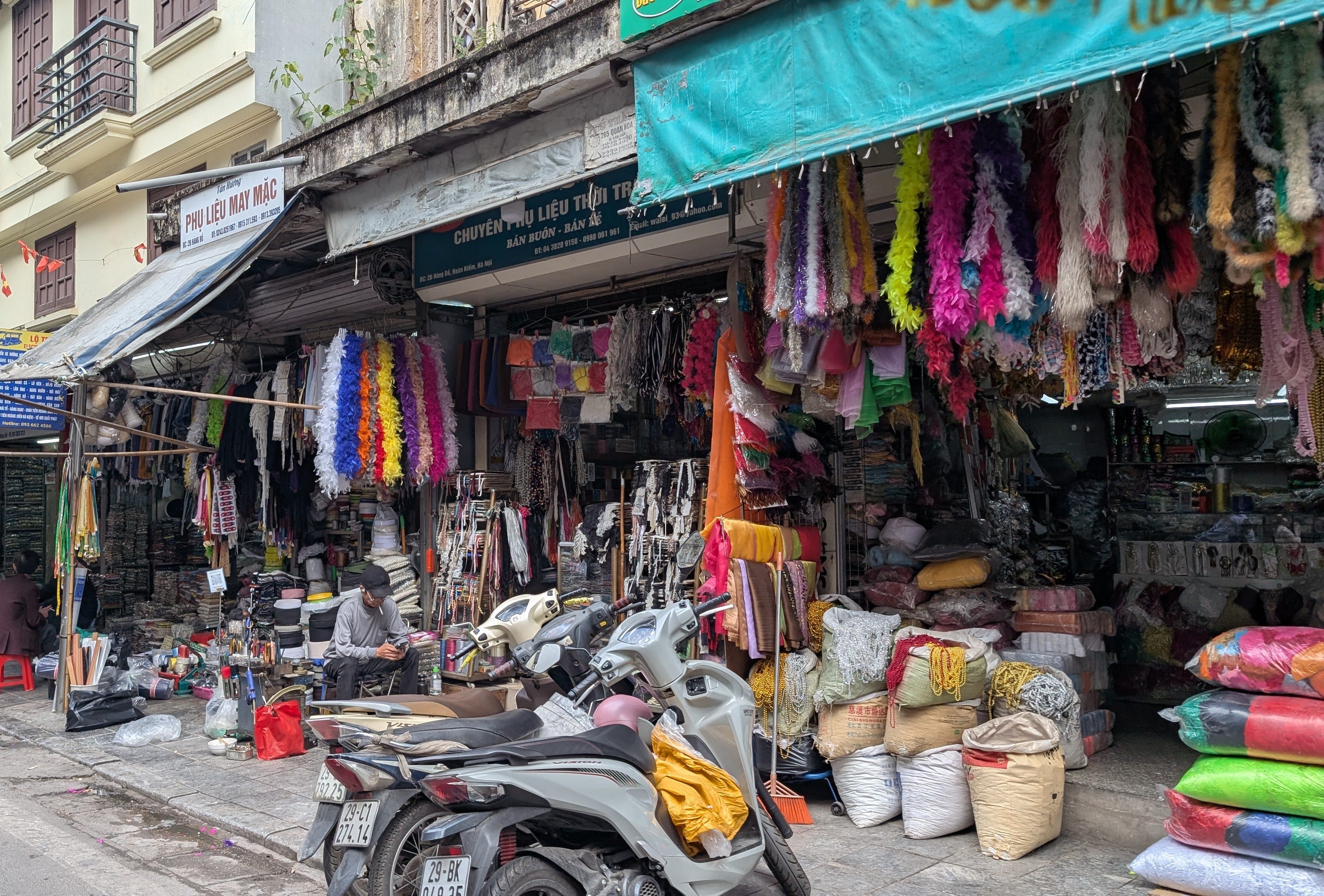
We passed down the sewing goods street and turned a corner into hardware row.
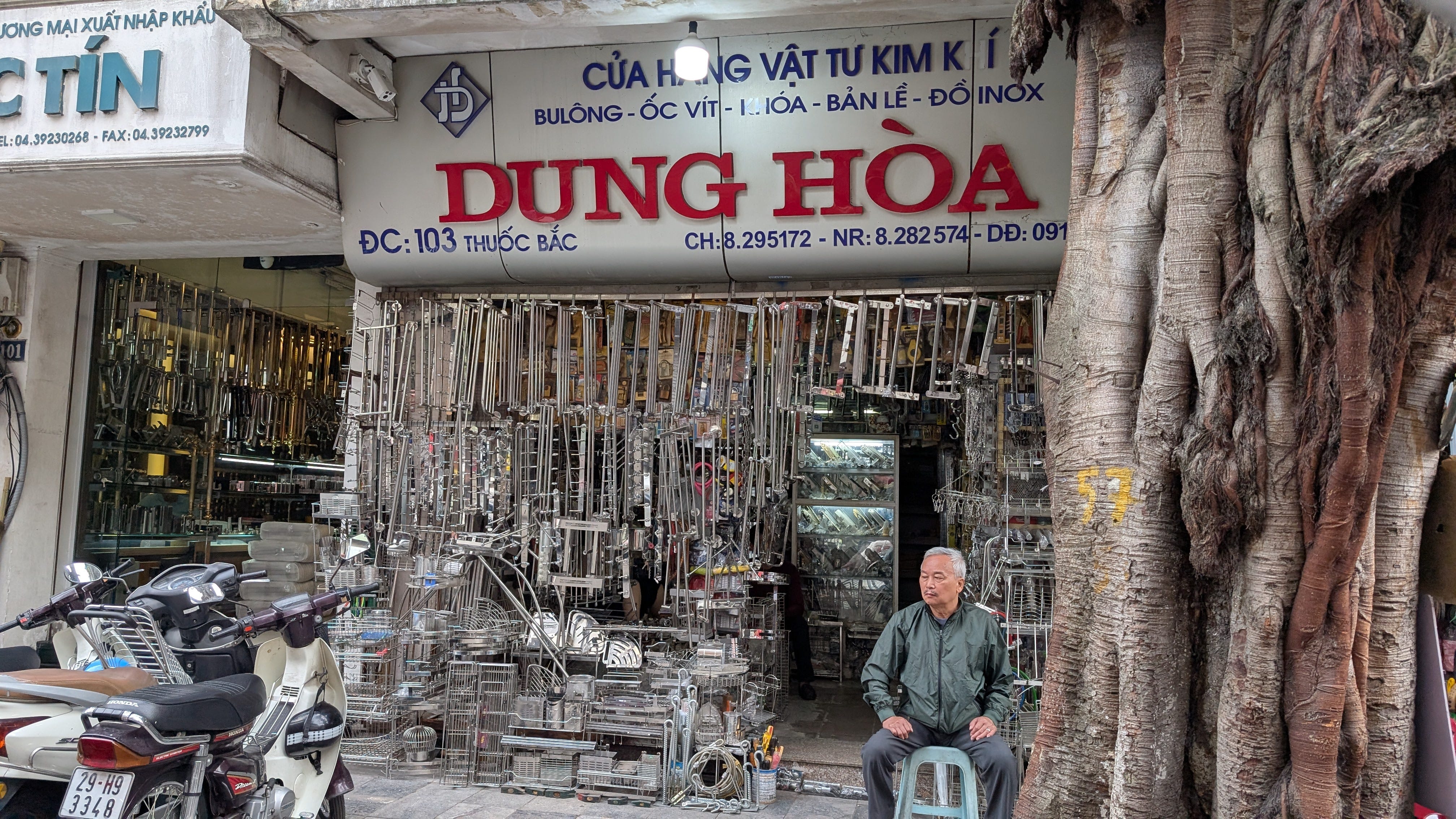
There were streets of clothing, spices, shoes, and of course coffee.
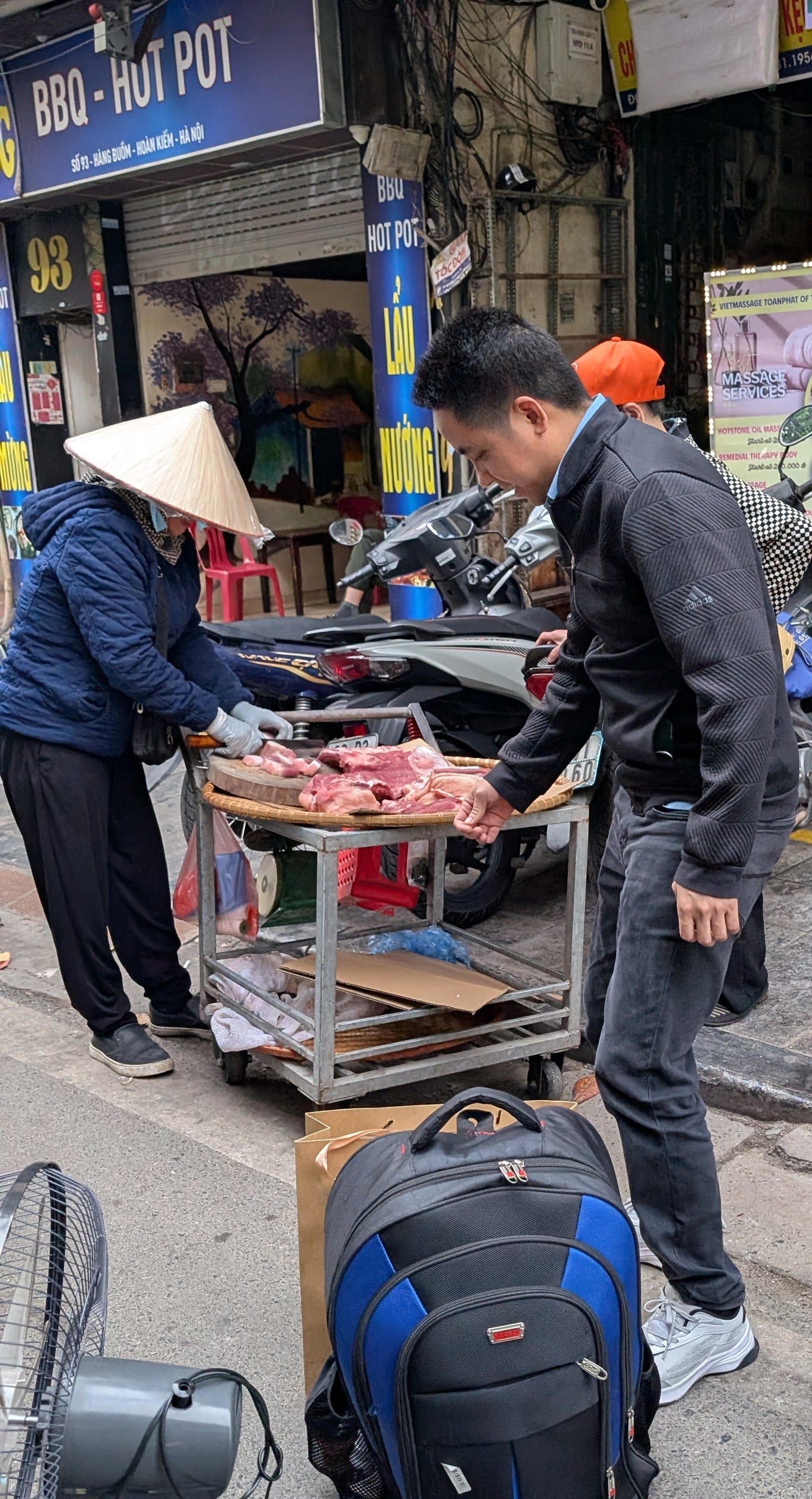
Many of the fresh goods are sold by street vendors like this woman selling pork from a little cart.
And everywhere there are at least a million motorcycles and scooters.
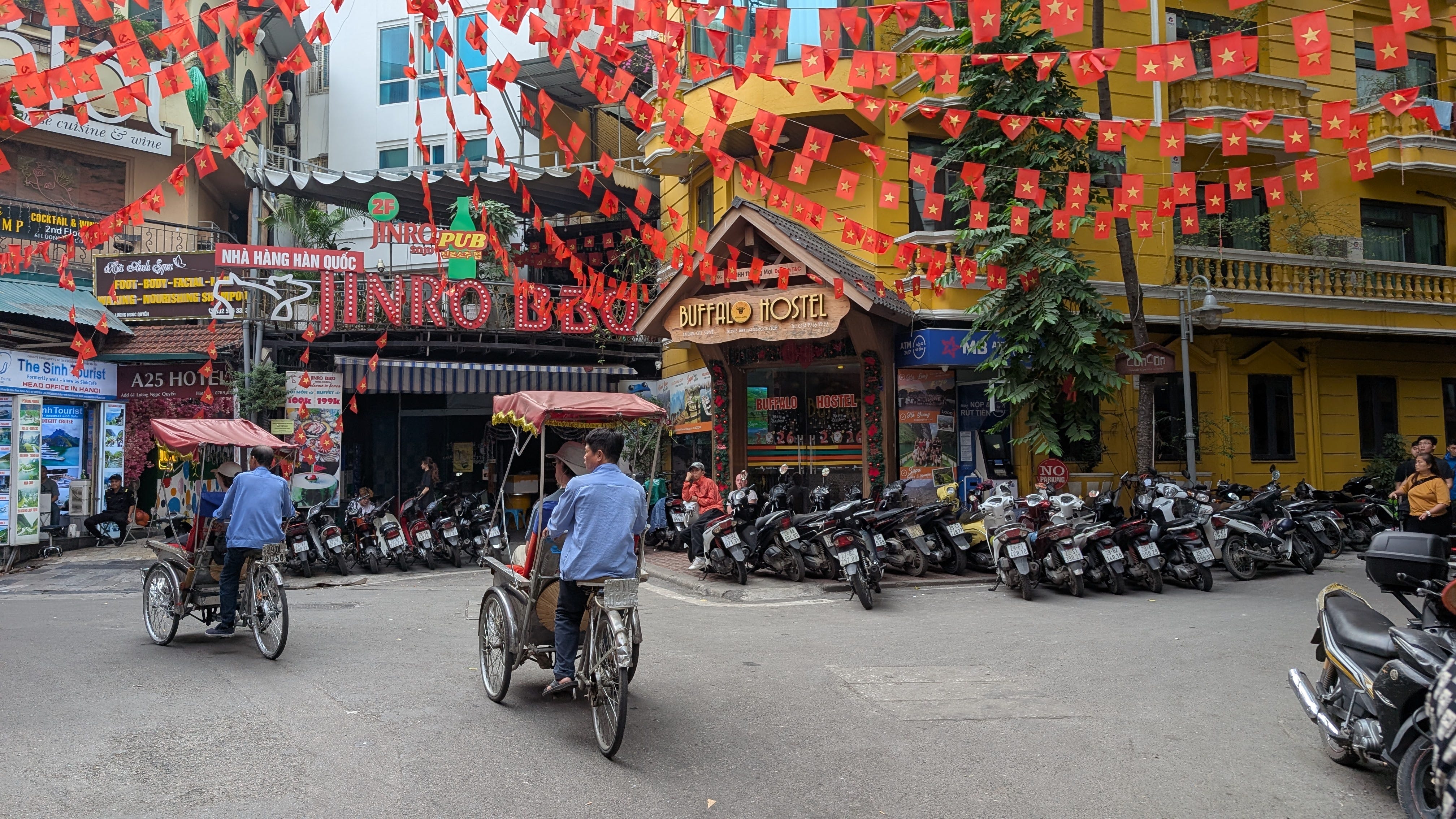
Jimmy was very concerned that we make our way safely through the overwhelming traffic, but after India and even Bangkok, it just didn't seem that bad to us.
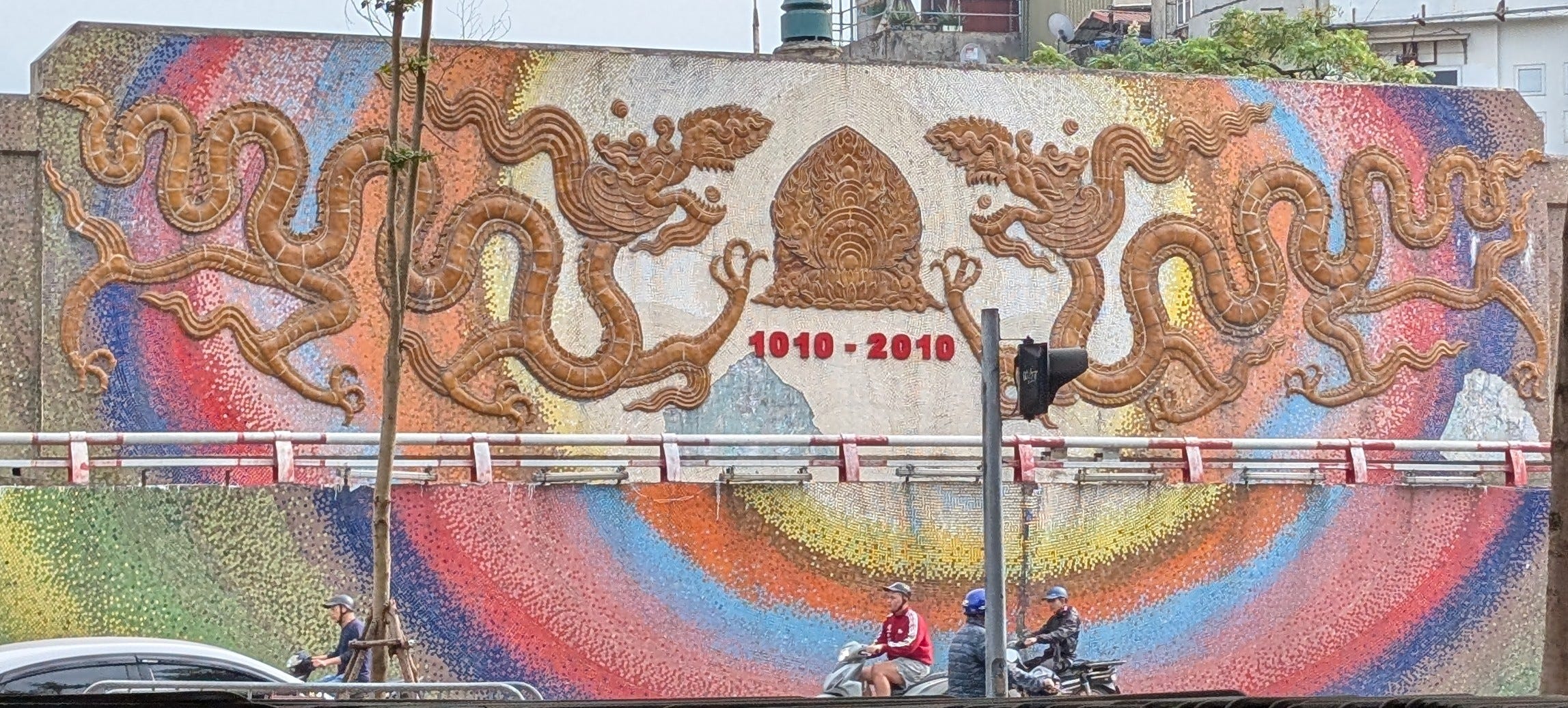
Back near our starting point I caught sight of this mural, commemorating the celebration of Hanoi’s founding, more than a thousand years ago.
Leaving our cyclos, we headed to the Temple of Literature. Originally built in 1070, it served as the Imperial Academy until 1779. It has been renovated and reconstructed several times.
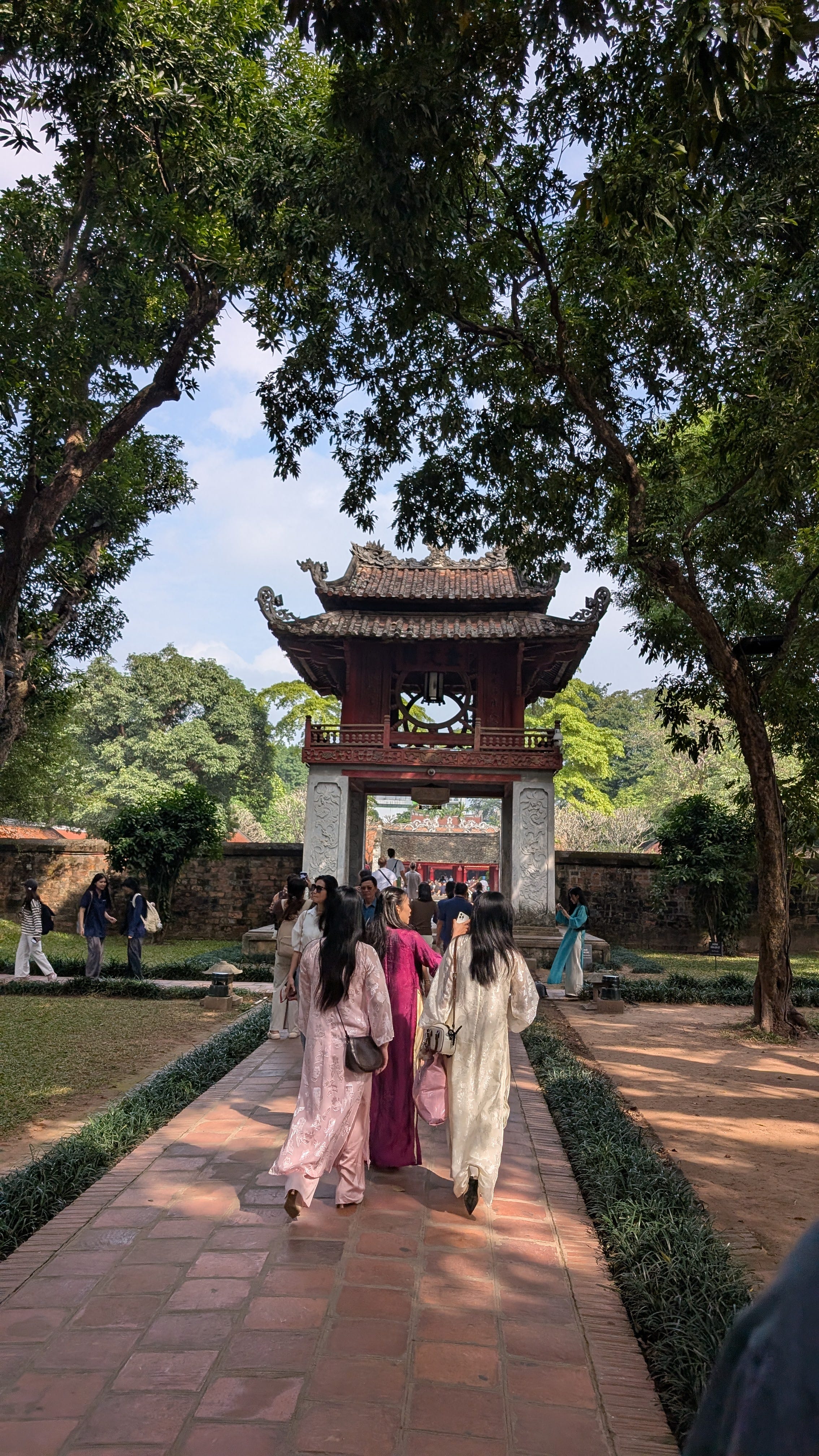
The temple complex is a long rectangle, narrow relative to its length. Visitors pass through a series of gates and courtyards. The Khue Van Cac, above, is constructed so that moonlight will pass through and illuminate the pond in the next courtyard.
All over Hanoi we saw young women being photographed in áo dài, the traditional Vietnamese dress. According to Jimmy this is a big trend. The photos are posted on social media and used to make calendars and other personal mementos to give as gifts at Tet, the Vietnamese New Year celebration.
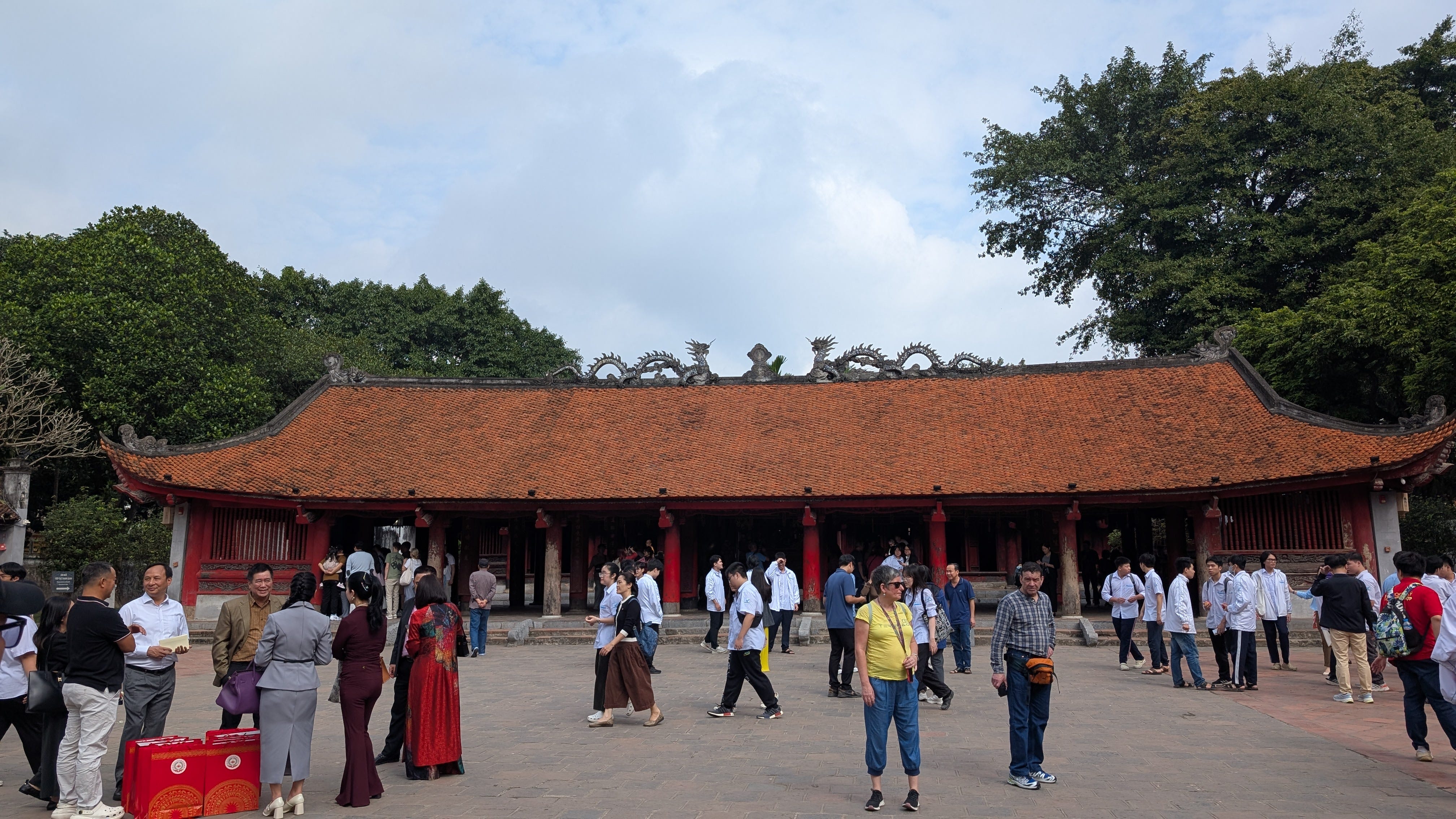
This is the central courtyard of the temple, where students would sit on mats with lap desks to listen to lectures and take their exams.
It was very interesting to us to see the very Chinese architecture in contrast with the more Indian influenced styles in Thailand and Laos.
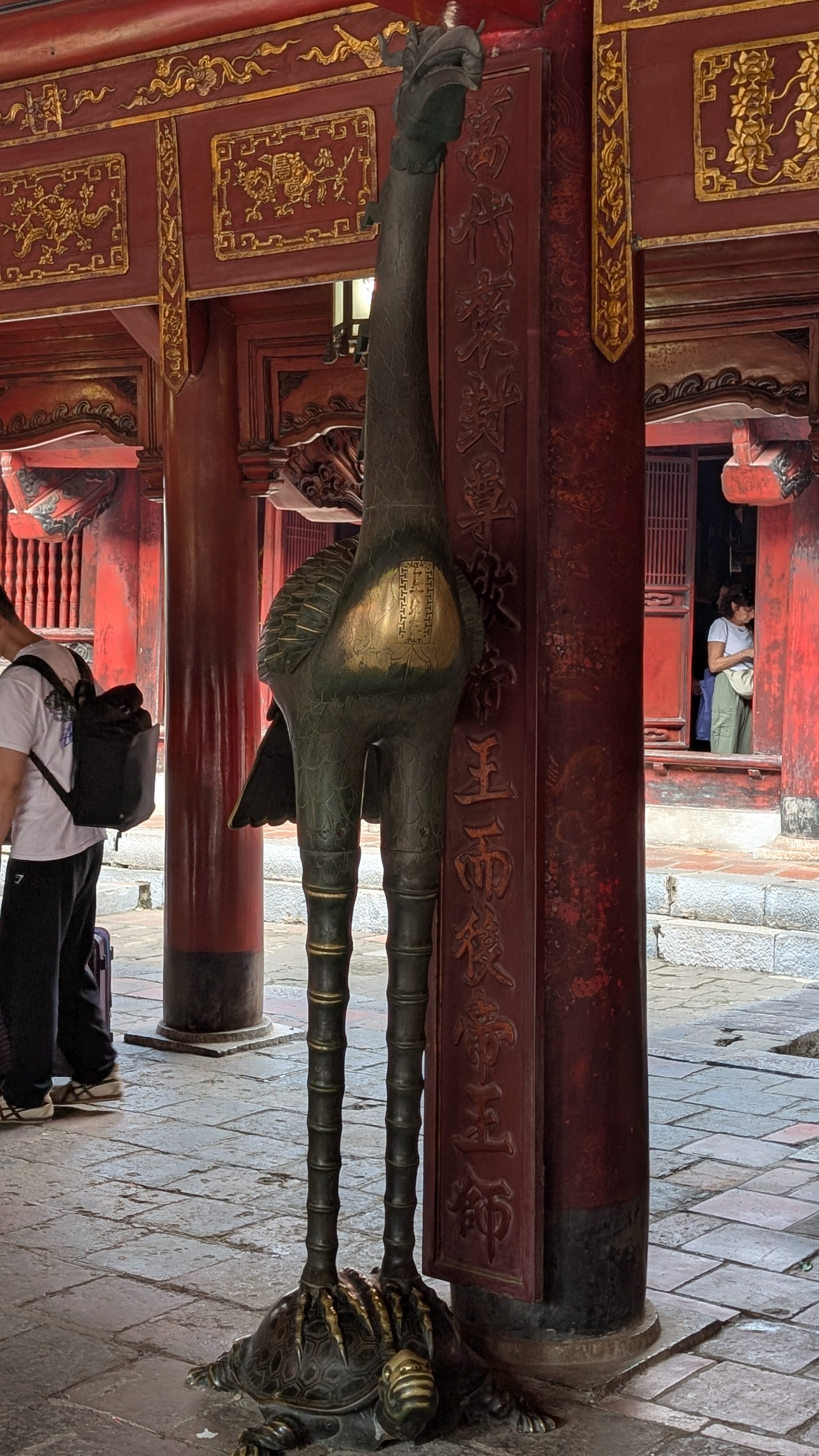
We passed through the House of Ceremonies with an altar flanked by bronze sculptures of phoenixes perched on turtles. These are two of the four sacred animals in Vietnamese culture and visitors, especially students, are encouraged to rub them for luck.
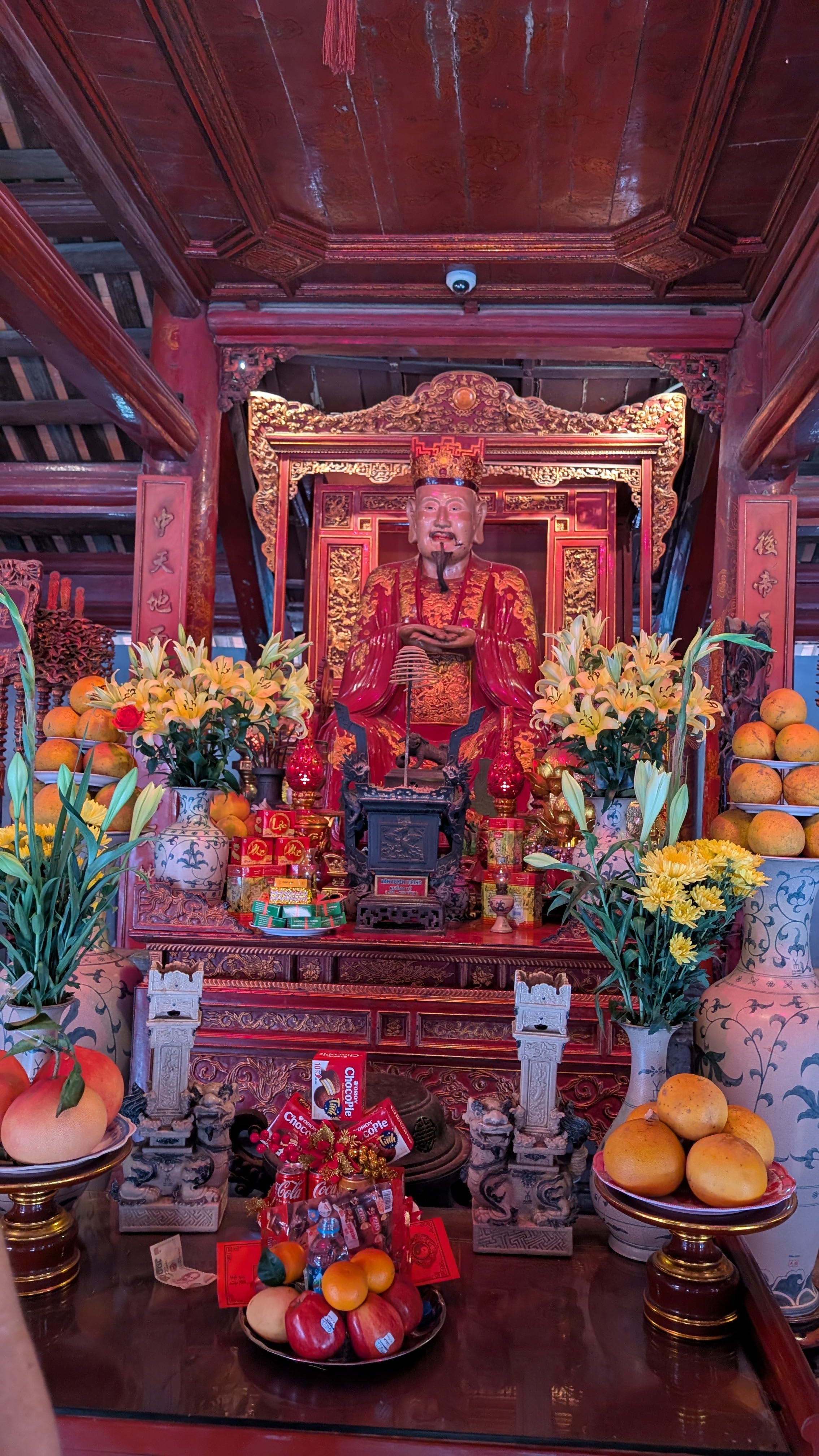
This is the sanctuary of the temple, with its large image of Confucius. To either side are figures of his four main disciples.
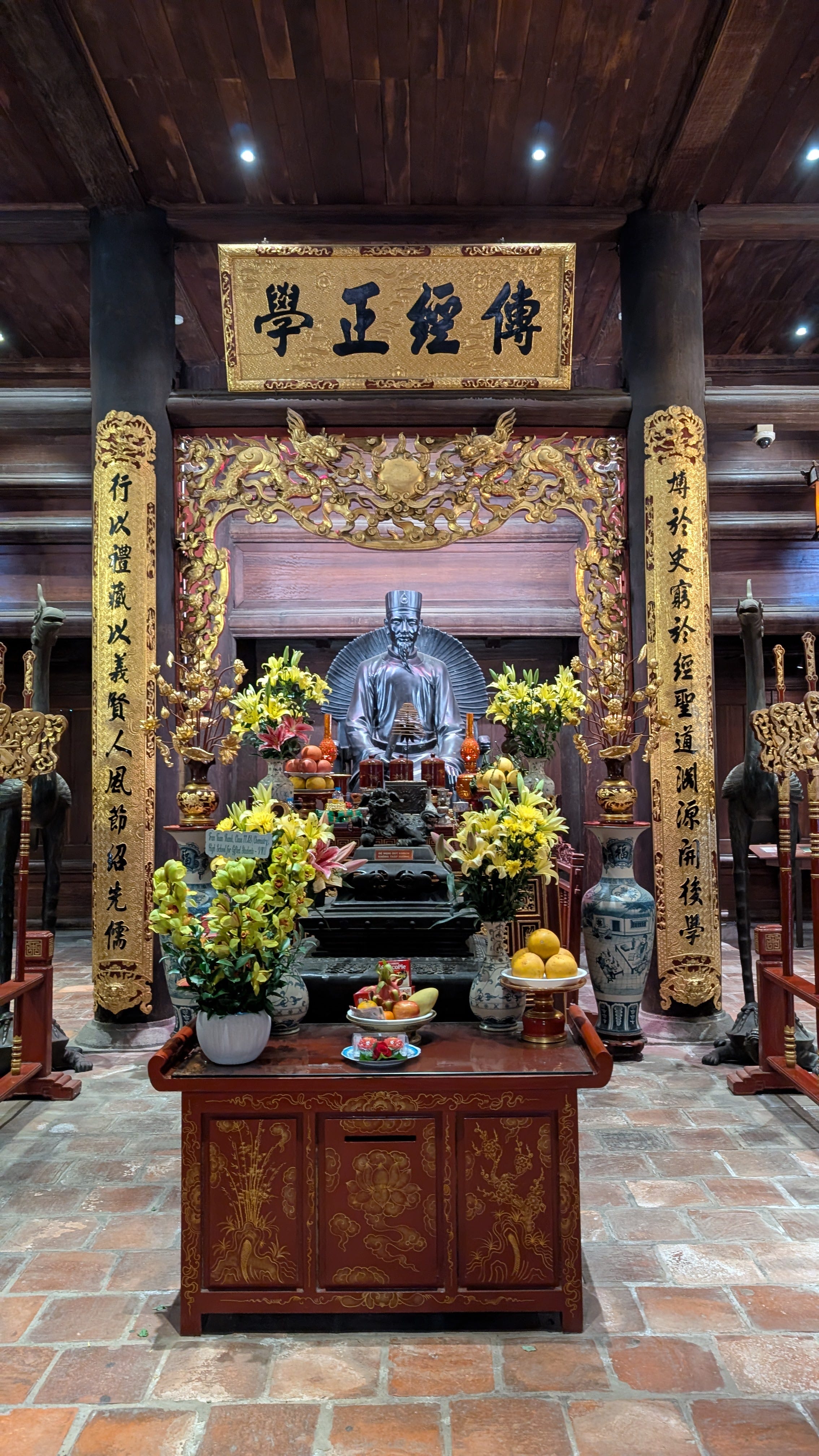
Next up was a shrine dedicated to Chu Văn An, the revered 14th century headmaster of the academy. He is seen as a model not only of education, but of moral rectitude, because he resigned from his position and retired to his home village after the emperor refused to behead seven other mandarins (important figures at court) whom Chu Văn An accused of corruption.
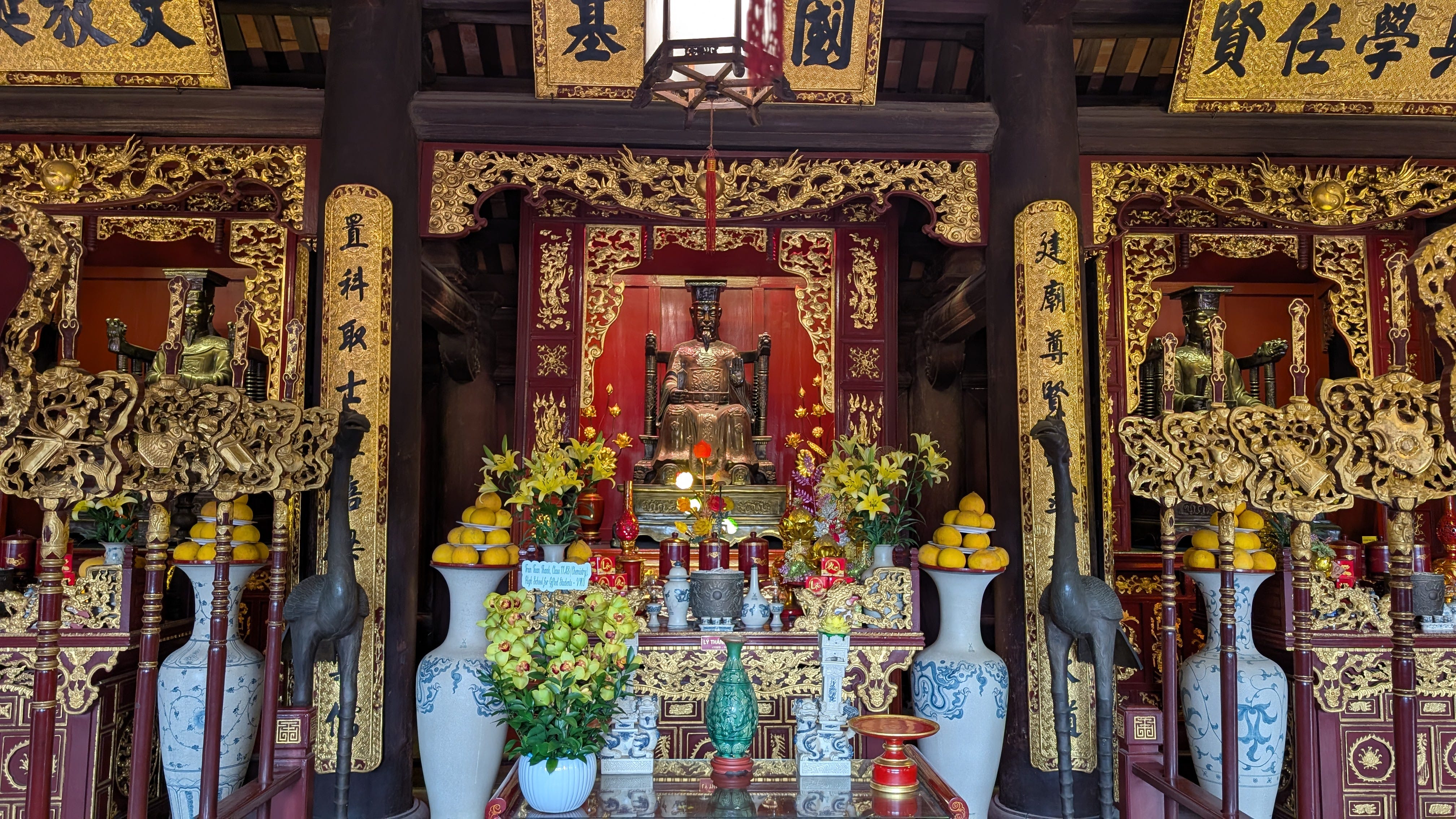
On the second floor of that building is a shrine honoring three monarchs who were central to the history of the temple. This part of the complex we reconstructed in 2000 and I found the Communist government's relationship with the history of monarchy interesting to contemplate and compare with other countries.
From the temple we moved on to the Museum of Ethnography, which documents and celebrates the many different peoples of Vietnam. In their outdoor space they have a collection of typical structures from several different cultures, each built by members of the communities represented.
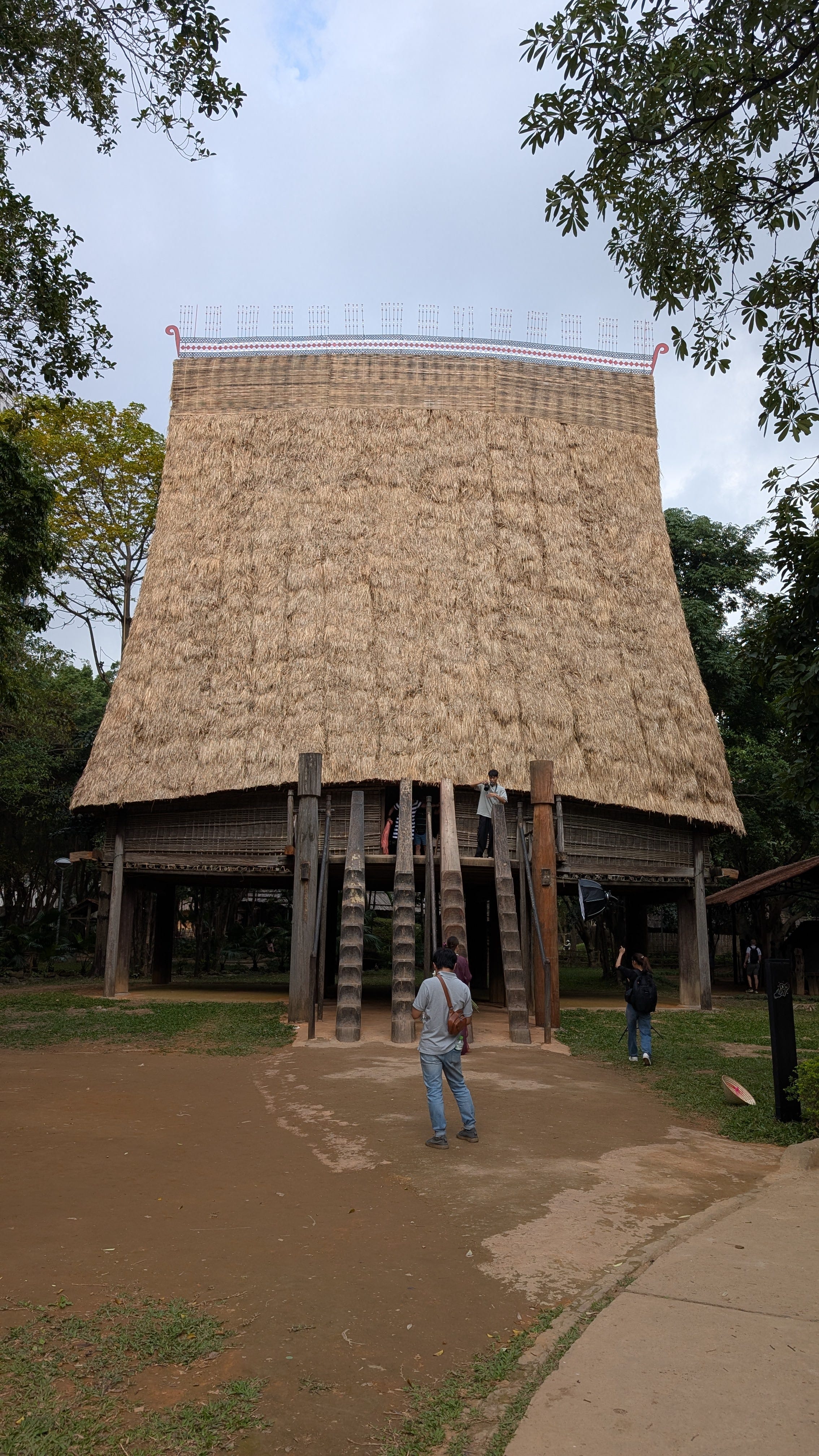
This is a traditional Bahnar community house. It showcases the talent and strength of the village and is used for rituals, education, meetings with outsiders, and social gatherings.
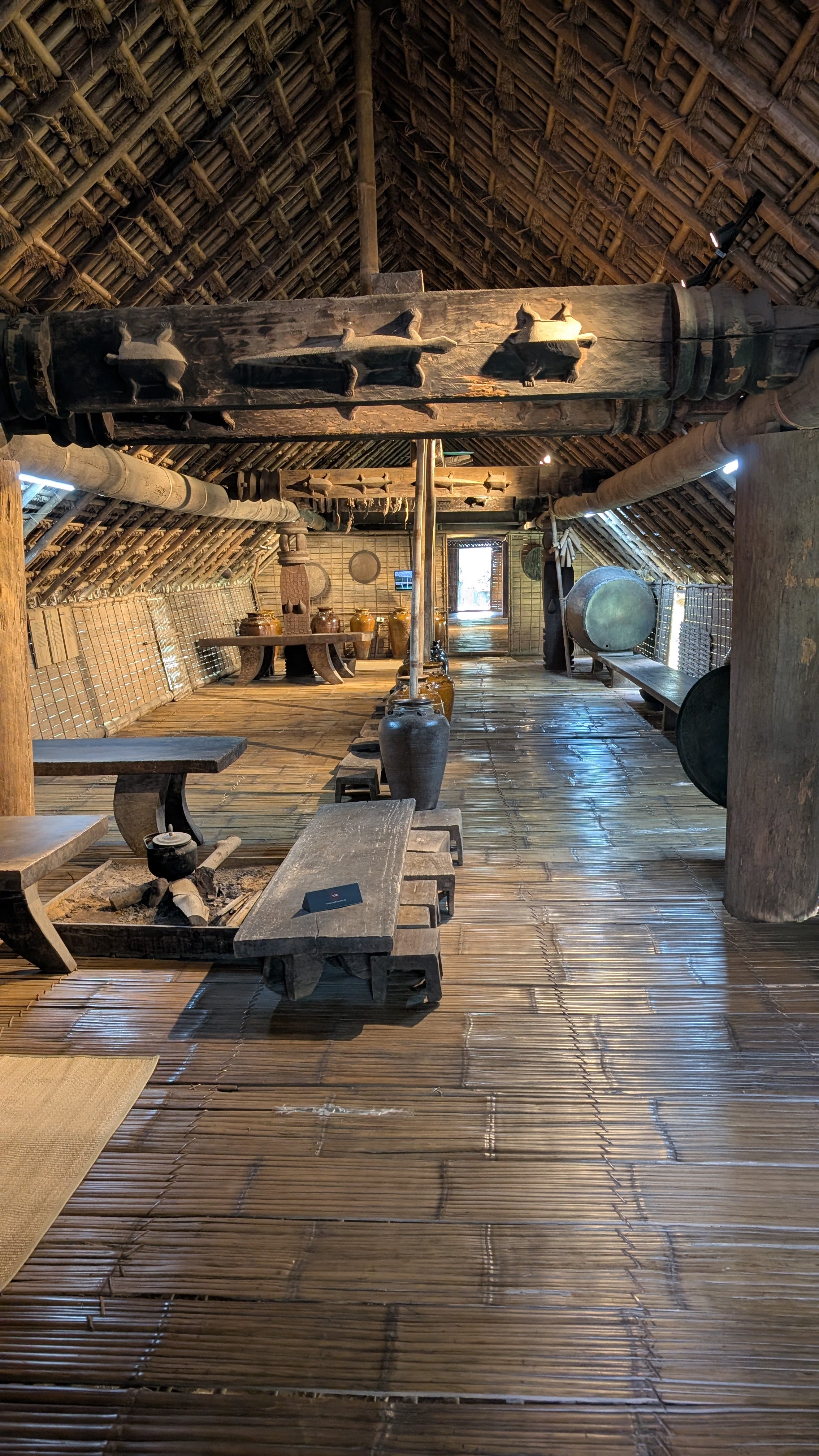
This is the interior of a traditional Ede longhouse. The bigger the matrilineal family, the longer the house.
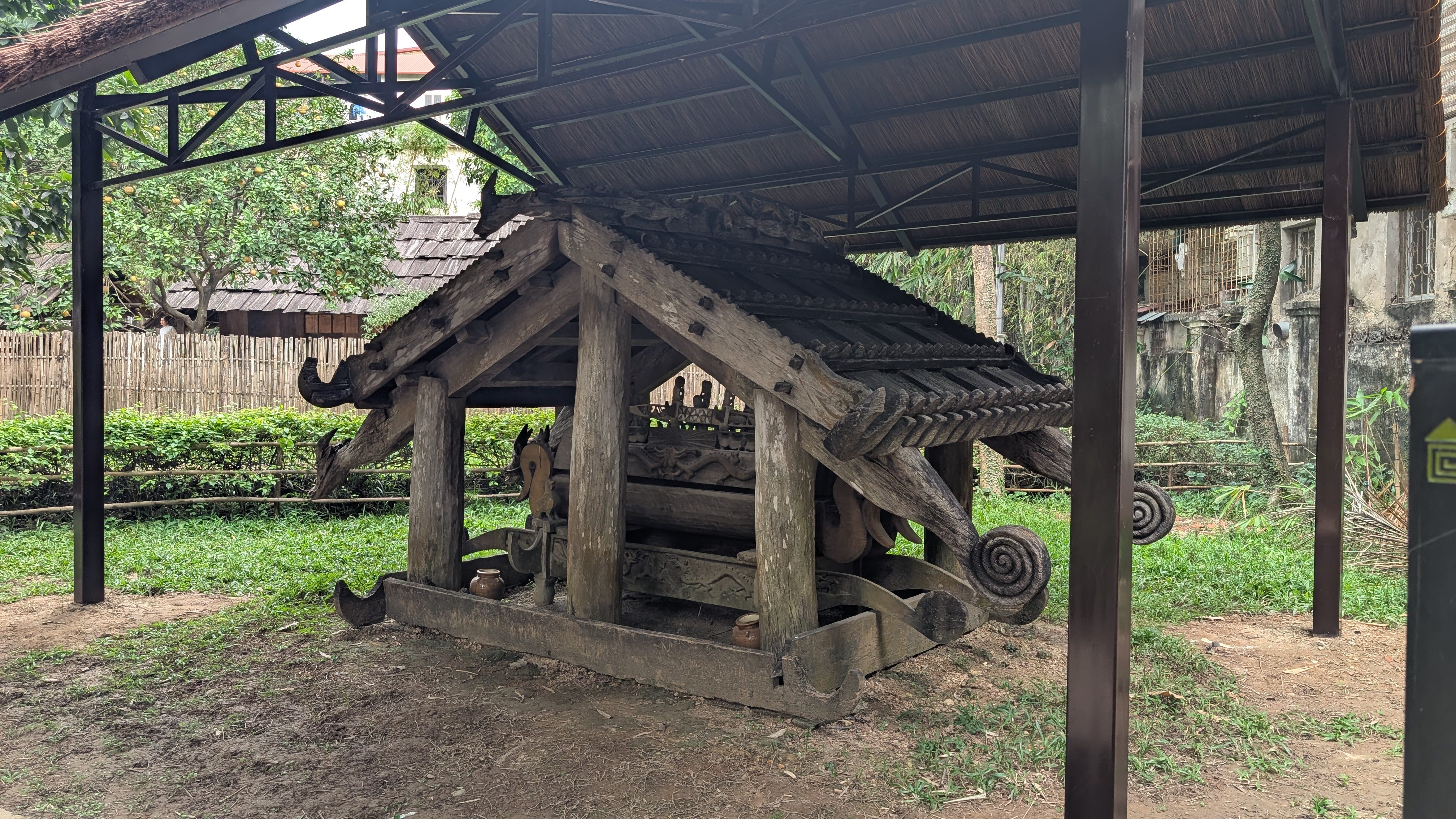
This is a Cotu tomb house, very similar to the one the builder had previously constructed in his village to honor his father.
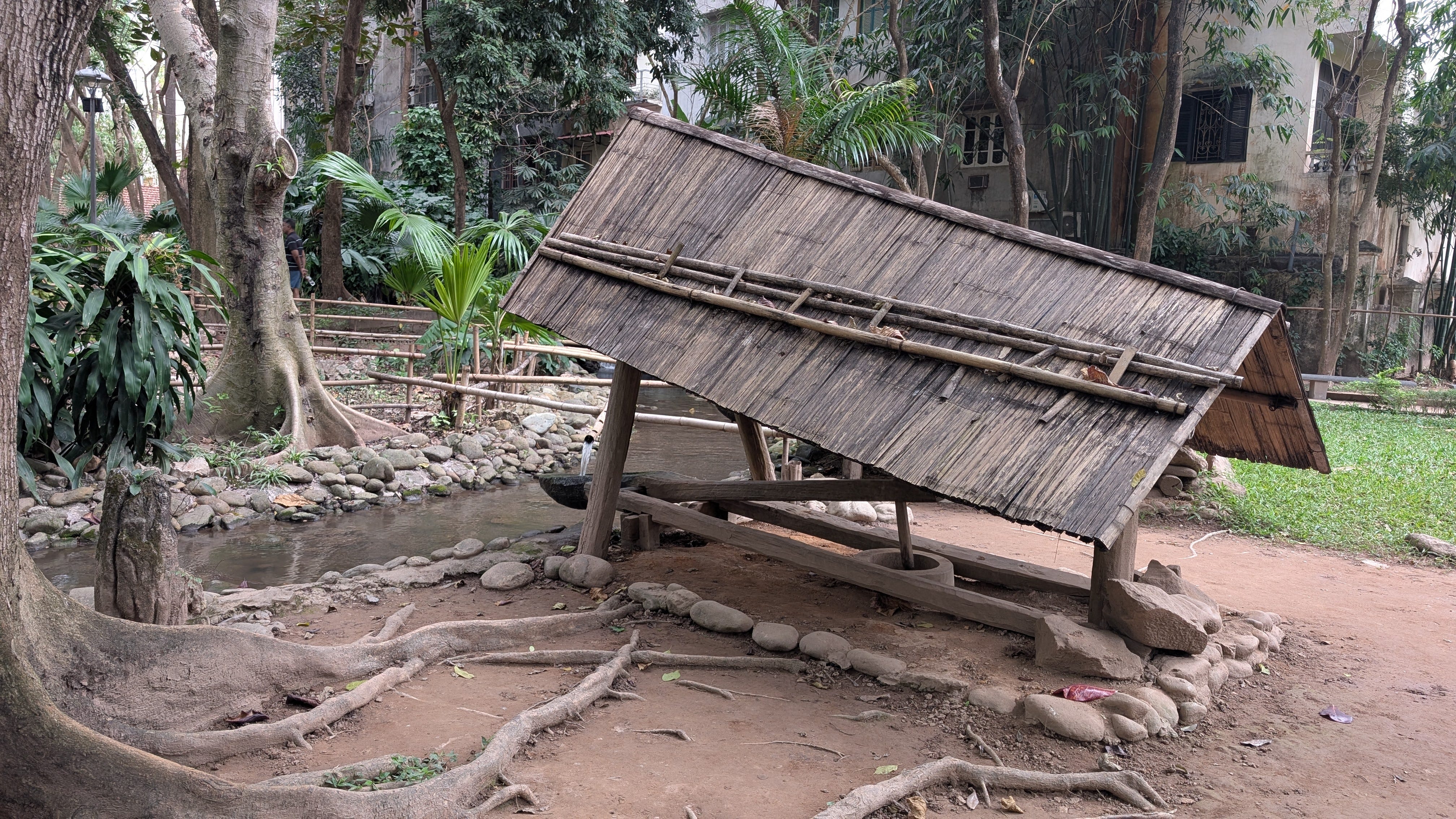
This is a hydraulic mortar and pestle traditional to the Yao people. It would slowly grind rice all day while the workers were in the paddies.
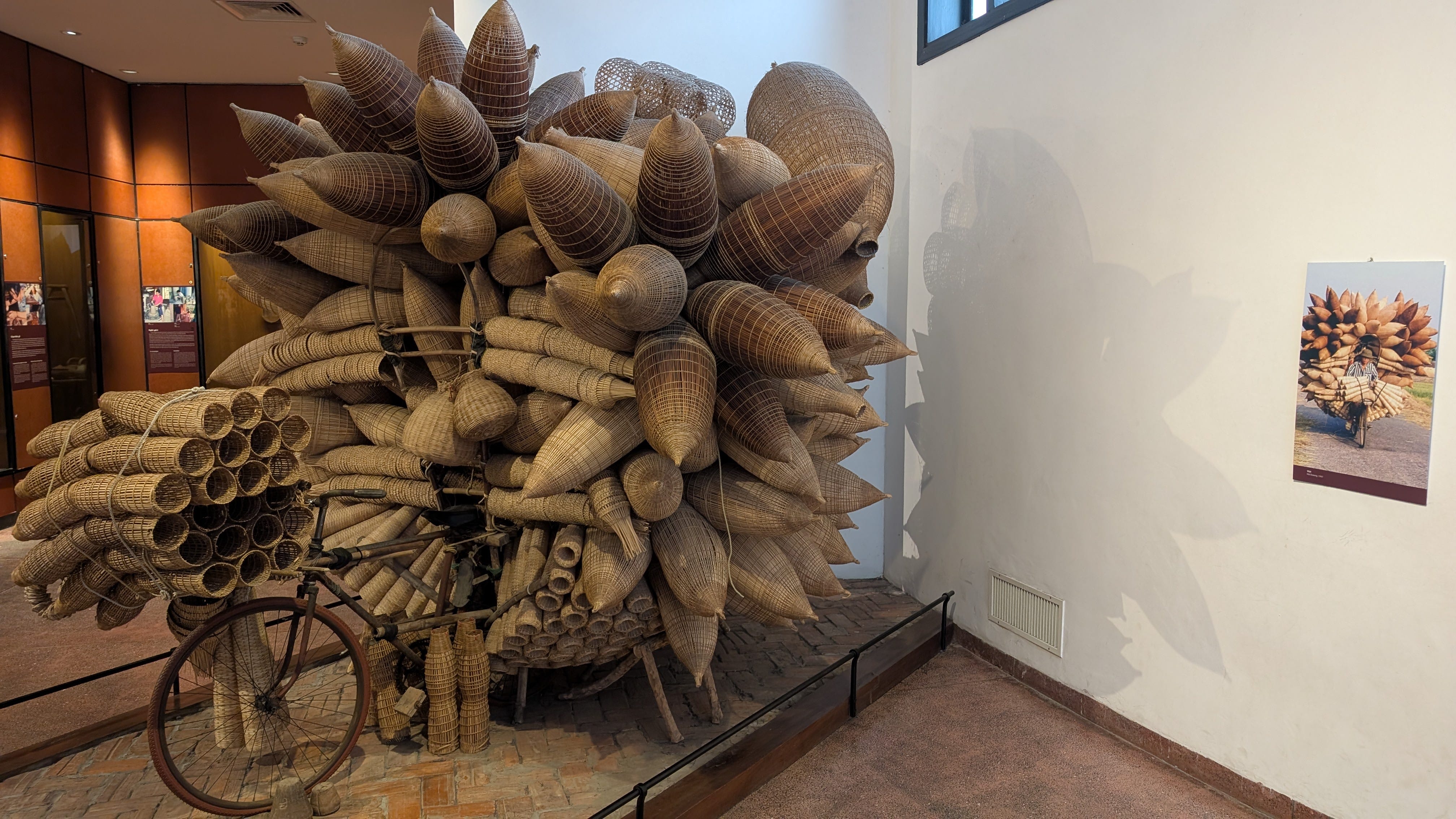
Inside the museum are many smaller artifacts and clothing of different communities. This bicycle loaded with fish traps was used to hawk fresh fish in the Red River Delta until 1997.
We were getting very warm and tired, so we rushed through the exhibits and had to veto one more stop at a painting workshop in favor of being taken to lunch.
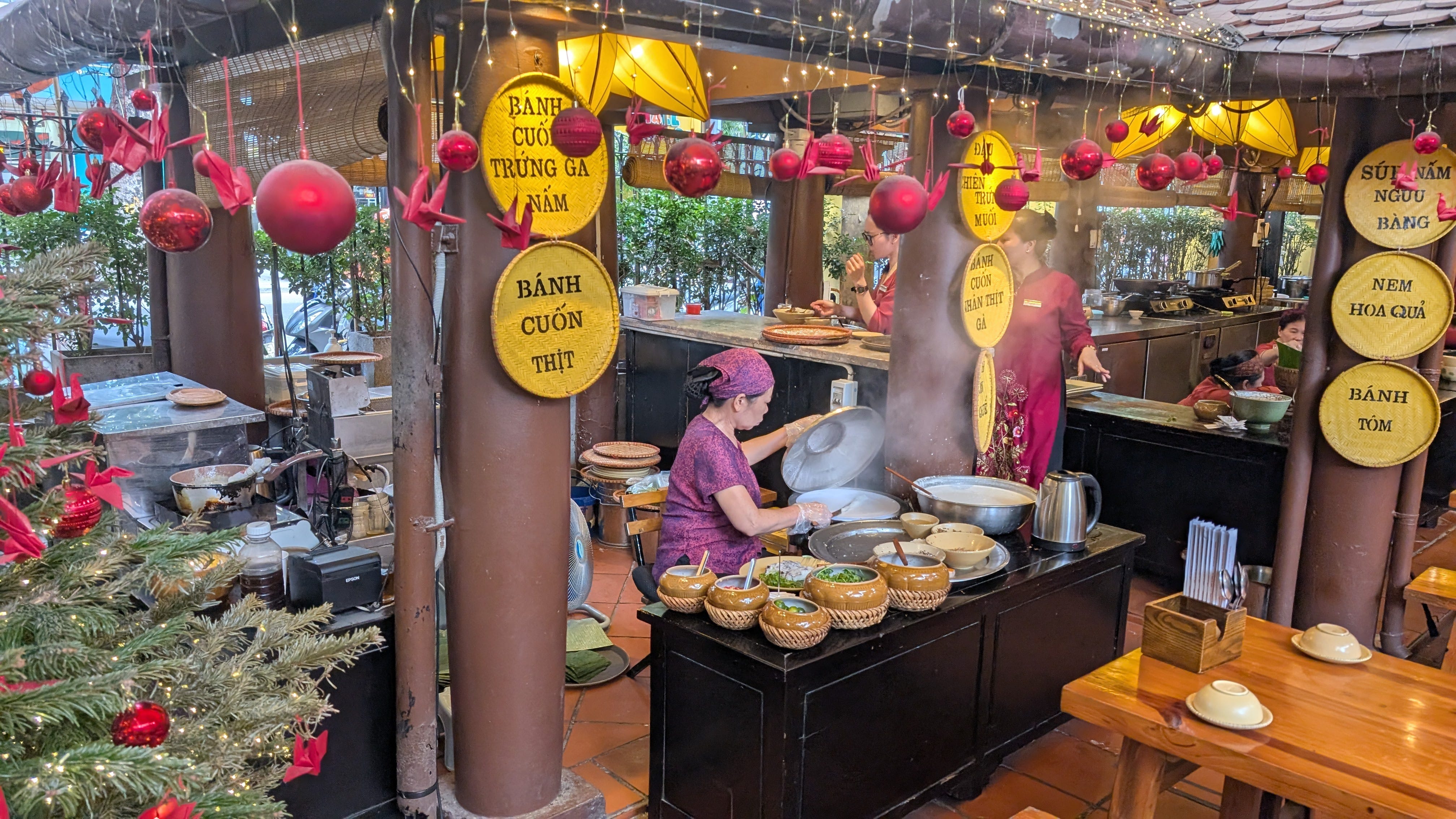
Jimmy dropped us at a place near our hotel that had several kitchen spaces surrounding a covered courtyard of tables. The menu was huge and we were hungry enough to find it daunting, but we managed to choose. I got chicken soup with pork & shrimp spring rolls, while Jason had papaya salad with quail, and Alice chose a plate of sauteed morning glory with garlic that was delicious. I thought it tasted a lot like the water spinach we sometimes had at Mary Chung’s and was amused to see both names listed for the same dish on another menu.
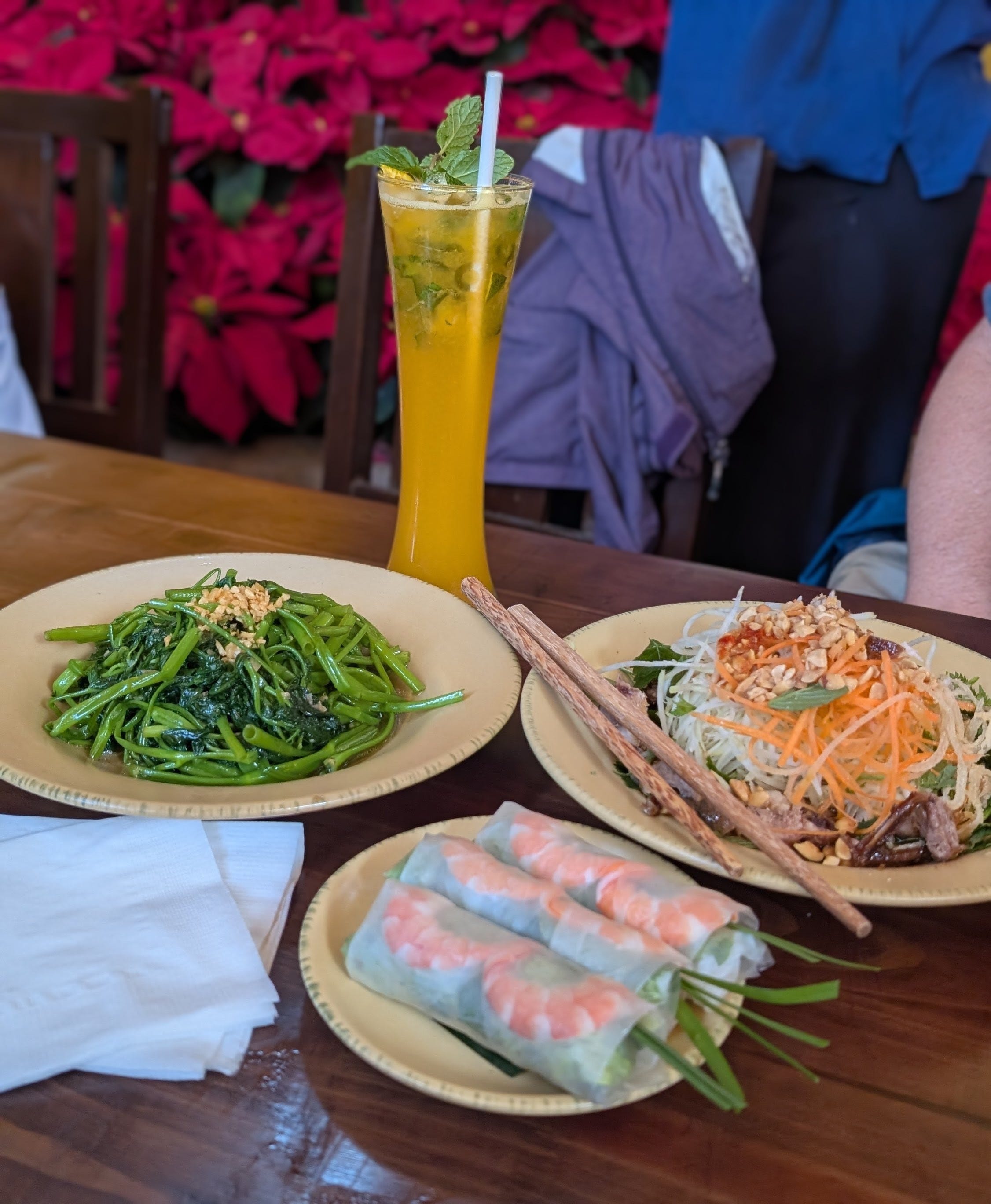
After lunch we made our own way back to the hotel for a break. Stay tuned for pictures from our evening tour!
I’m enjoying all the trees!
Nice to see what it looks like today - and the shrimp fresh rolls! So many street markets! That hotel is not on the one on your spreadsheet. I spent my youth listening to death reports daily from there on the evening news, so it is wonderful to get a new perspective.