
Getting Inside Topkapi Palace

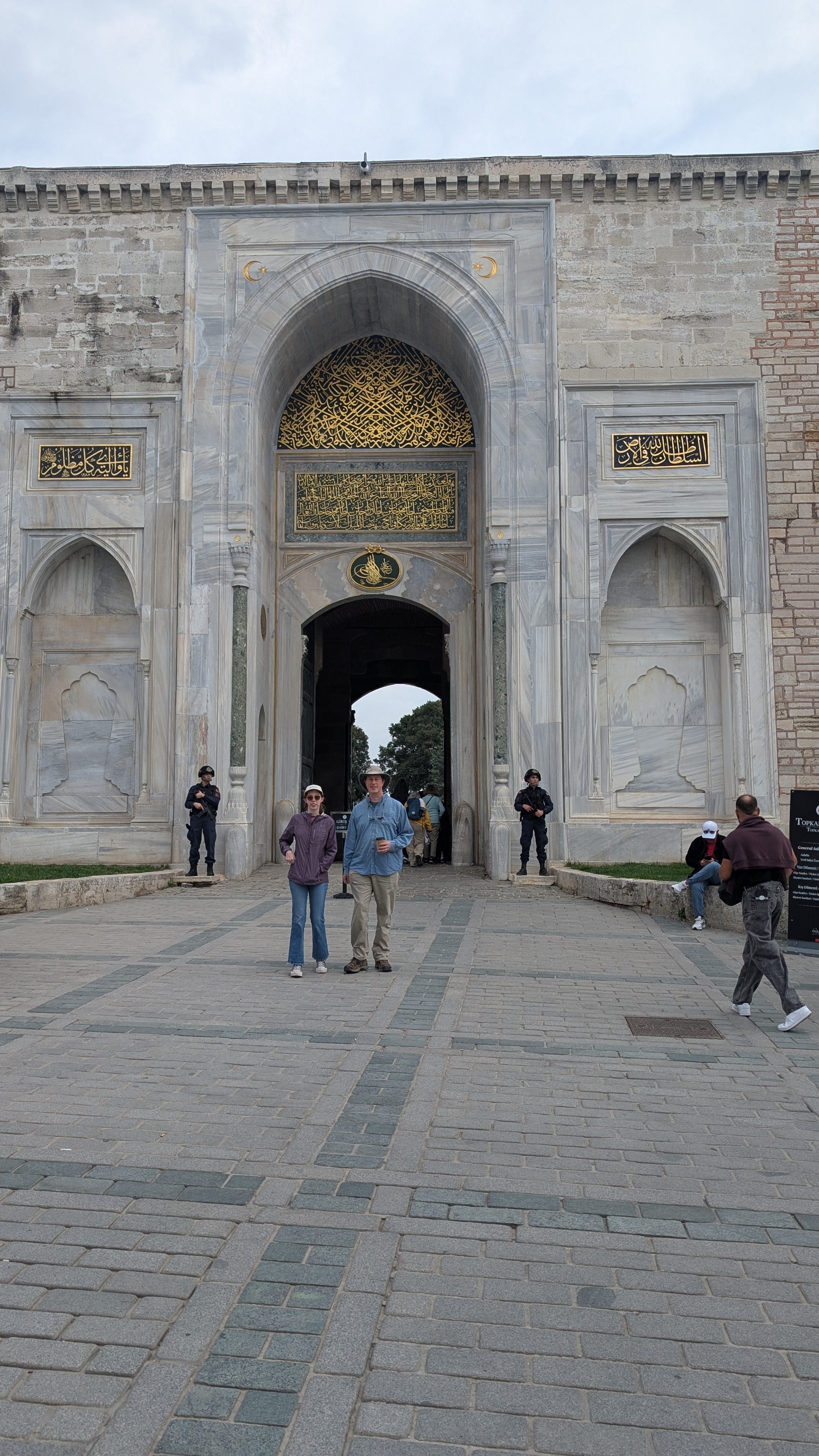
We made it to Topkapi Palace fairly early in the day, before the crowds got too fierce. Sadly, the audioguide wasn't working for us, but the signs offered enough guidance and description to get us by.
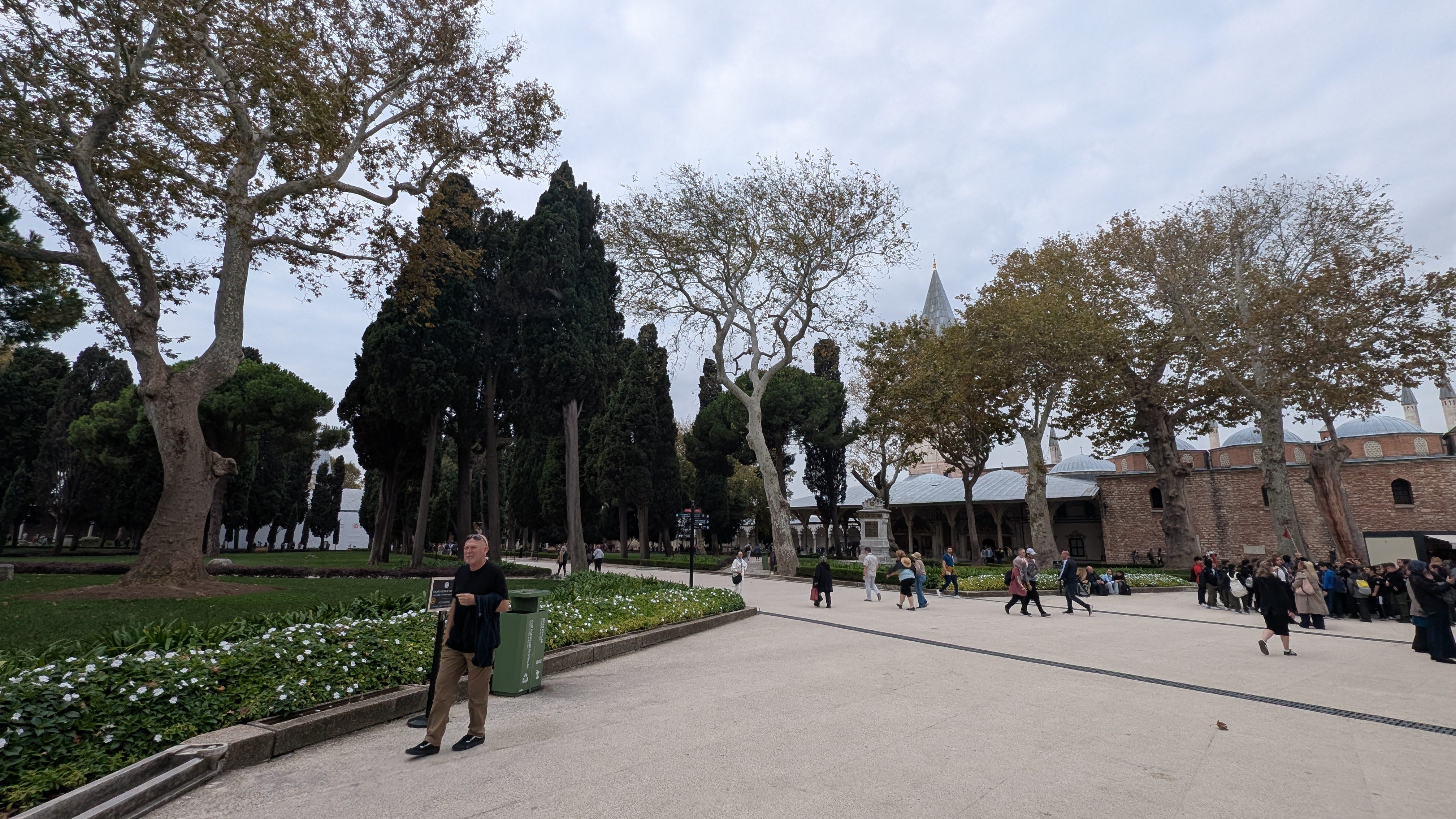
Topkapi is not a palace in the usual sense, but a complex of buildings built over the course of centuries around four courtyards. The complex housed not only the royal family, but also a couple thousand of the elite guard, and another thousand or more servants. There were dormitories and mosques and schools within the walls, as well as council chambers and pavilions.
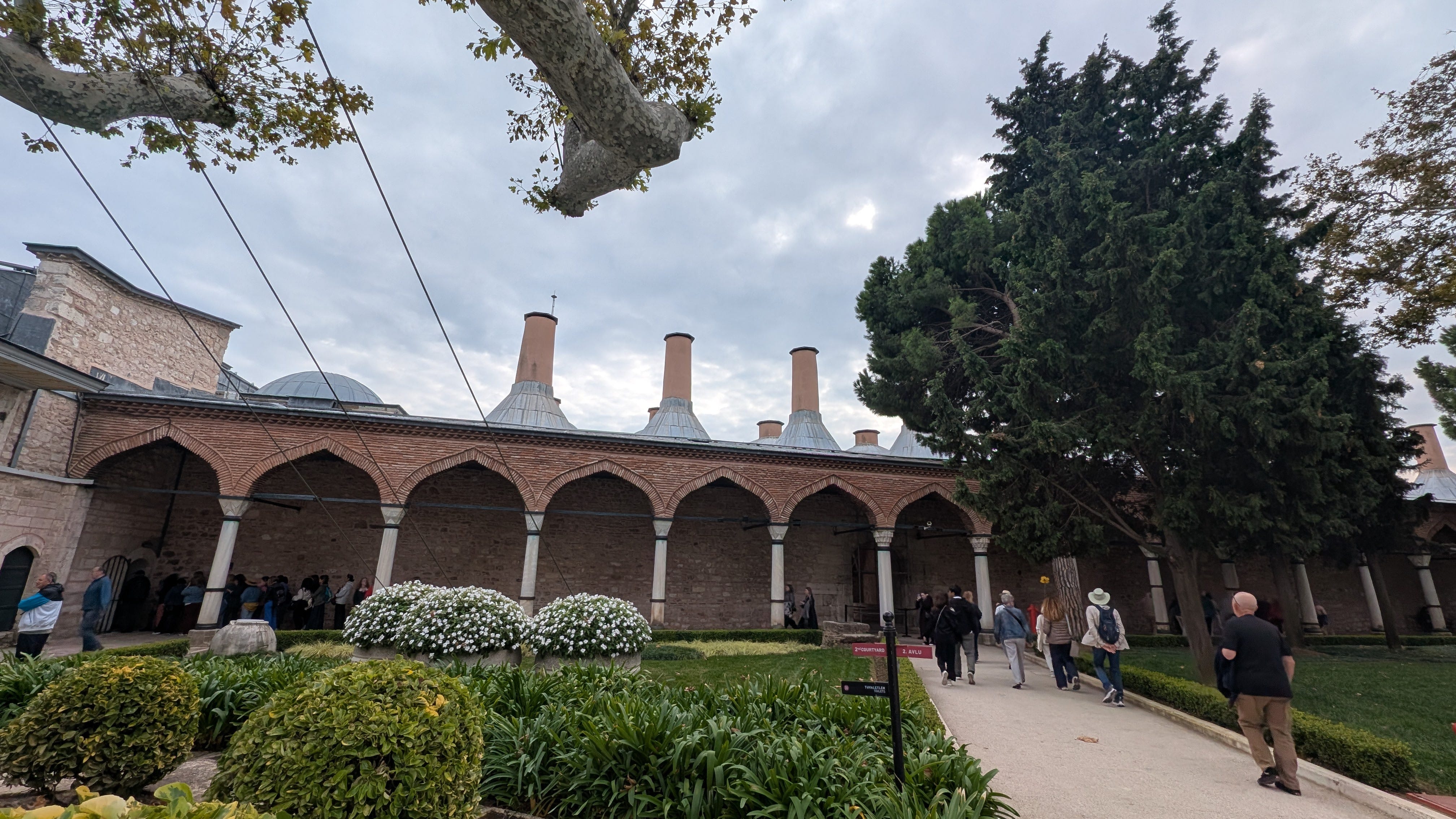
Our first stop was the vast kitchens with twenty chimneys crowning the interior domes.
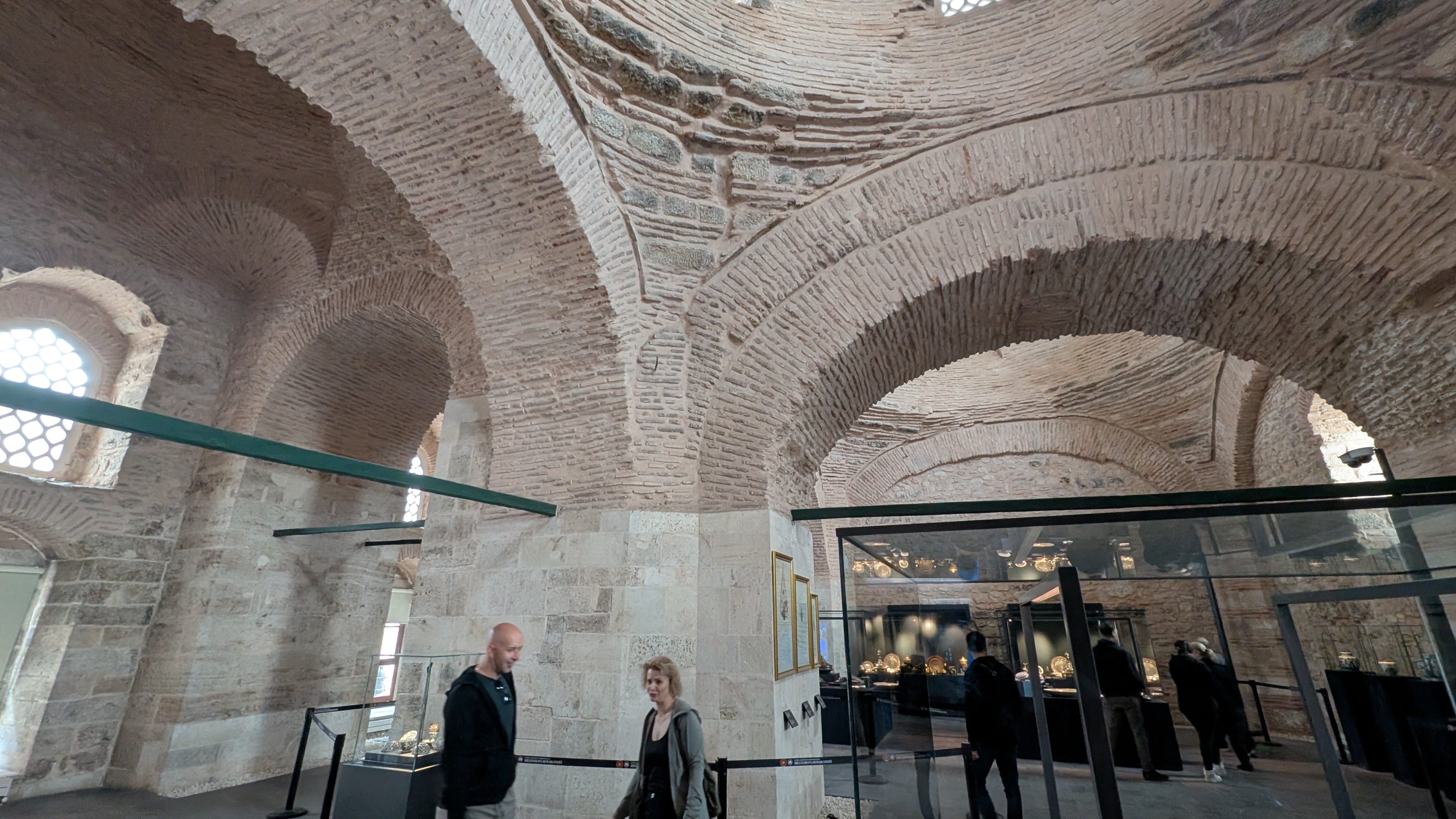
We saw many examples of the dishes used to serve thousands of people every day.
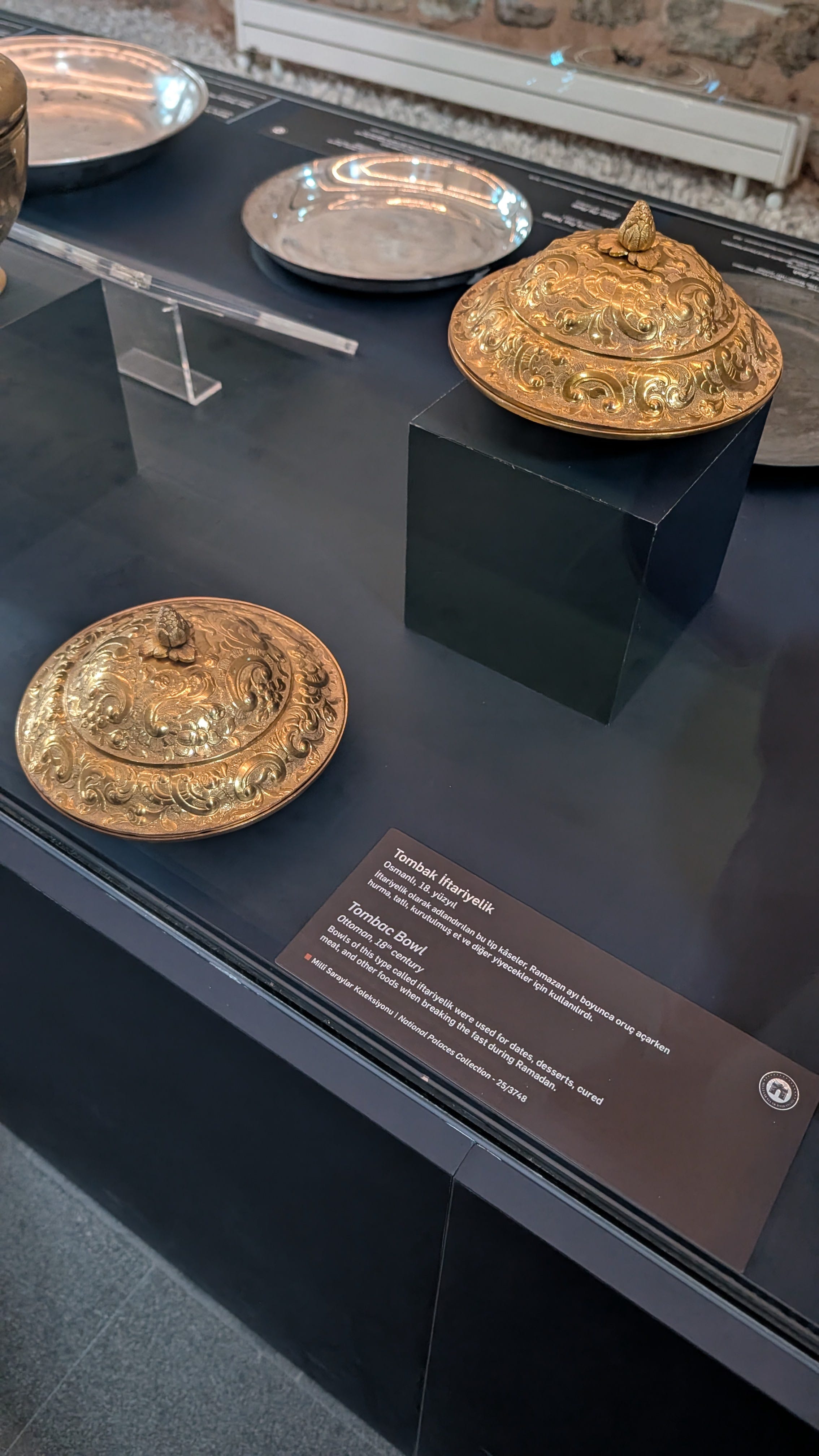
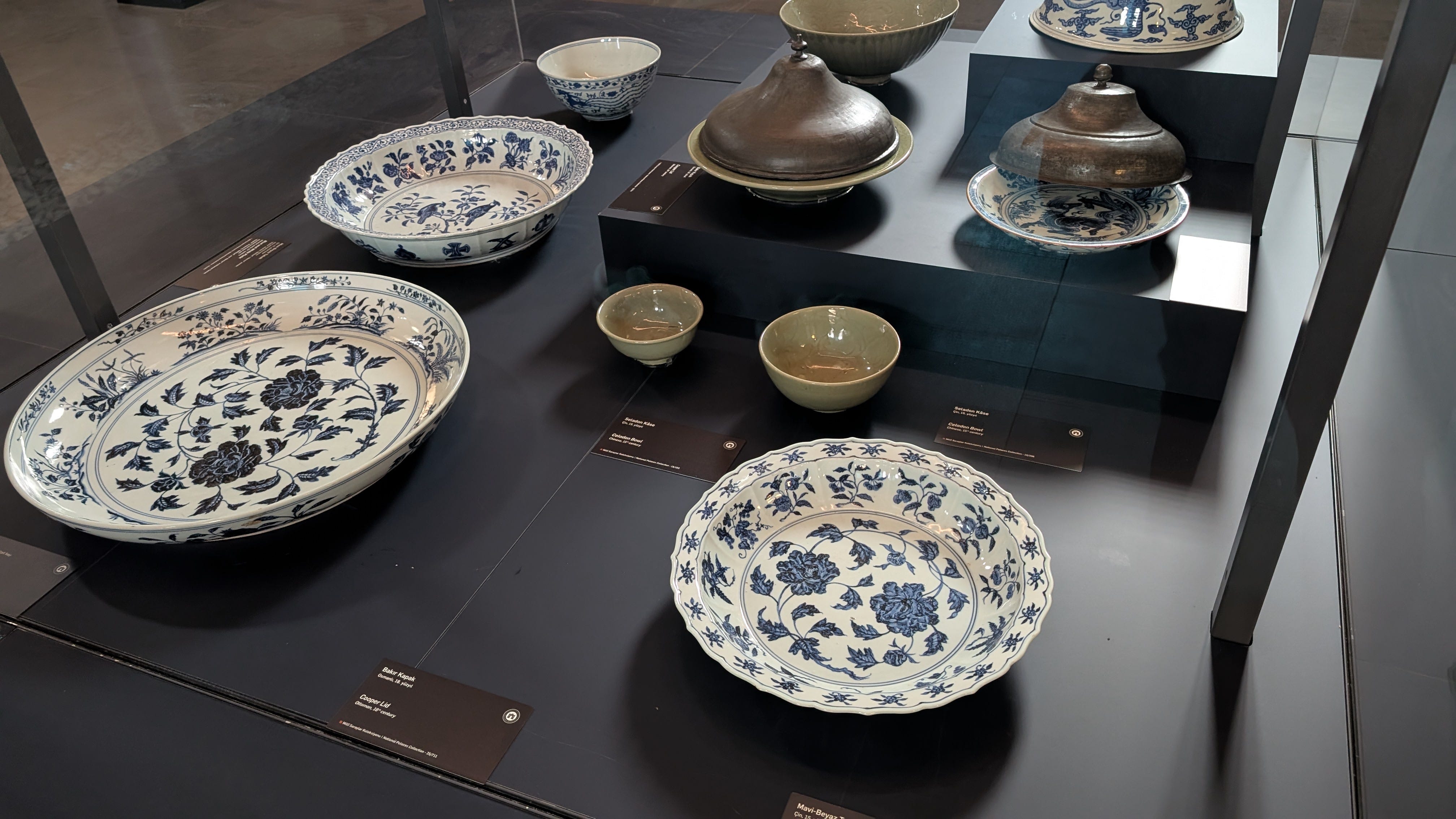
Dishes were served out of metalware, but the sultans generally preferred to eat off of porcelain, mostly imported from China.
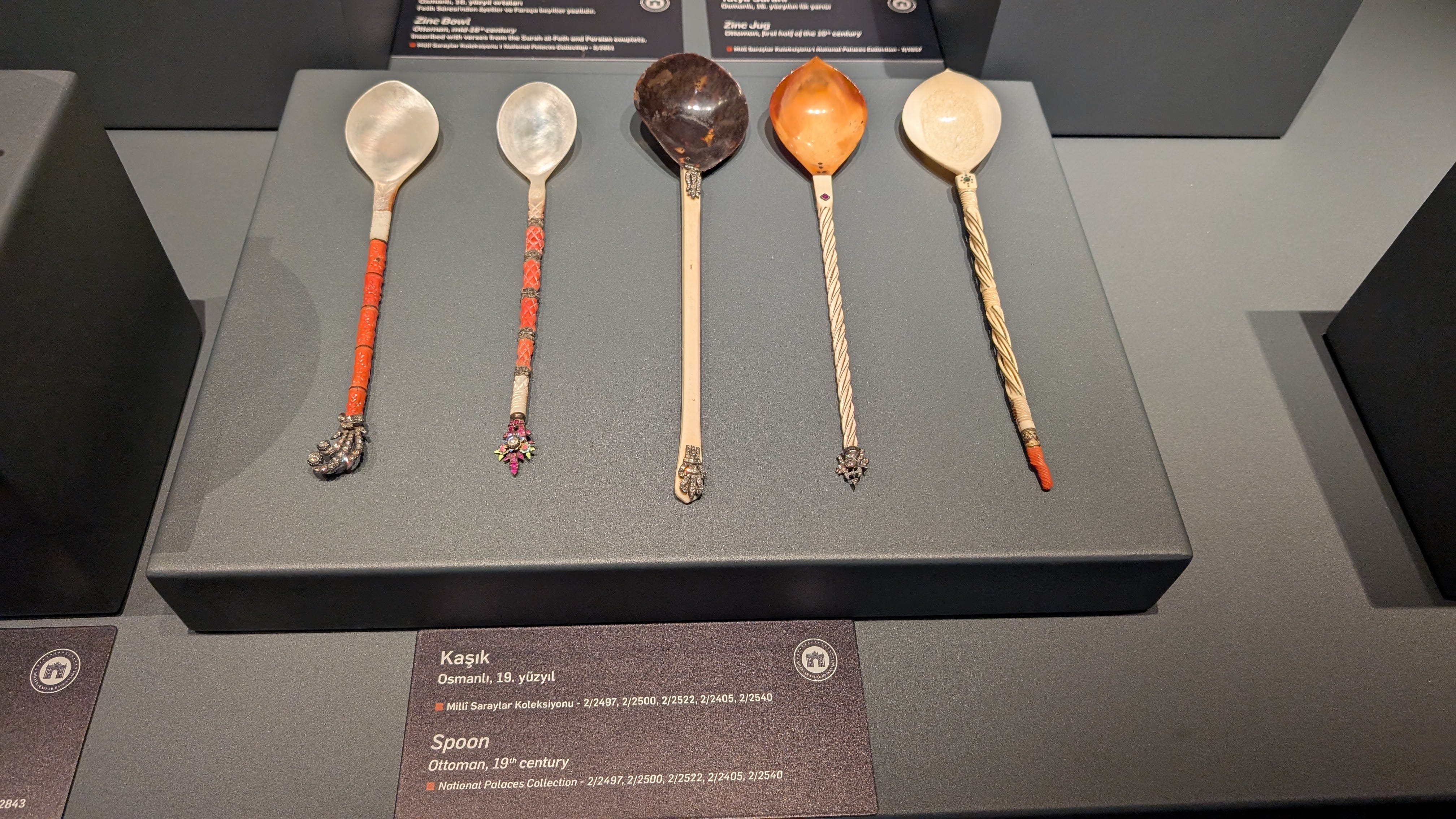
Forks were not yet popular, but spoons for serving and eating more liquid dishes were elaborate and very specific.
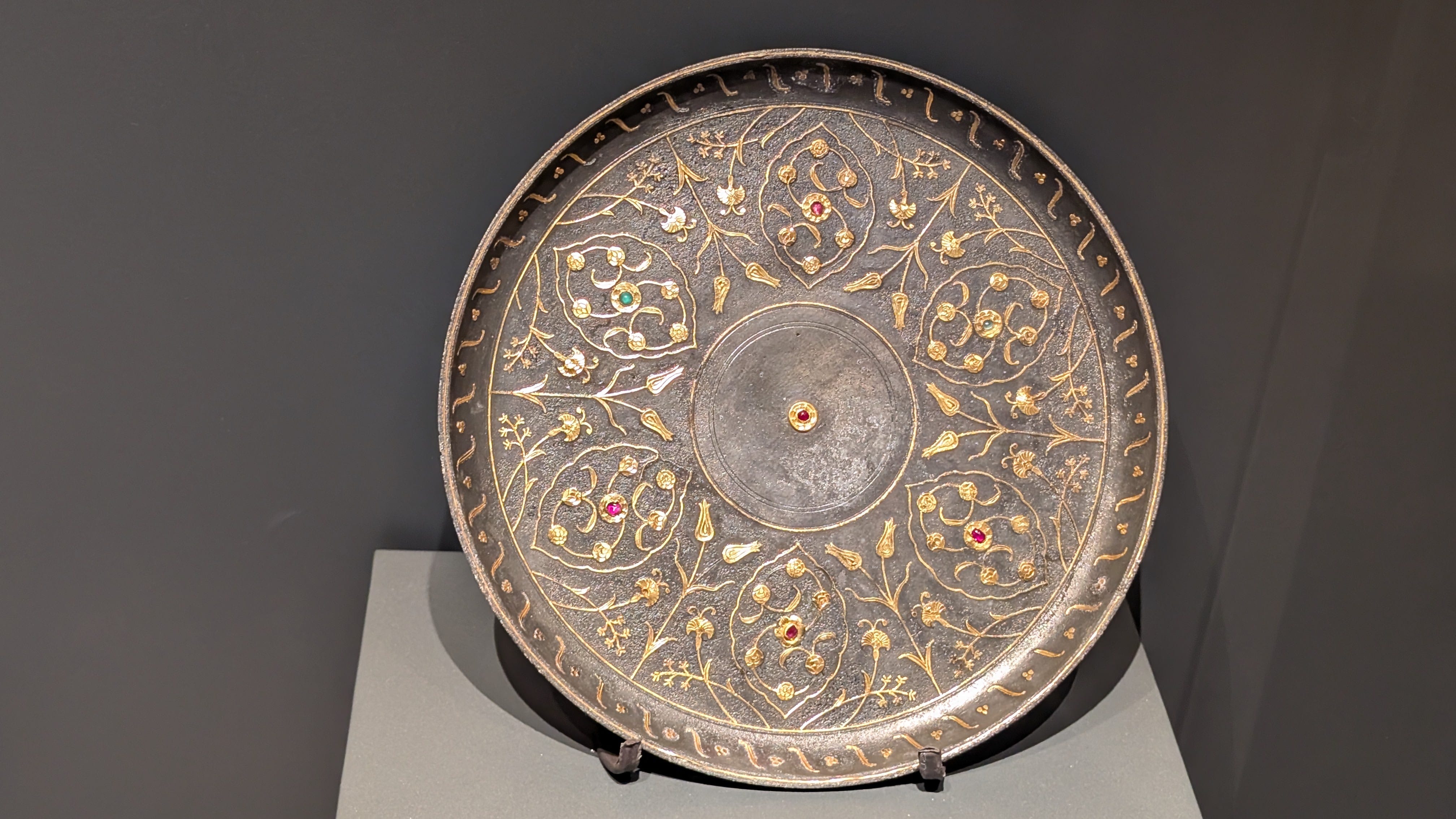
I don't think I had ever seen zincware before and there were many beautiful examples.
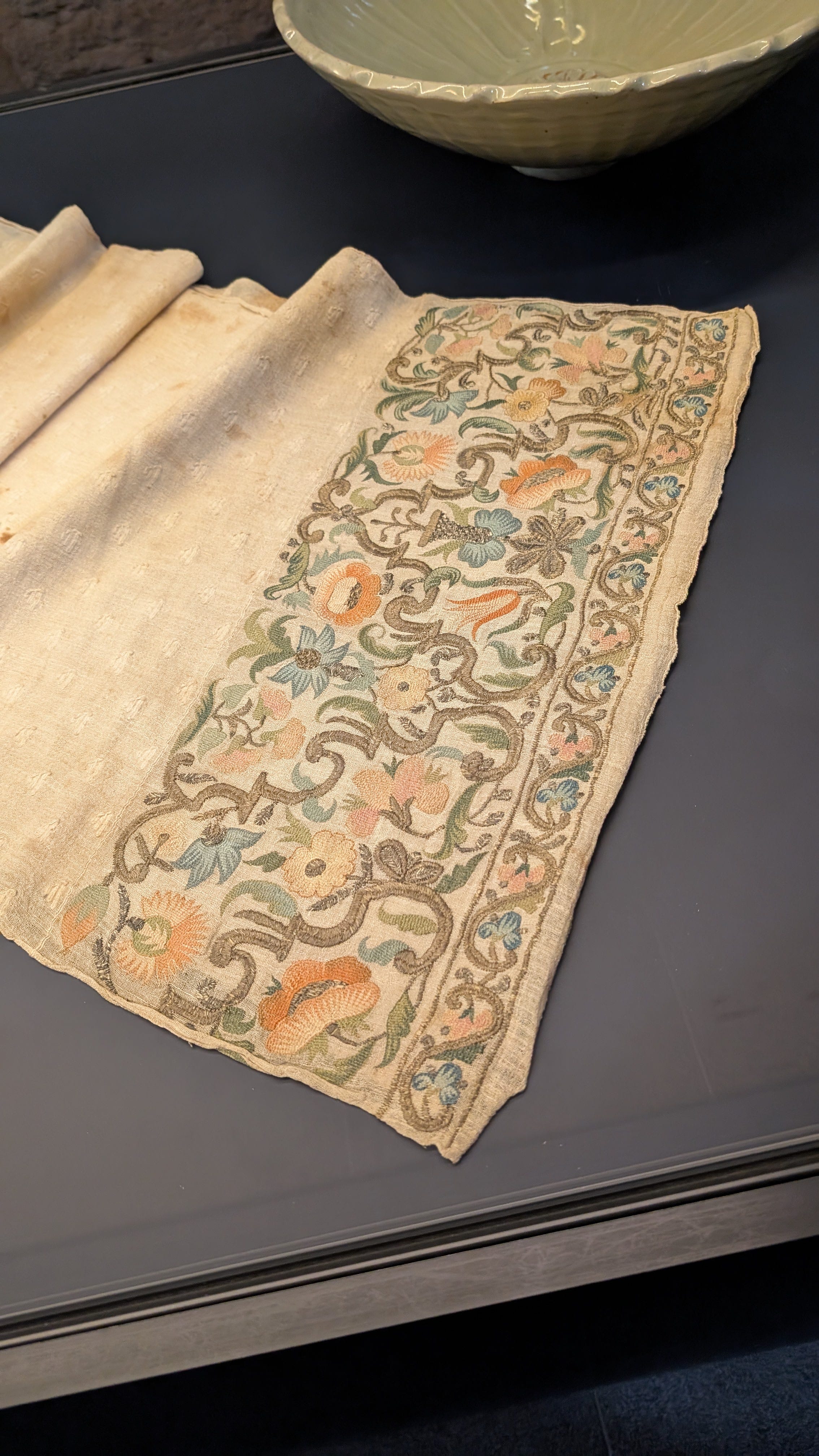
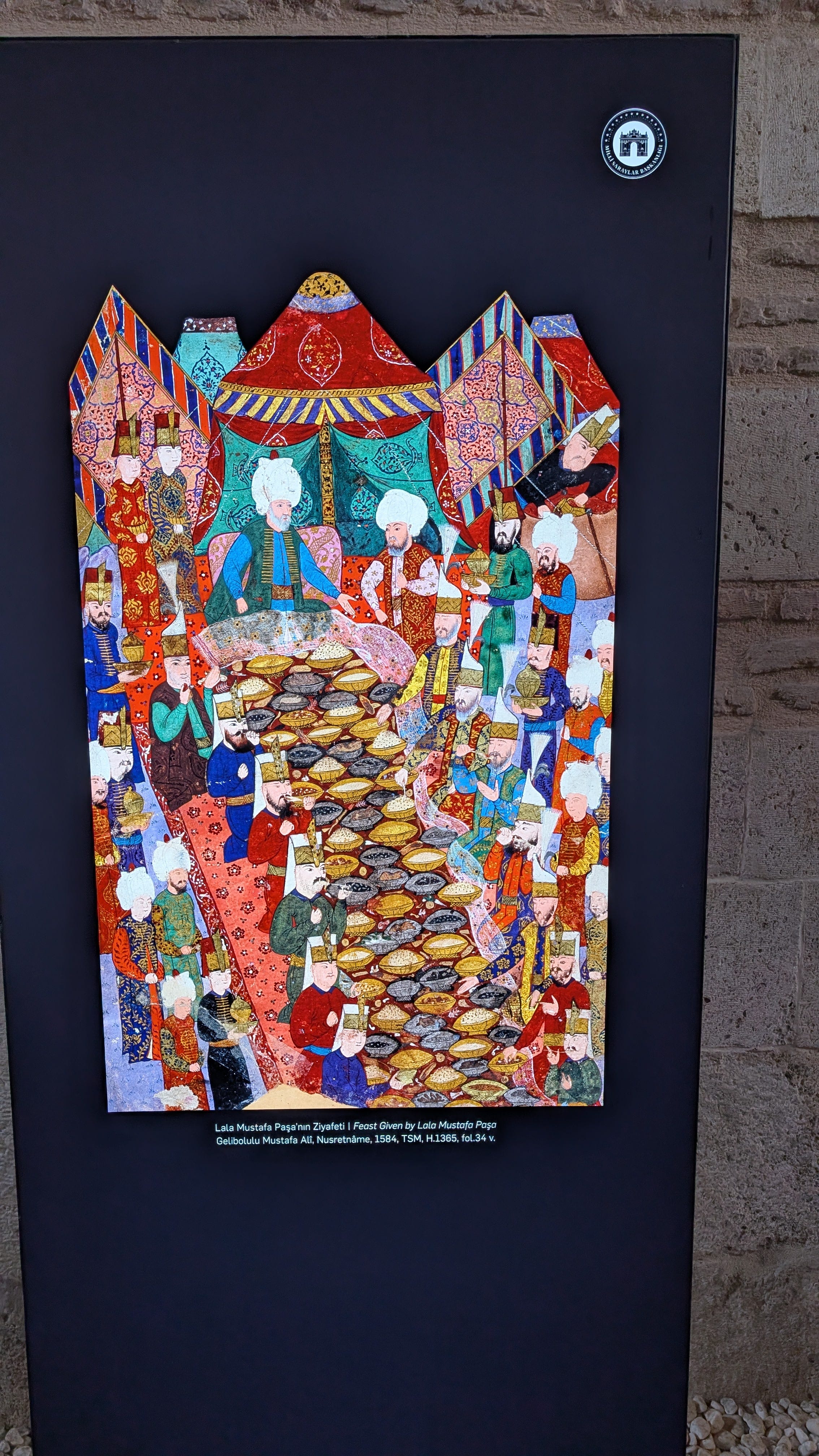
We were also intrigued by the beautifully embroidered napkins, which were shared by everyone around a table.
This image was displayed to show how that worked.
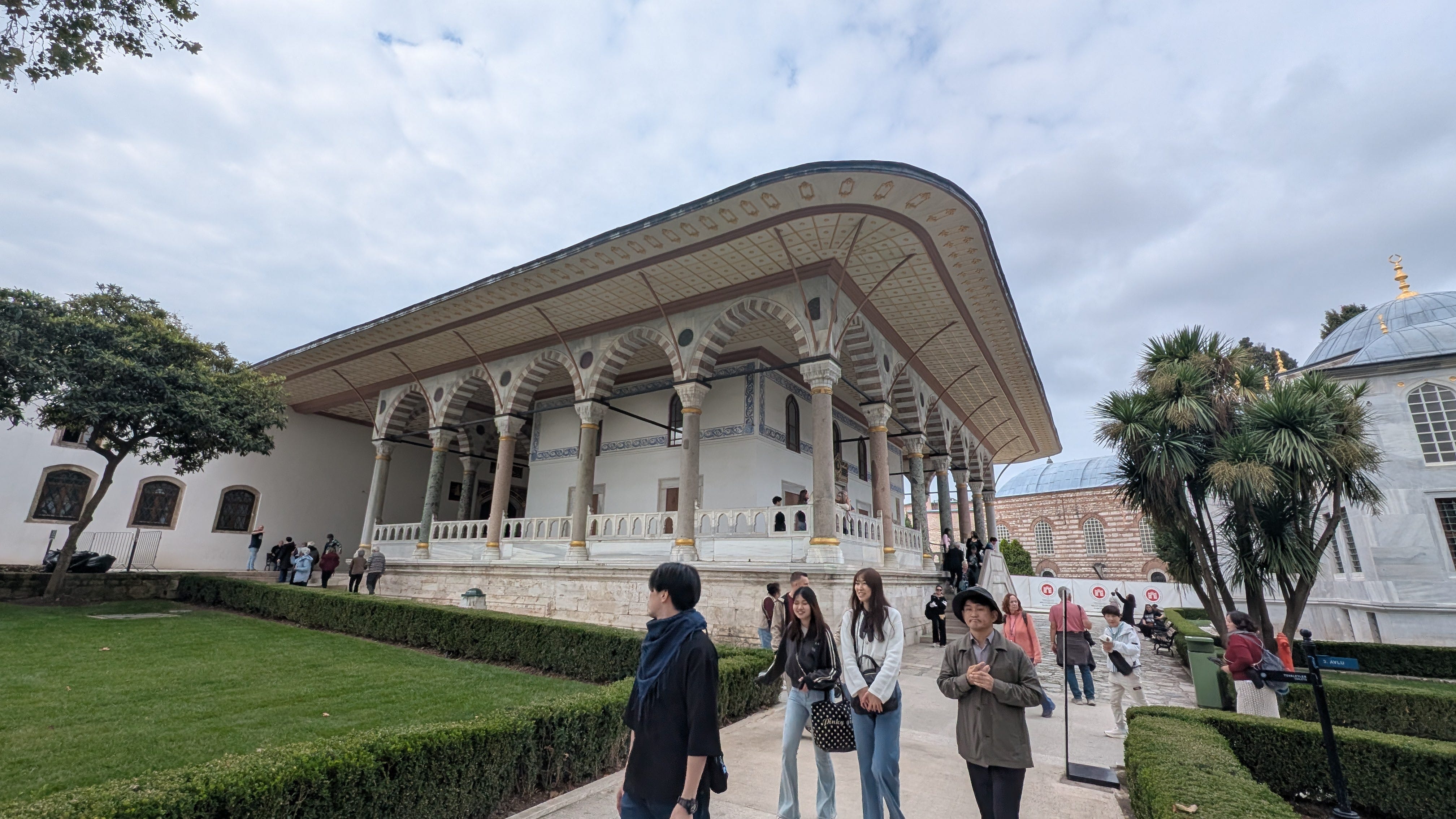
We moved on from there into the third courtyard and through a pavilion that served as an audience chamber.
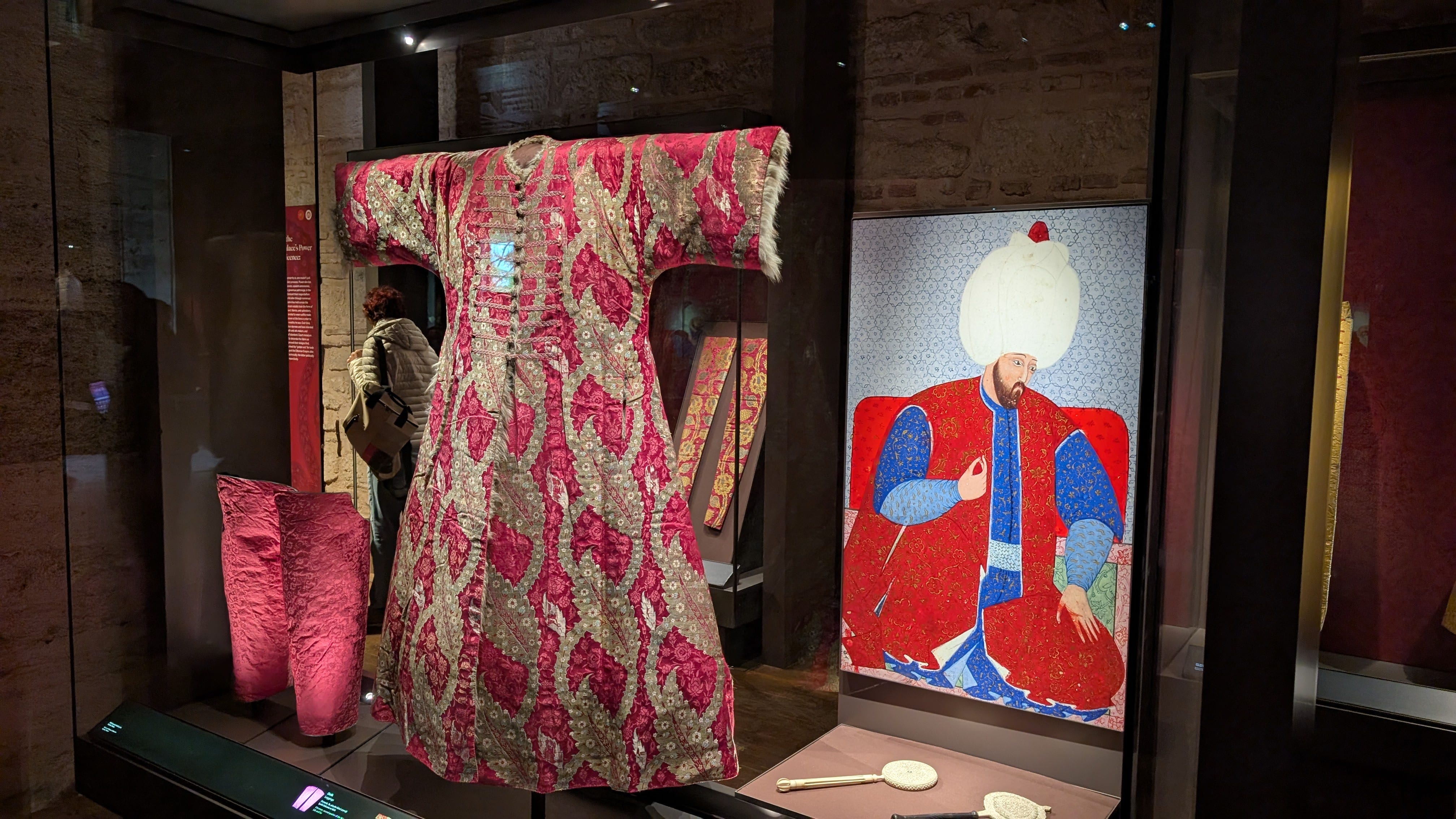
In one of the side buildings was an exhibit of clothing worn by sultans and princes. There was a religious ritual of saving their clothing by wrapping it up tightly with layers of preservative cloth. Sadly it did not apply to clothing worn by women, so relatively little of that has survived.
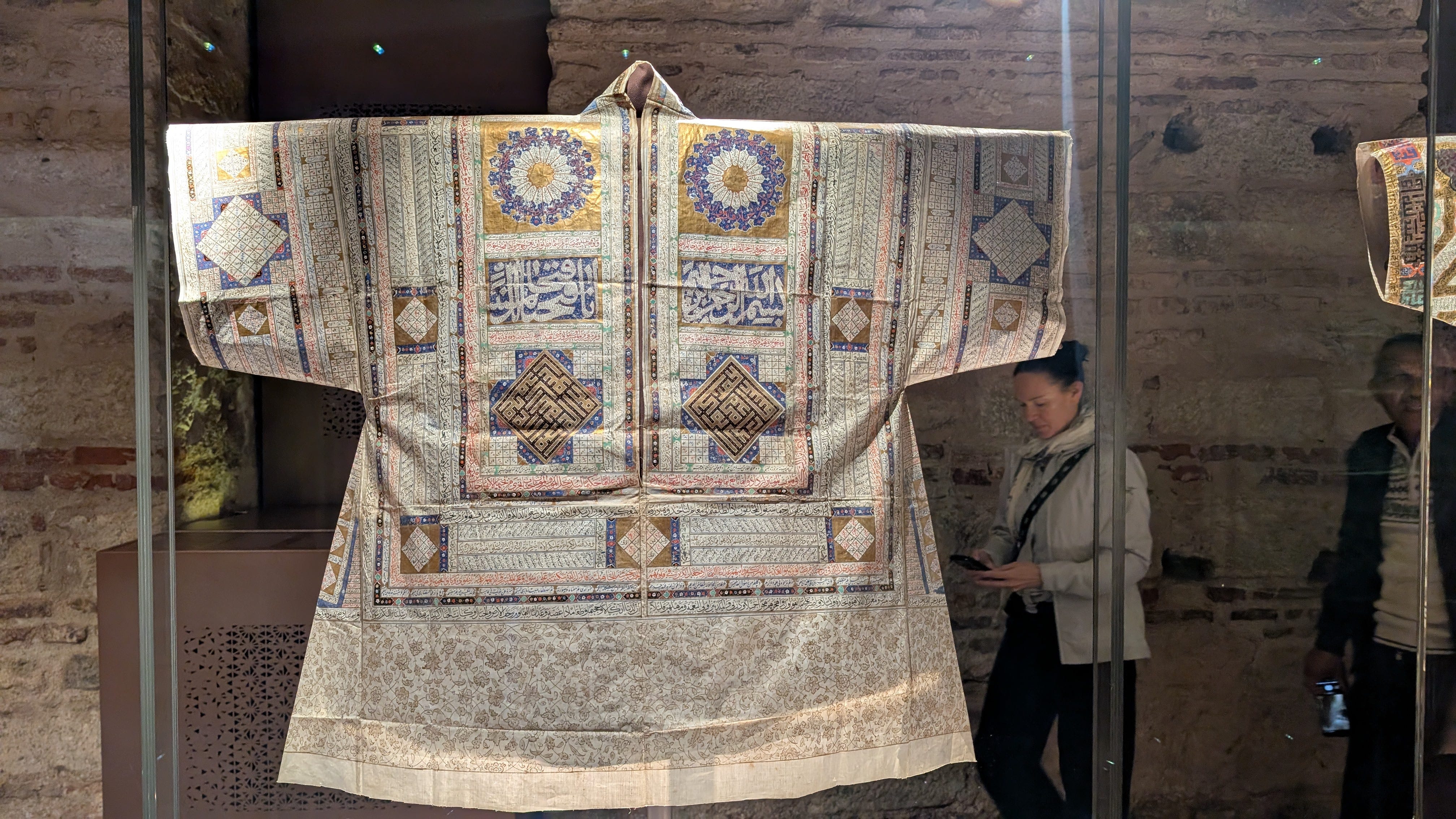
There were examples of the undershirts they wore that were embroidered with verses and symbols to protect the wearer from curses and diseases. One of these includes the propitious dates on which the work was begun and ended, so we know it took three years.
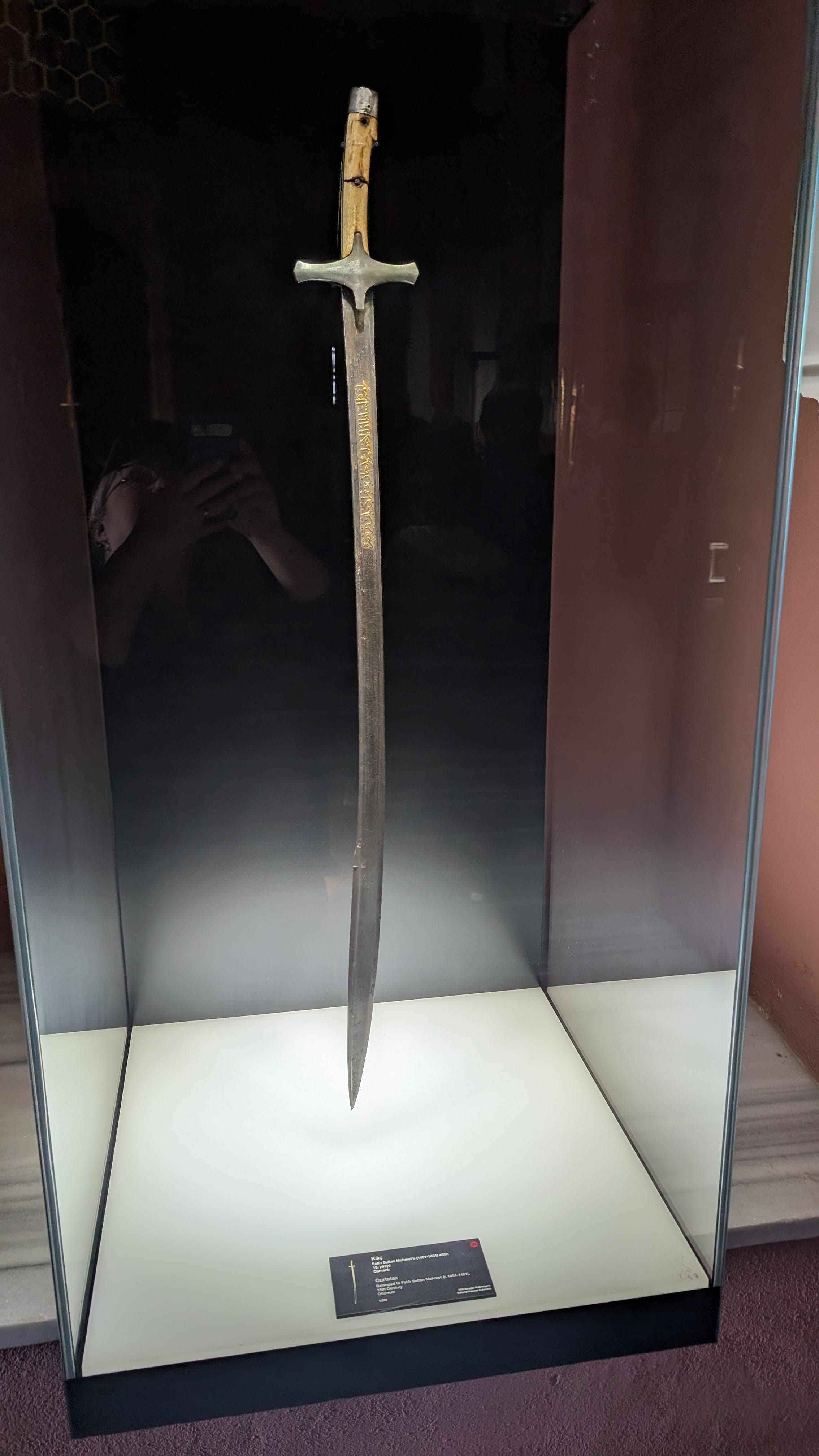
The next stop was the exhibit of pieces from the royal treasury, like this sword belonging to Mehmed II, who conquered Constantinople in 1453.
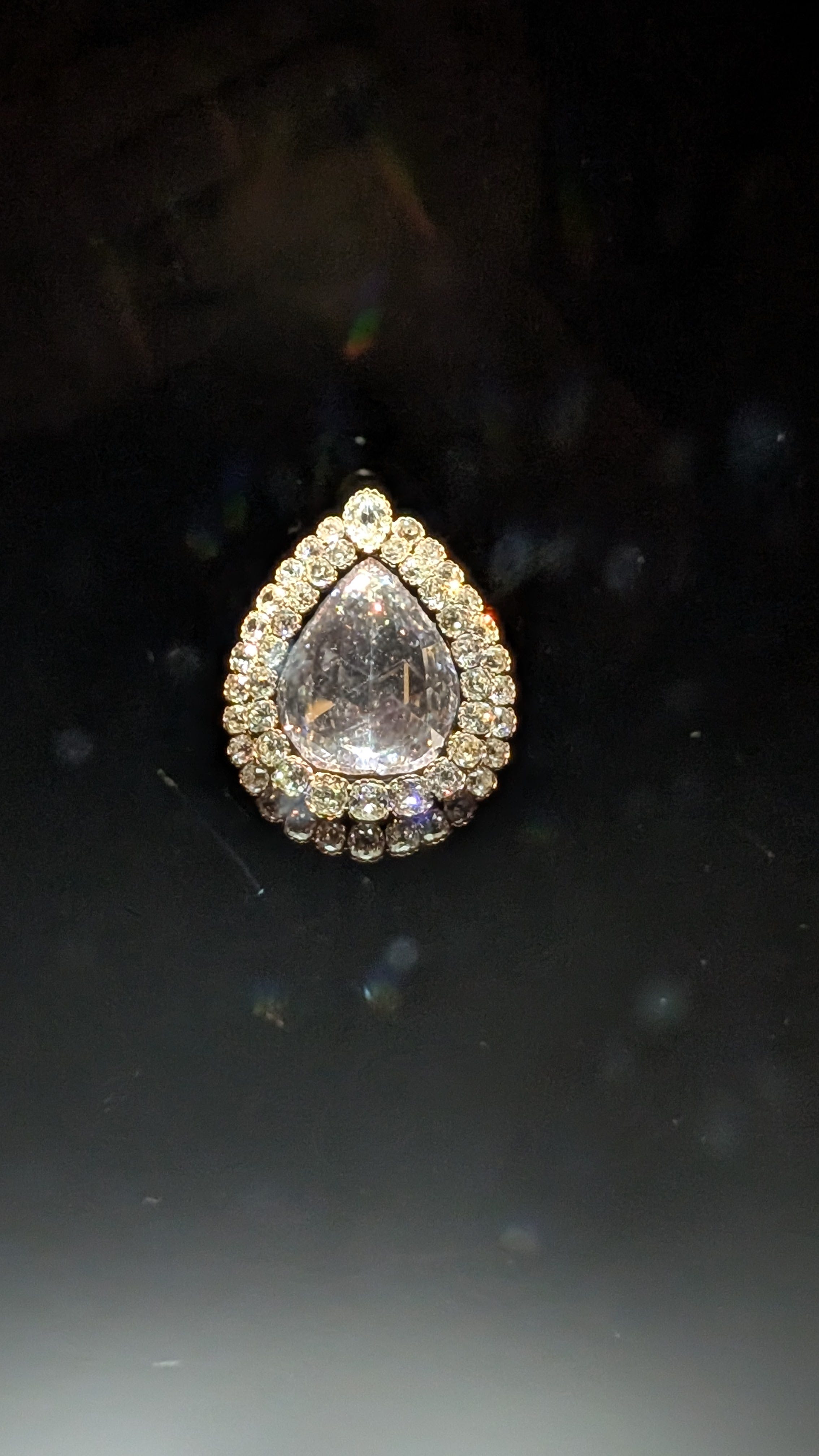
Highlights included the Spoonmaker’s Diamond, the fourth largest in the world.
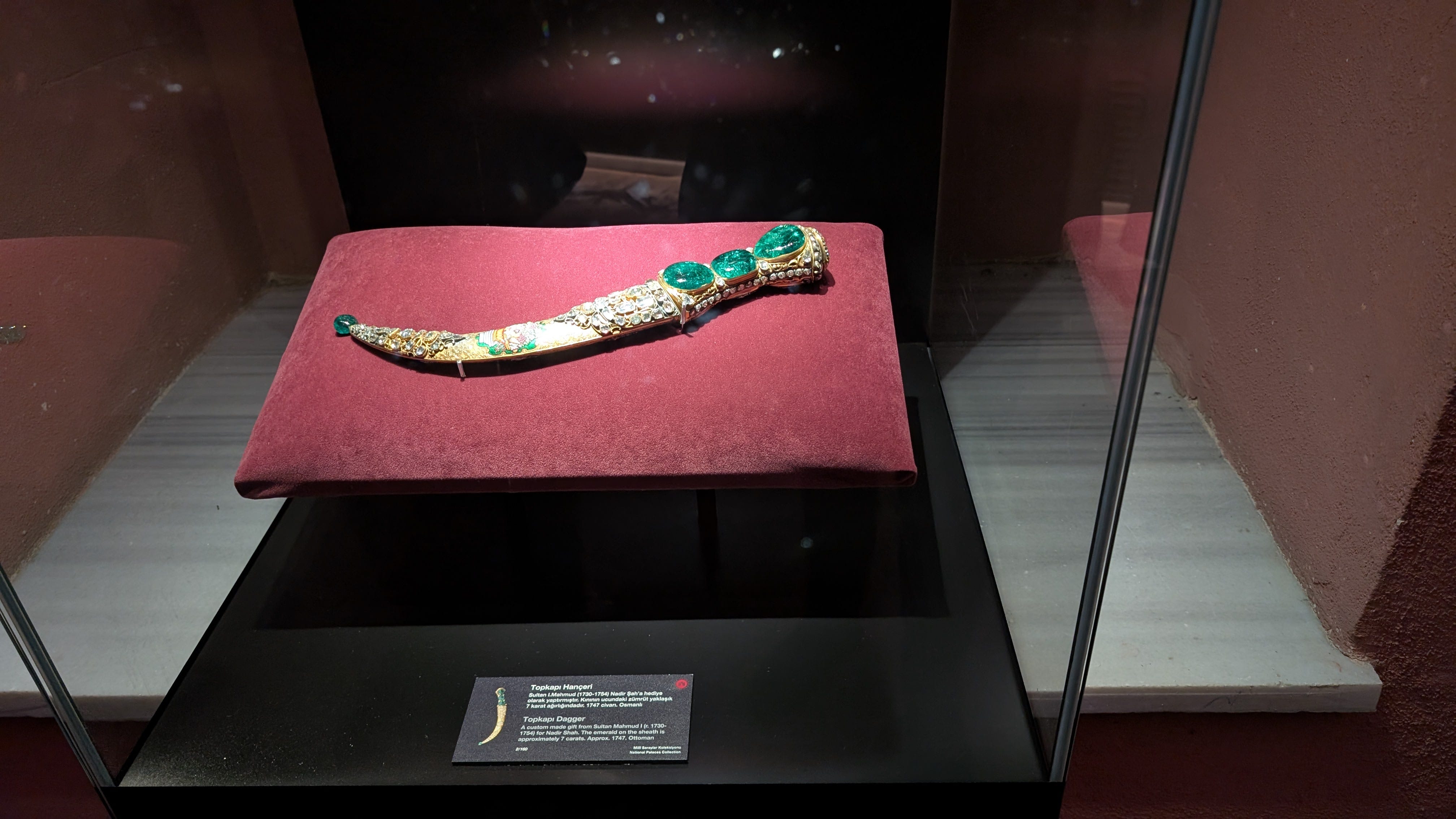
And the emerald-encrusted Topkapi Dagger.
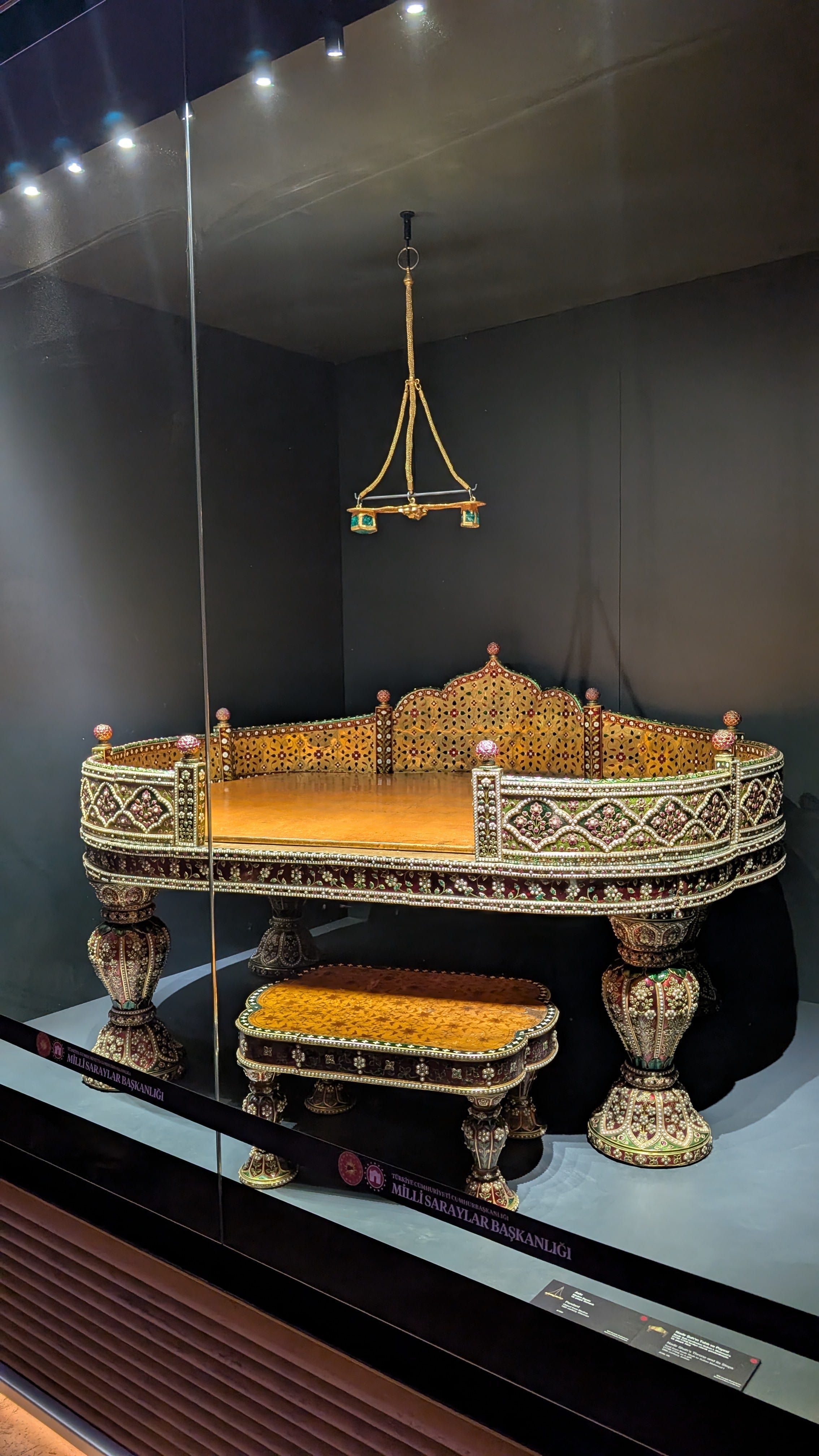
There were also several thrones, like this one.
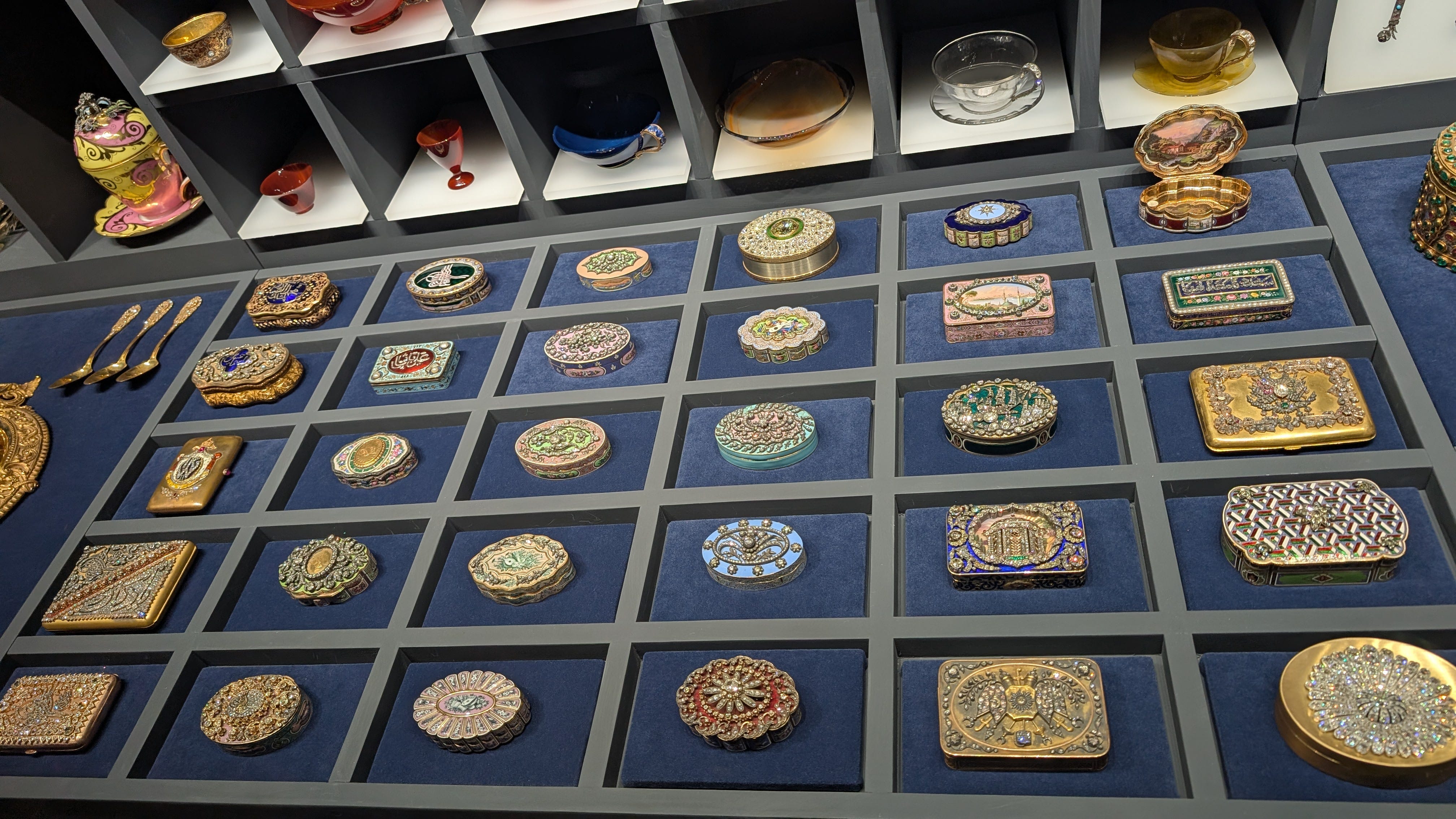
And various collections of things, like these jeweled boxes.
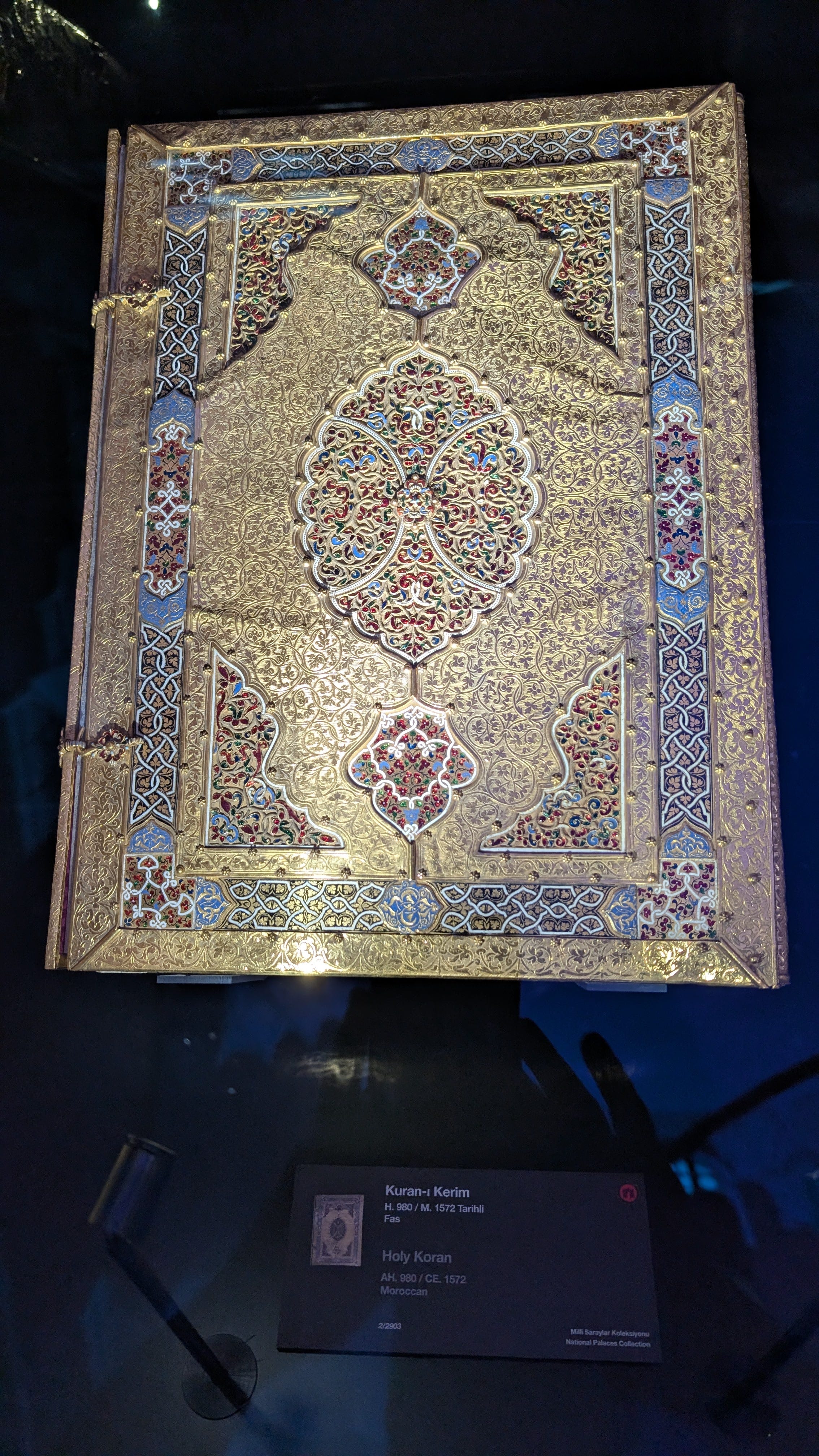
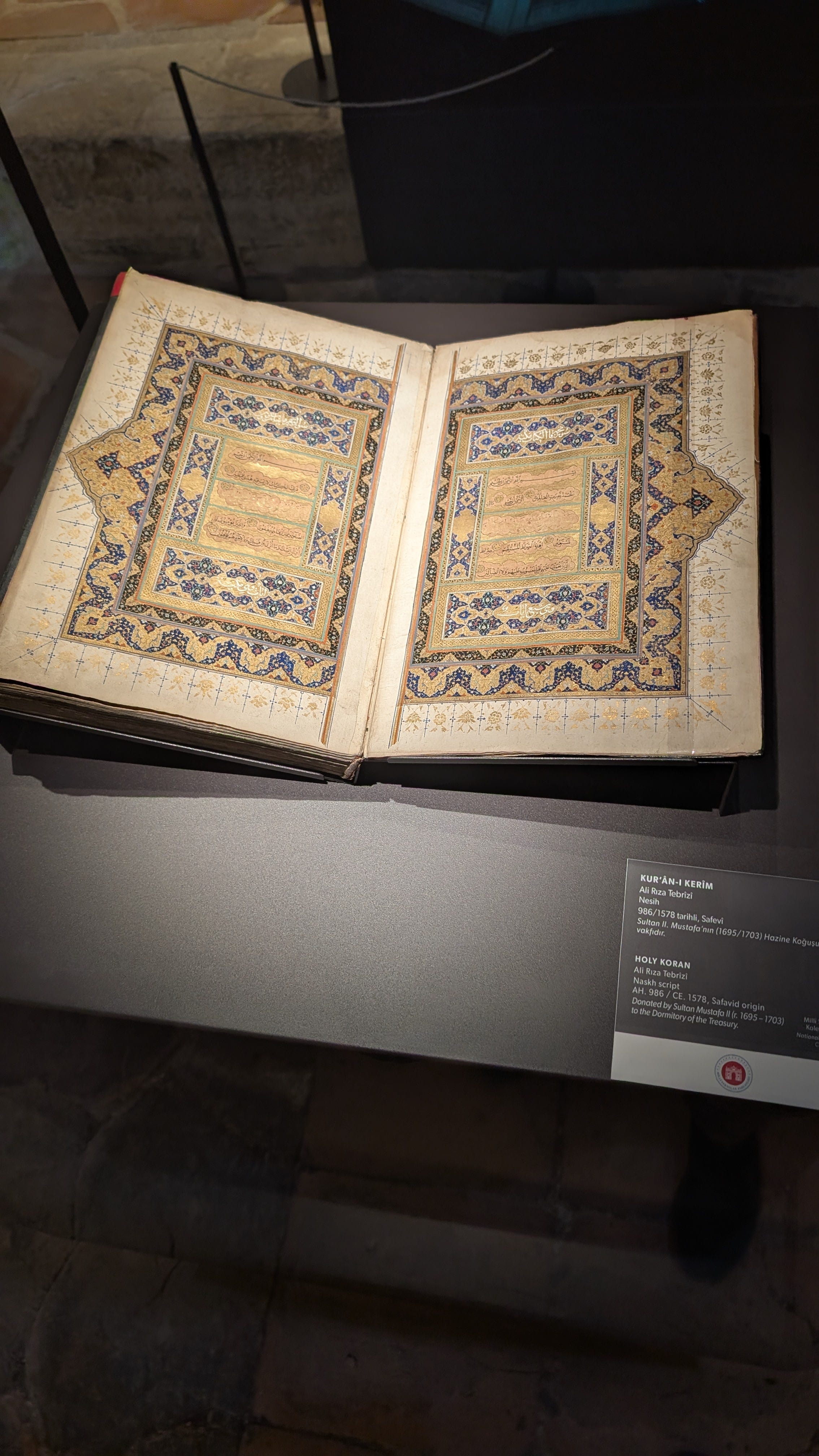
One of the most stunning pieces was this Holy Koran.
We continued on into the fourth courtyard, with its collection of royal pavilions. The Mecidiye Kiosk was the last to be built, in 1840.
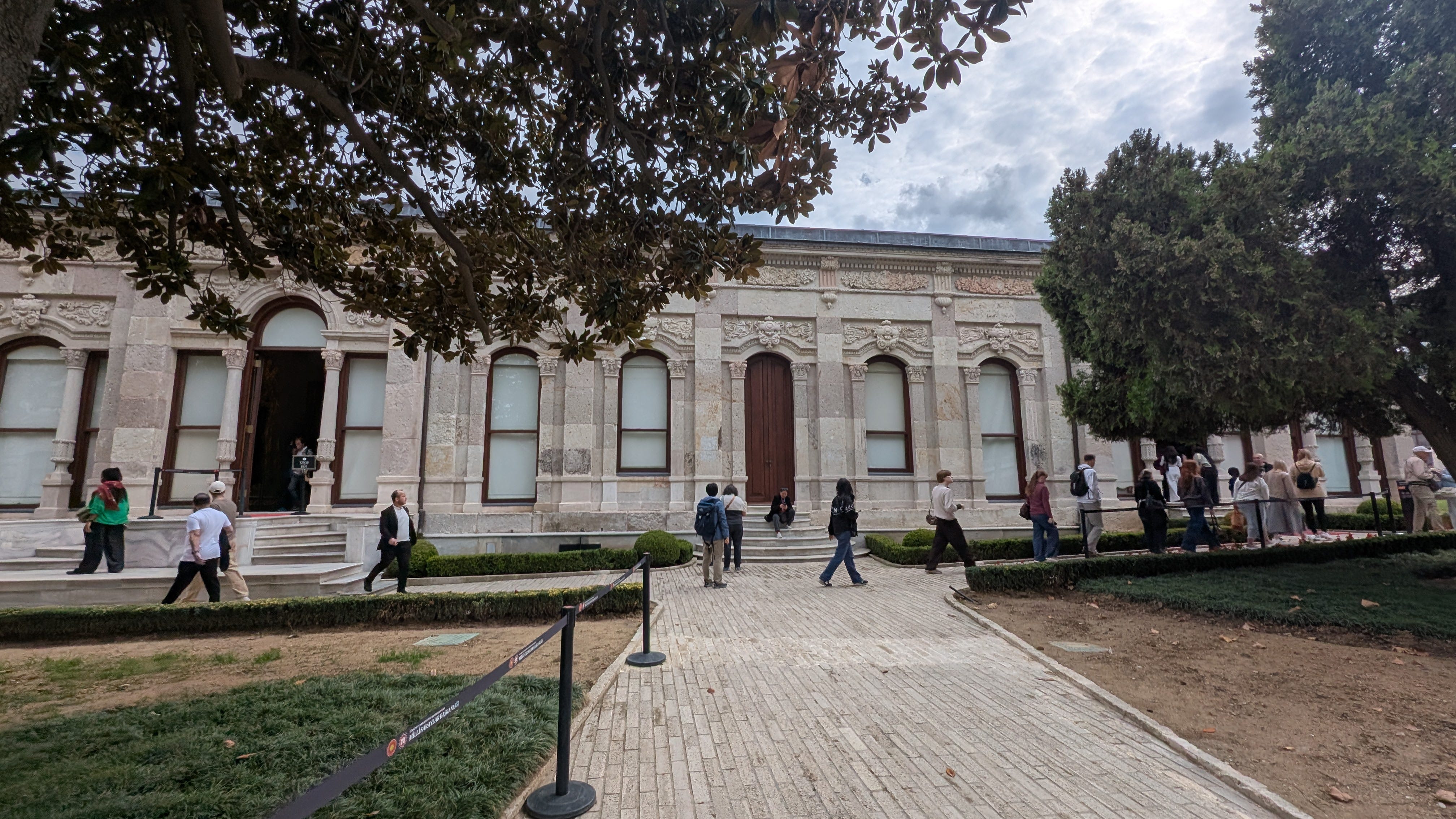
Most of the pavilions were arranged as a single large room with alcoves on three sides with divans where the royals sat.
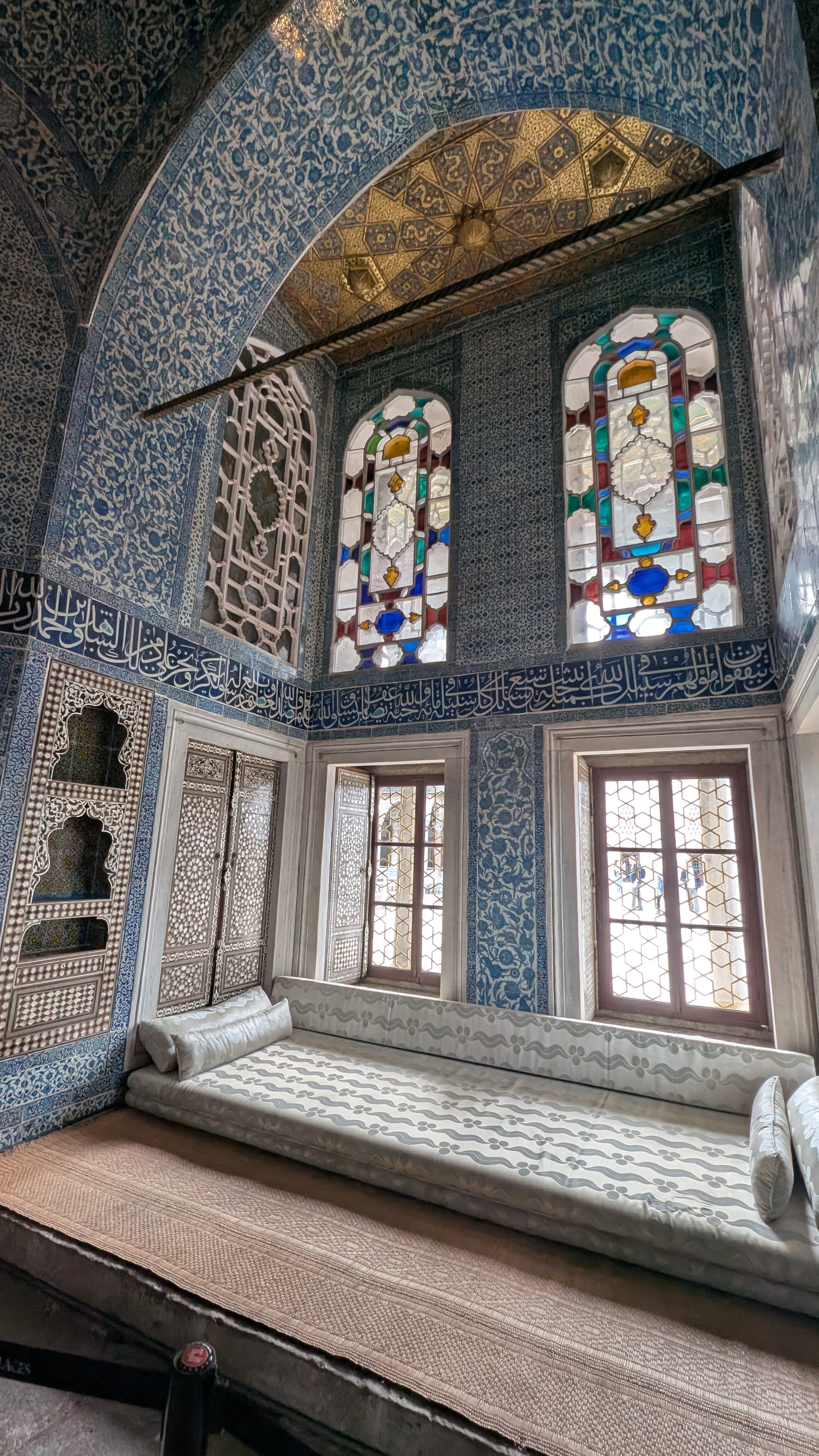
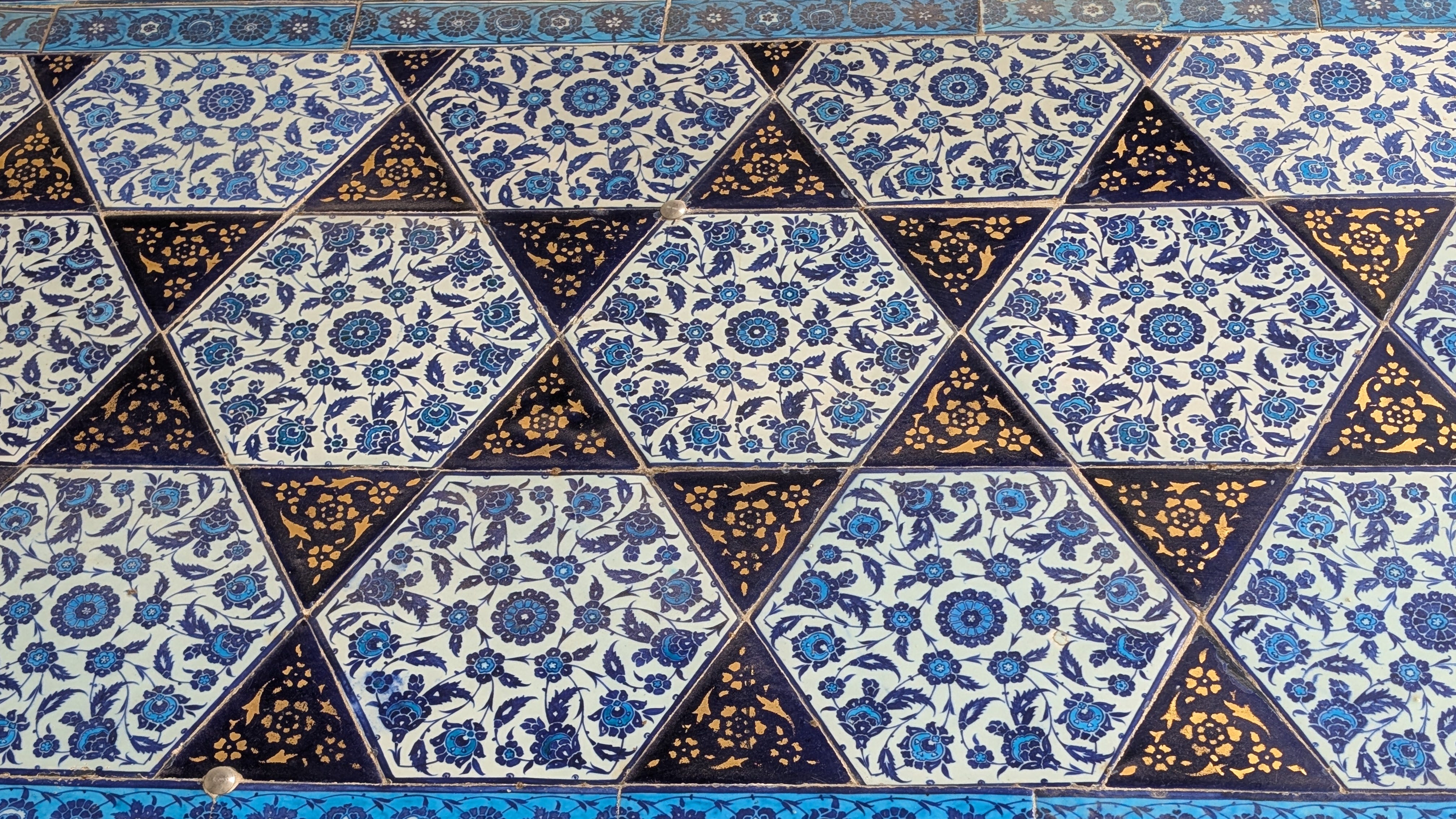
The tile in this section of the palace is just incredible.
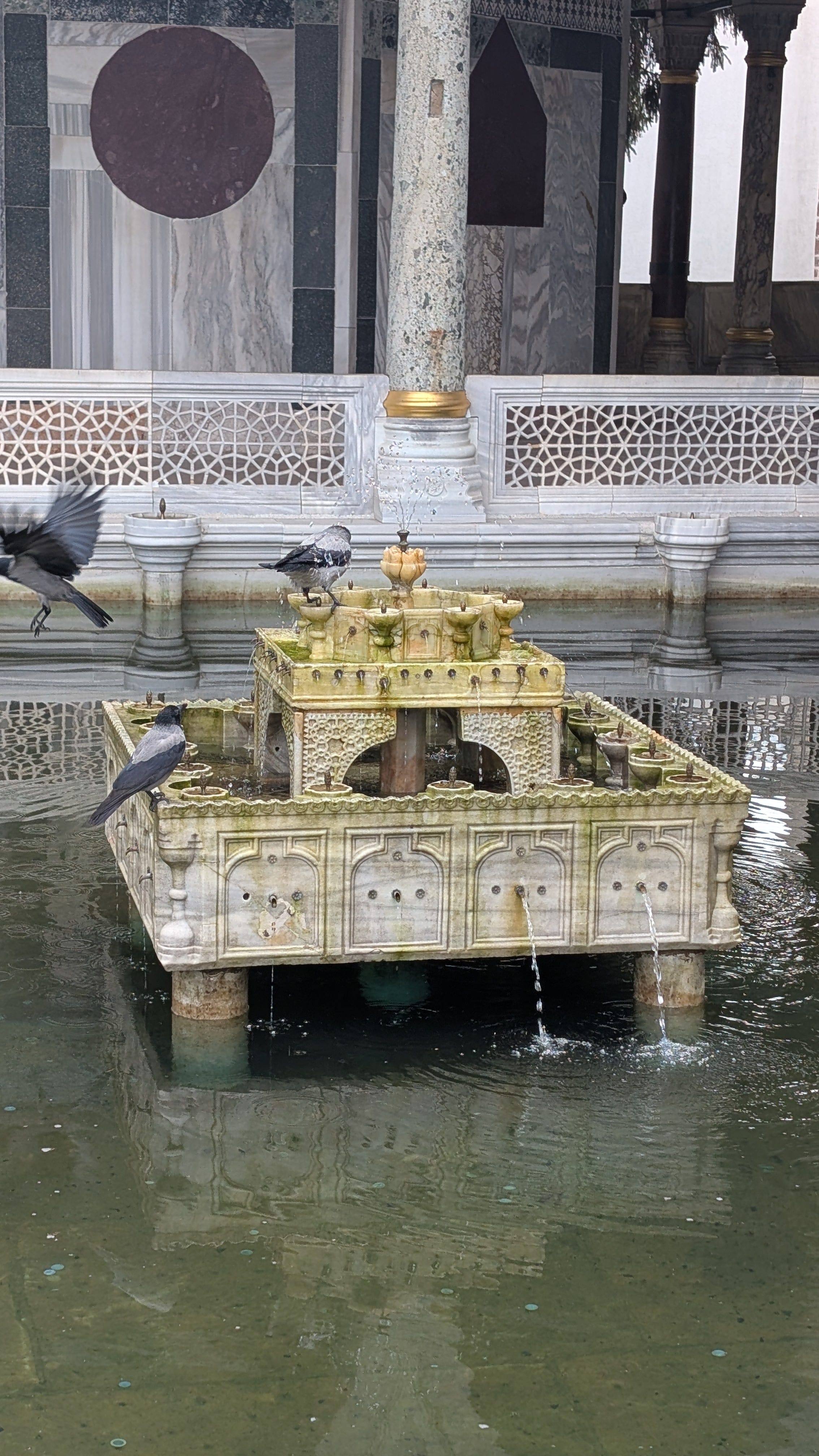
In between the pavilions are gardens with elaborate fountains, which the two-toned hooded crows were enjoying.
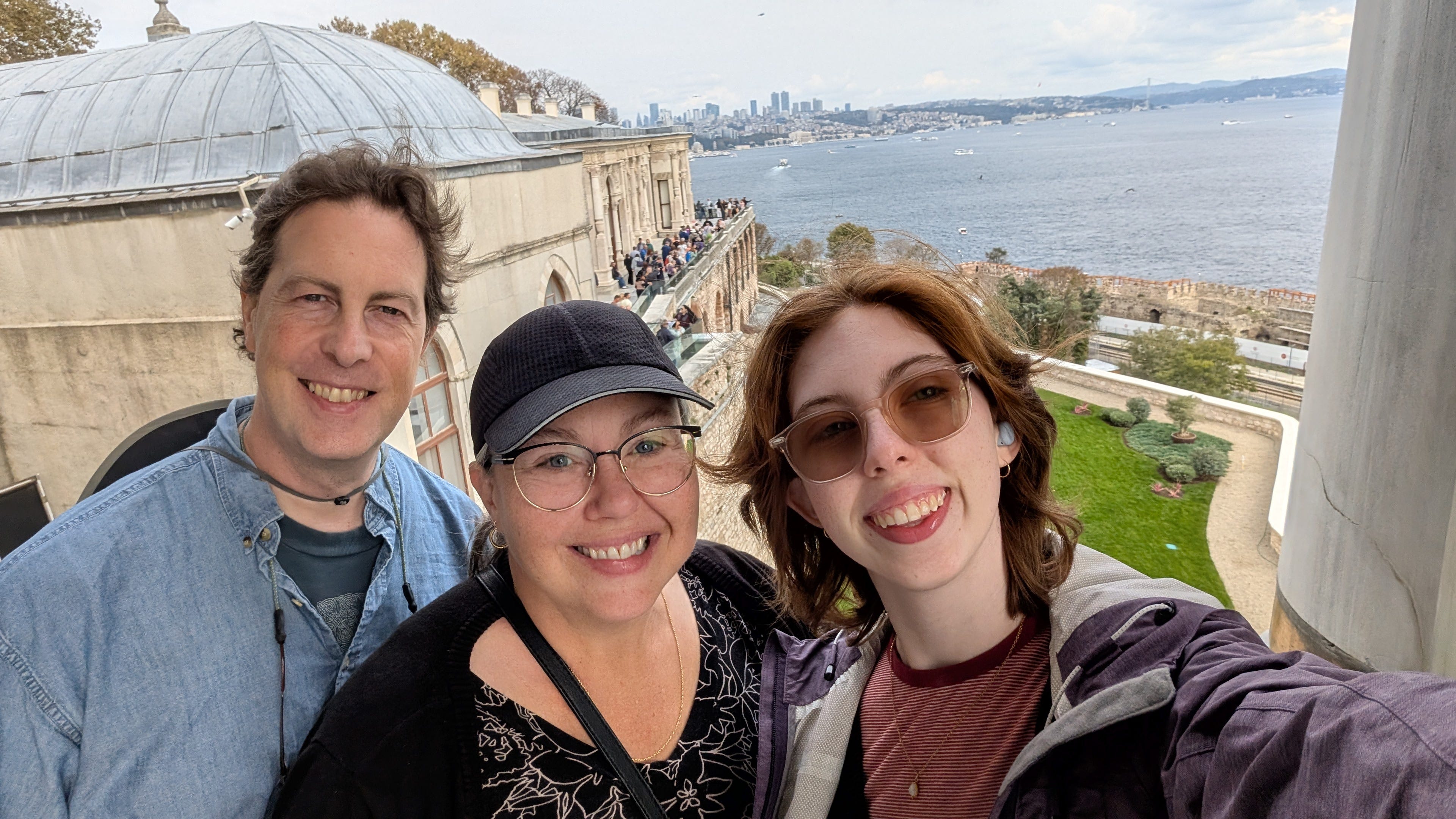
There are also spectacular views of the surrounding area.
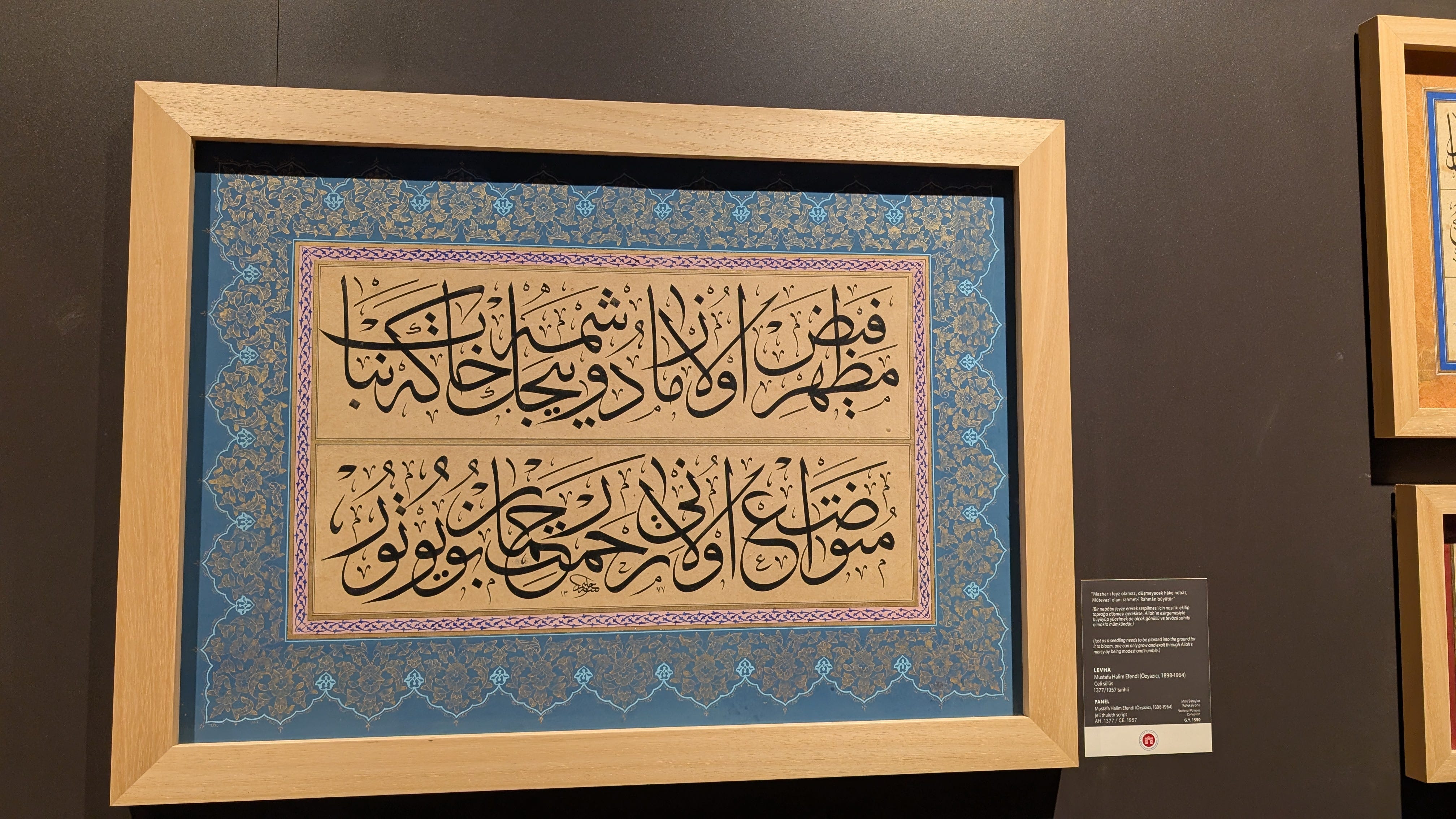
Another section houses beautiful examples of Islamic calligraphy.
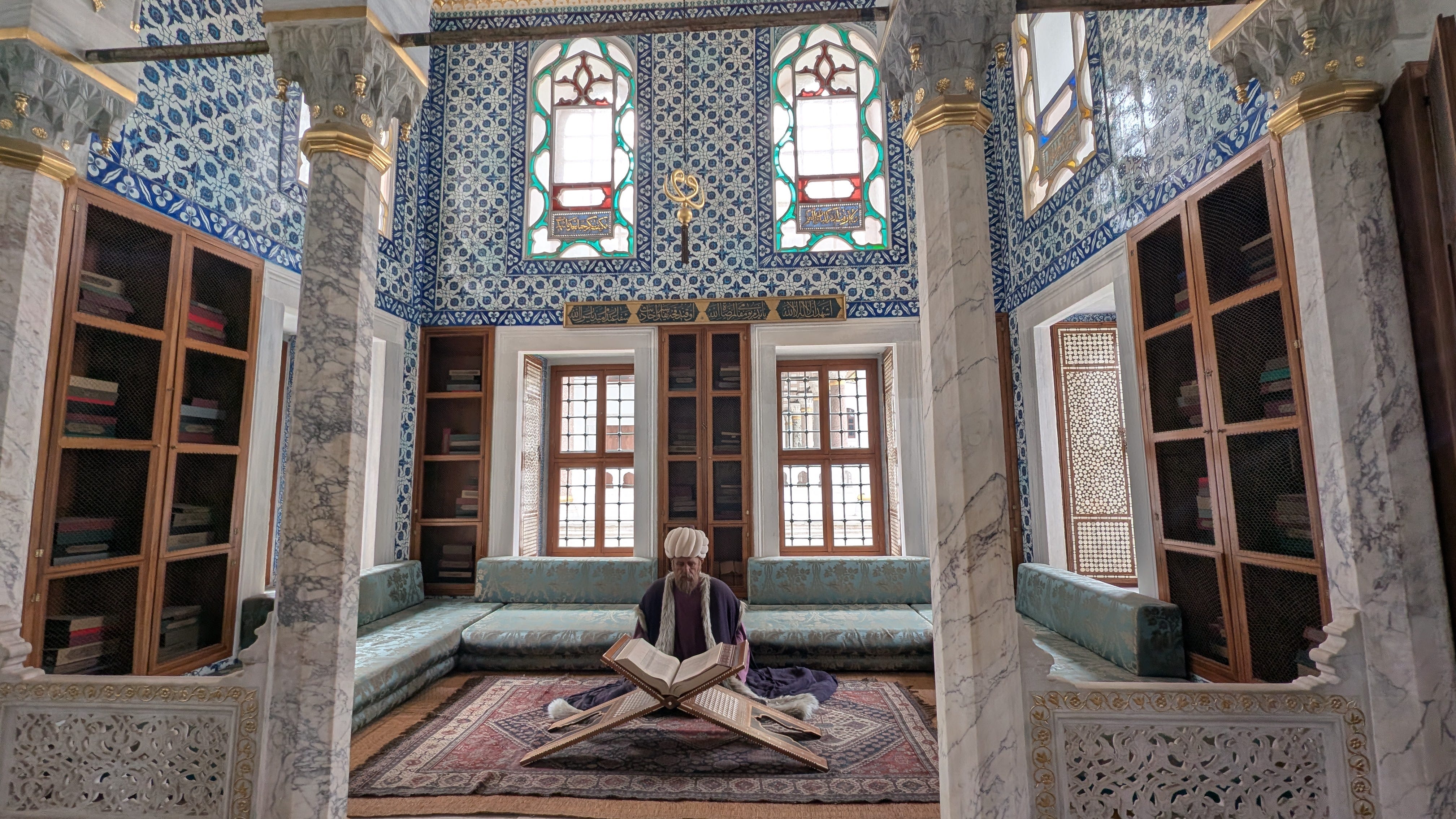
There is also a library, built to house books for all the inhabitants of the palace to learn from.
Alice was getting pretty tired by the time we returned to the second courtyard and the entrance to the harem, so she sat and rested while Jason and I moved as quickly as we could through that complex of corridors, baths, and receiving rooms.
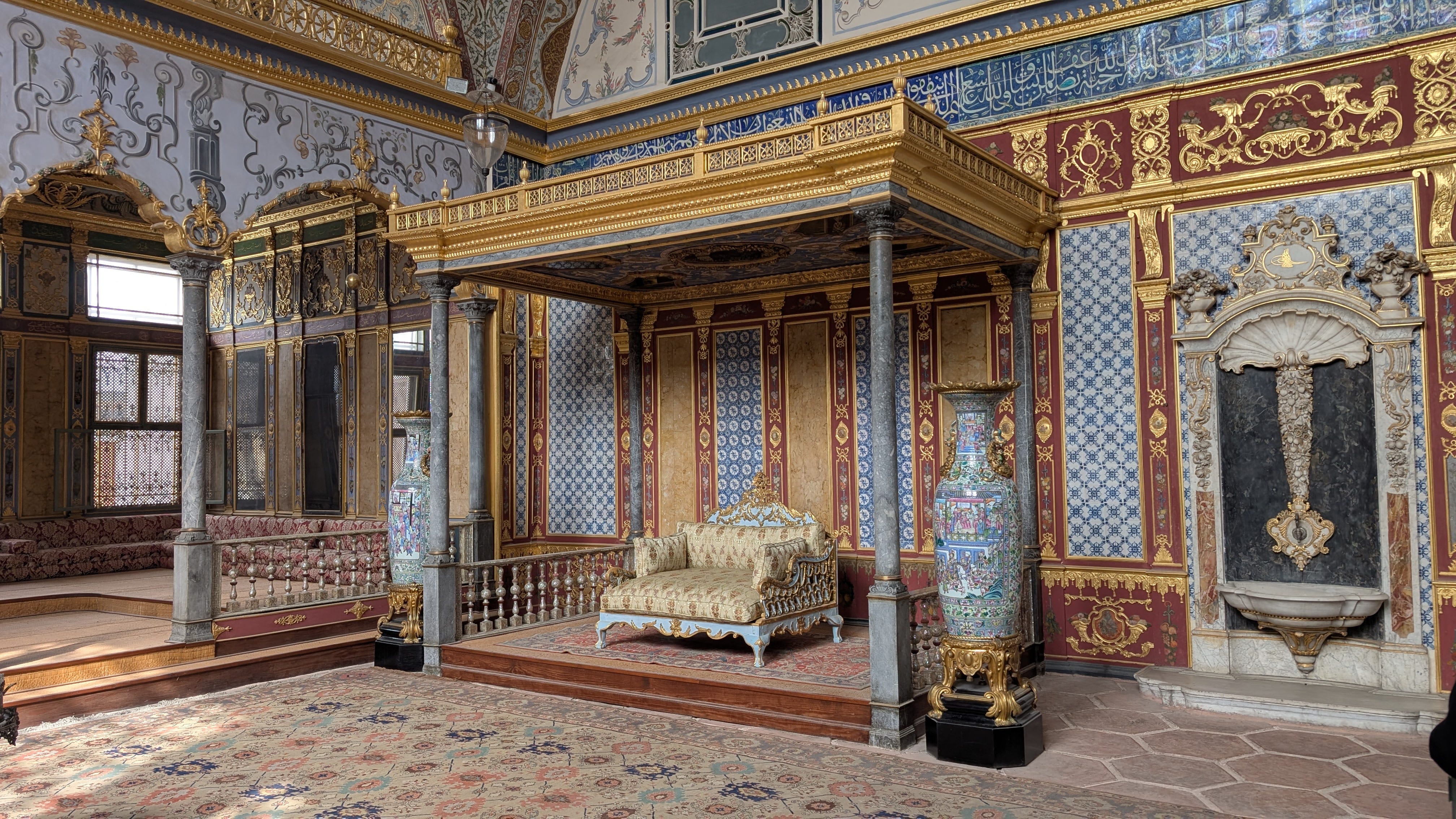
One of the highlights for me was the Fruit Room, named for the theme of its decoration.
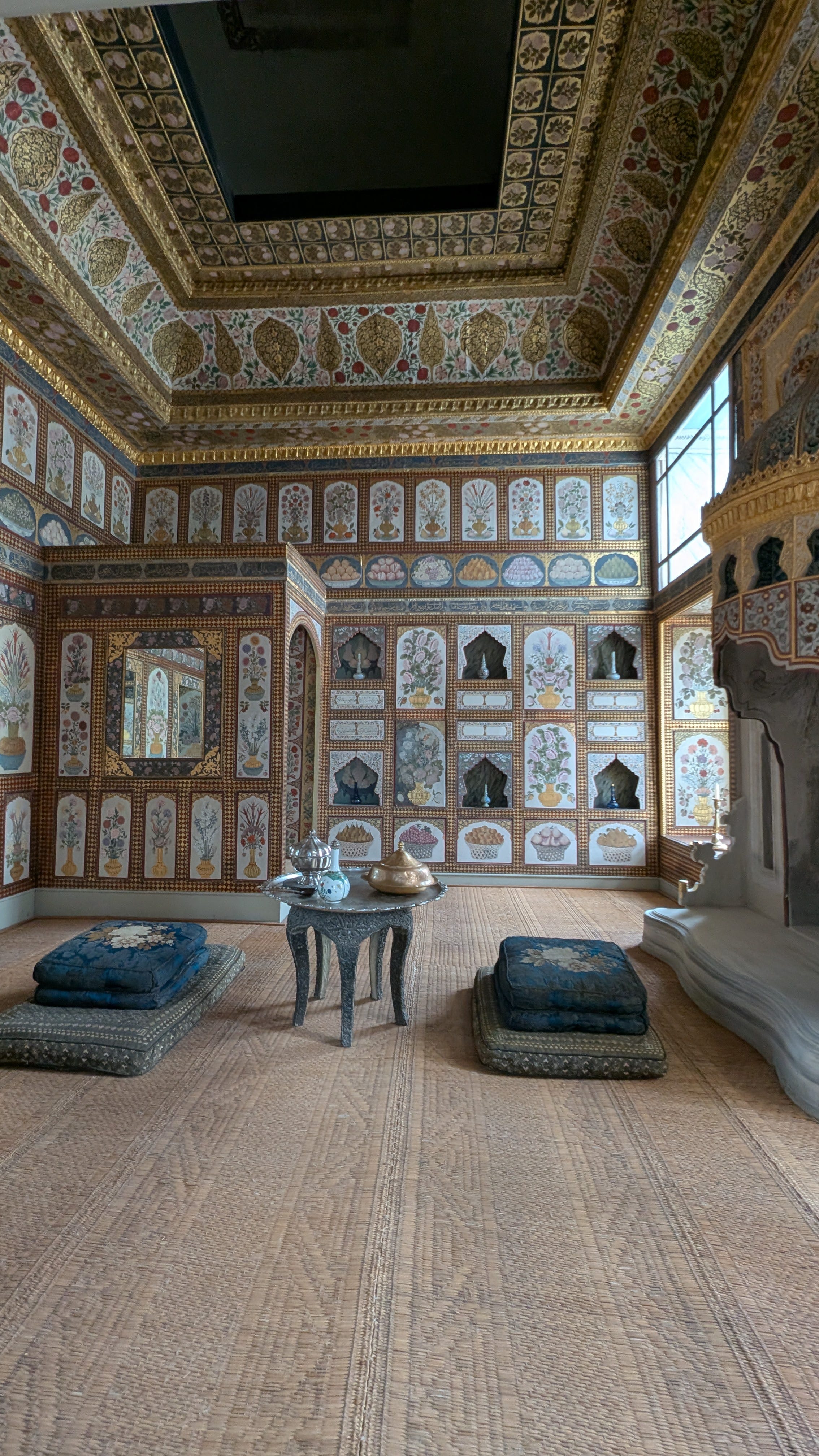
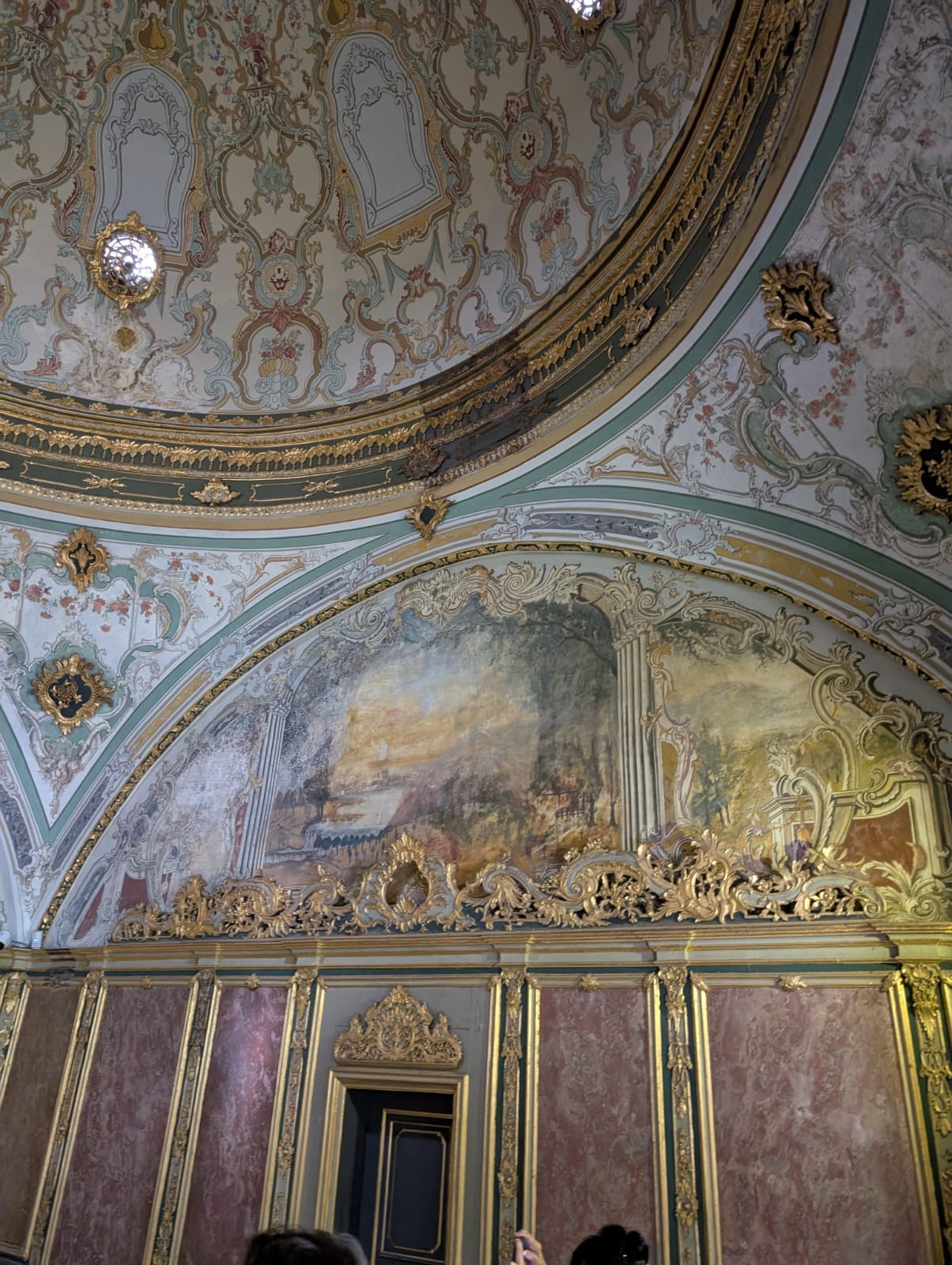
Returning to the second courtyard we stepped inside the Imperial Council chamber, where policies of the empire were debated and decided by the viziers.
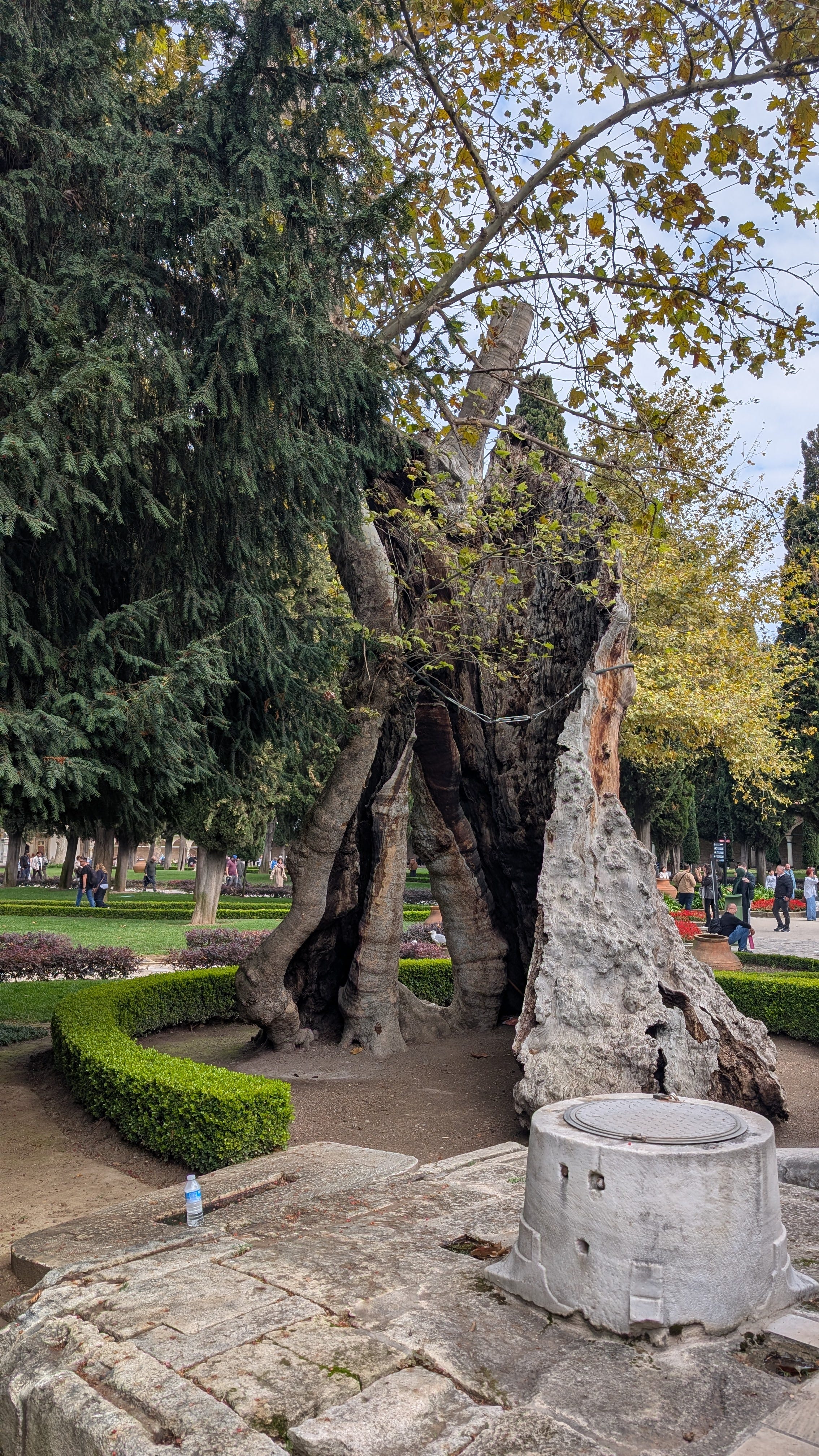
We strolled back through the first courtyard, past this incredibly old and hollowed out tree, and found an exit on the far side to emerge not far from a stop for the tram back up to our hotel.
Alice wasn't feeling up to any more excursions, so we got her some noodles from the Chinese restaurant next door to the hotel and Jason and I went out to dinner in our own.
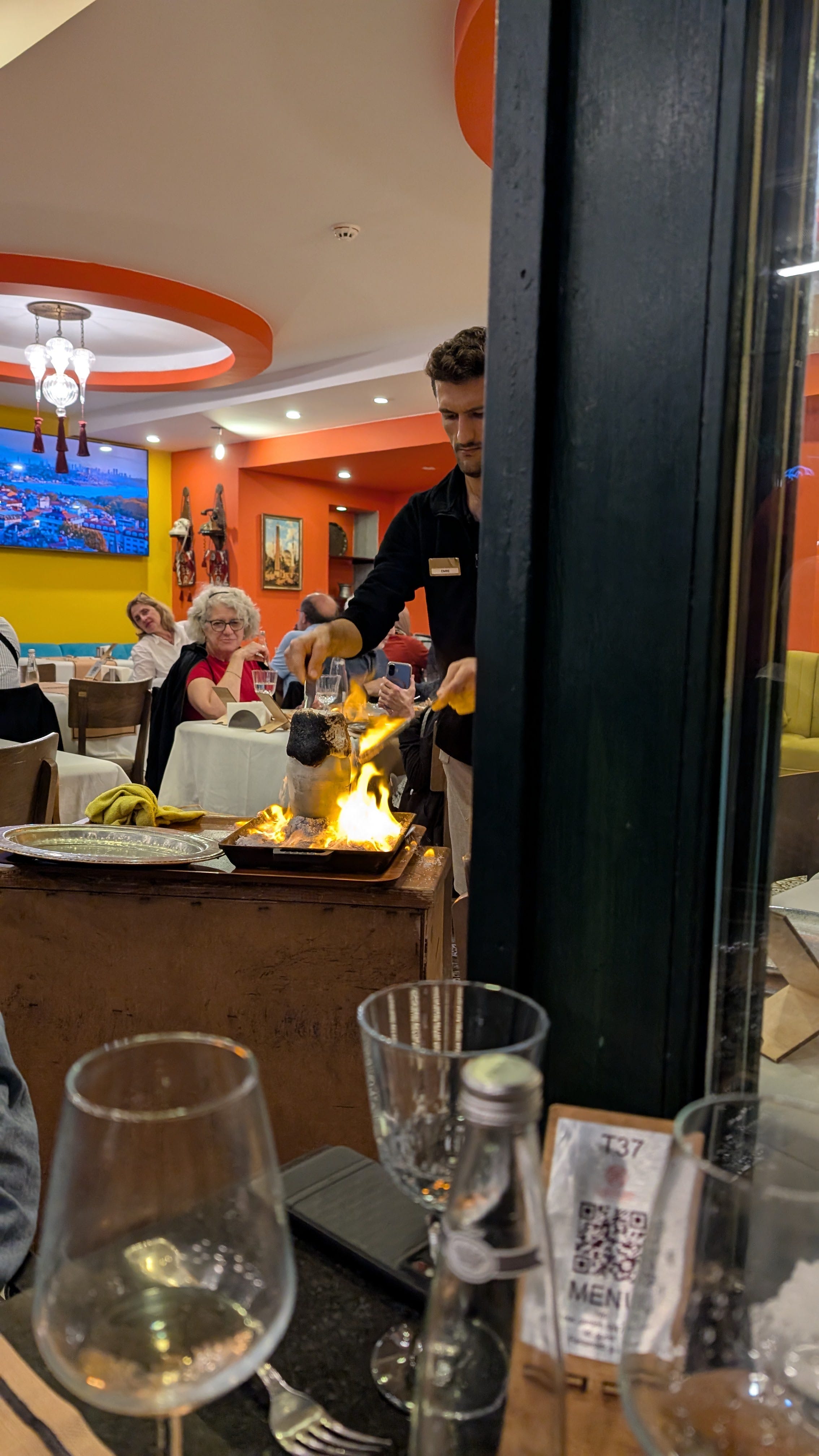
Garden 1897 was delightful and we decided to share the Lamb Pottery Kebab as our main. It came in this clay pot in a bed of flames and the waiter knocked off the top to pour the contents out into a serving dish.
We also shared künefe, a dessert of cheese wrapped in pastry threads, soaked in honey, topped with a pistachio crumble, and served with yoghurt ice cream.
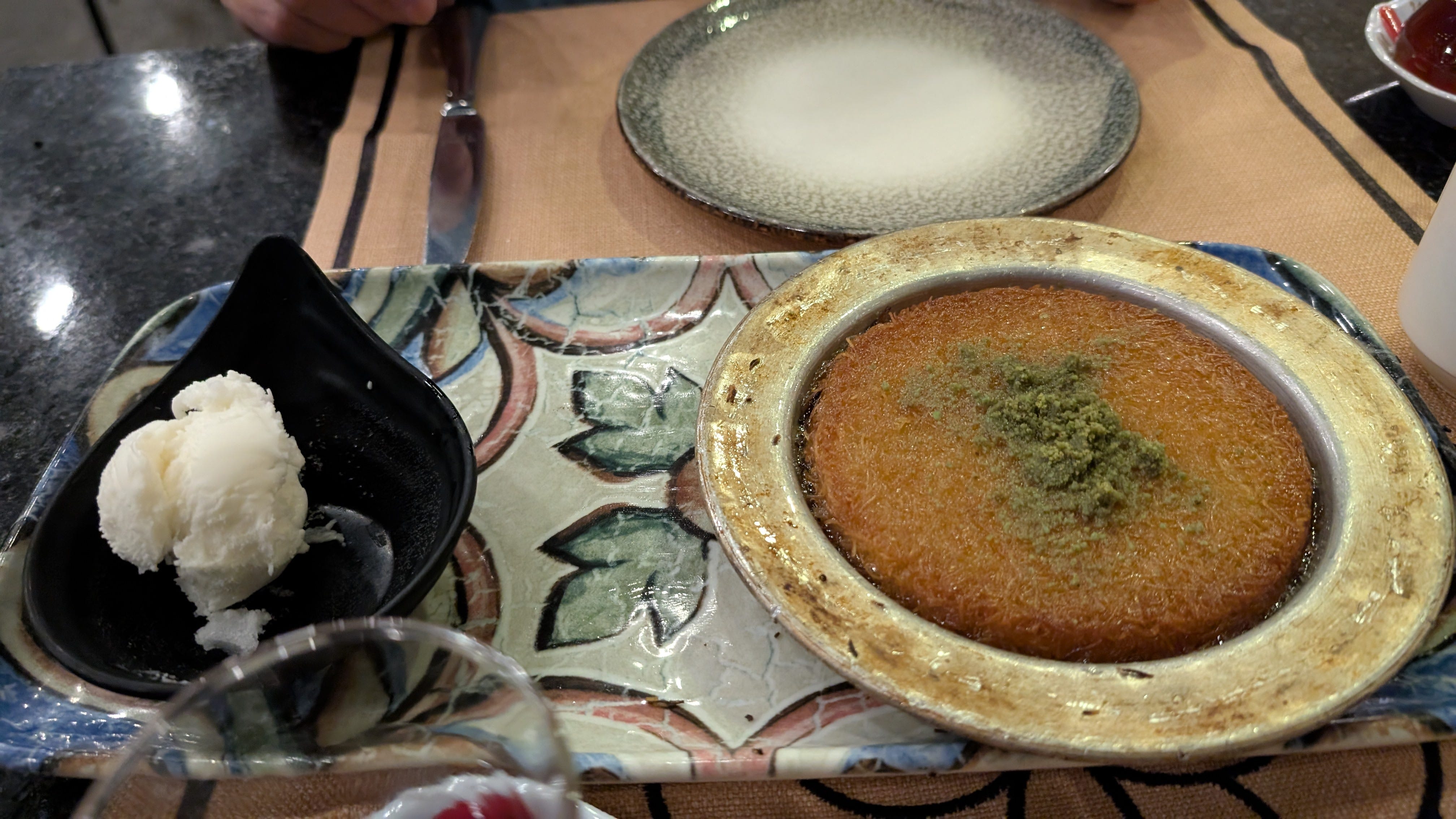
That was a sweet ending to the day and gave us the energy for the steep walk back up to the hotel.
I started to say you can bring me that Chinese blue & white porcelain bowl, and the zincware, then the jeweled box or two, and the divan and the dessert and... actually almost every photo had me wanting something! Of course I had to look up why I know the word Topkapi... the imdb says it was a 1964 movie with Peter Ustinov about "a group of thieves who plan to rob an Istanbul museum to steal a jewelled dagger."
Ha -- we used a photo of that tilework on thank you cards at CJP! Fascinating to see where it actually comes from.